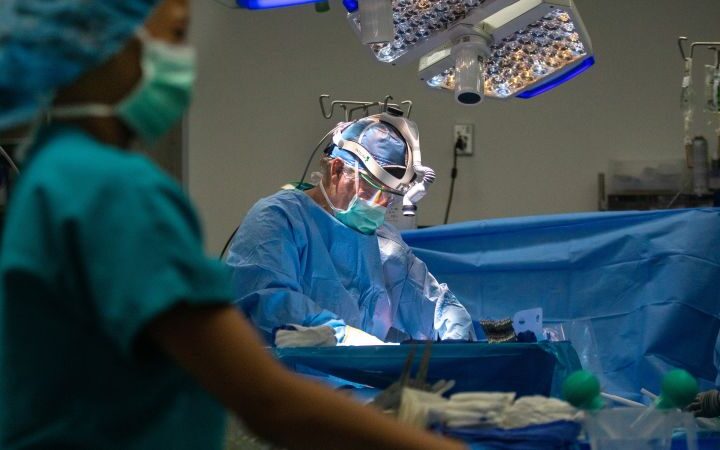
Tim Andrews has become the first individual to transition from receiving a genetically modified pig kidney to a human kidney transplant. This milestone comes after his initial transplant on January 25, 2025, which lasted for 271 days before rejection necessitated his return to dialysis, reports BritPanorama.
Speaking from his hospital bed, the 67-year-old Andrews expressed his unique position in medical history: “I’m the first one that went across the bridge. … I’m the only person in the world that’s ever had a pig kidney and then had a human kidney after it. Nobody’s ever been across that bridge. That is cool!”
Before receiving the pig kidney, Andrews had been enduring the rigors of end-stage kidney disease brought on by diabetes. He experienced significant challenges during his time on dialysis, describing the emotional and physical toll it took on him. Despite his grave circumstances, he remained hopeful for a better future.
On January 12, shortly before a planned surgery, Andrews was notified by Mass General Brigham that a near-perfect human kidney match had been found. His transplant surgery proceeded the next morning.
Now, just days following the human transplant, Andrews anticipates returning to his home in New Hampshire, having been granted a new lease on life. His case is being viewed as a potential breakthrough in the field of xenotransplantation, where animal organs are utilized as temporary solutions to organ shortages in humans, offering a glimmer of hope for further advancements.
An answer to organ shortages
Xenotransplantation has been proposed as a solution to the escalating shortage of organ donors, with genetically modified pig organs aimed at reducing the risk of rejection. In the United States alone, there are over 100,000 individuals awaiting organ transplants, with approximately 80% requiring kidneys. This situation is compounded by the fact that only the most critically ill patients are eligible to be placed on waiting lists.
Currently, more than 800,000 individuals suffer from kidney failure, and nearly 70% of these are dependent on dialysis. However, the procedure attempts to artificially accomplish the work of healthy kidneys, often resulting in poor patient outcomes; the five-year survival rate for dialysis patients hovers around 40%.
Dr. Leonardo Riella, medical director of kidney transplantation at Mass General Brigham, elaborated on the burdens of dialysis: “It has a huge burden on the patient, both in their quality of life but most importantly on their health.”
While the field of xenotransplantation remains in its infancy, Riella emphasizes the importance of developing alternatives to dialysis. “Even if it is a bridge,” he stated, “it would be better than [Tim] just staying on dialysis.”
This will do something for humanity
For Andrews, his experience transcends mere personal gain; he believes it can pave a pathway for others grappling with end-stage renal disease. “This will do something for humanity,” he told CNN’s Chief Medical Correspondent Dr. Sanjay Gupta in a documentary, depicting his journey.
Andrews experienced significant changes immediately following his pig kidney transplant, which he referred to as “Wilma.” Initially, he felt clarity and newfound energy that had evaded him during dialysis. However, after suffering from rejection signals and infections, the kidney had to be removed, leading him back to dialysis.
Mike Curtis, president and CEO of eGenesis, the company responsible for supplying Andrews’ donor pig, noted the slow rejection process observed with Andrews’ previous transplant. Despite the challenges, the data gathered from Andrews’ case may help inform future xenotransplant patients.
Andrews’ situation has catalyzed further research, with Mass General and eGenesis planning to conduct additional xenotransplants, aiming for a clinical trial in the future. Riella remarked, “Our goal is to basically ban dialysis as a long-term treatment.”
Andrews remains reflective about his journey, attributing his survival to the xenotransplant. “If I didn’t take Wilma, I’d have been dead by now,” he said. Now, with the human kidney transplant, he feels optimistic about the future and emphasizes the importance of organ donation to others. “People need to step up and help,” he urged.
In a heartfelt message shared on social media, Andrews expressed gratitude to the family of the unidentified donor, highlighting the heroism of organ donation and the hope it brings to countless individuals. “Your family member is a hero,” he said, reinforcing the vital role that such acts of generosity play in the fight against organ shortages.
With both medical and personal advancements tied closely to his experience, Andrews is poised at the intersection of innovation and inspiration, marking a notable chapter in organ transplantation history.