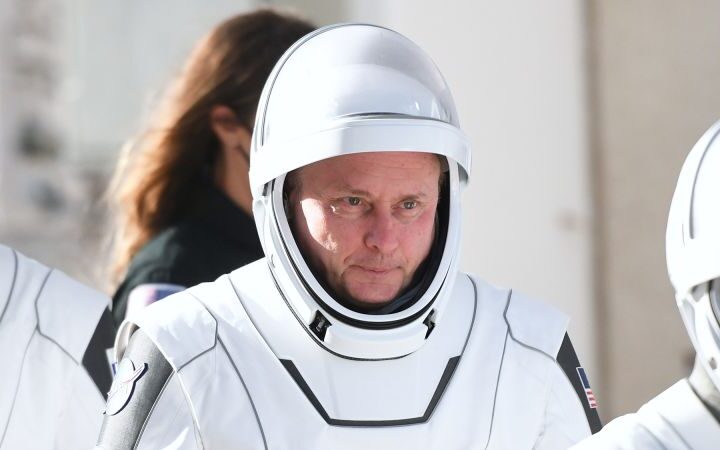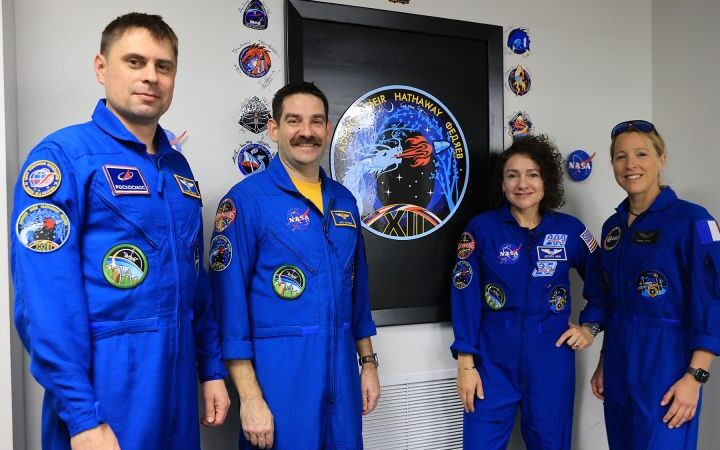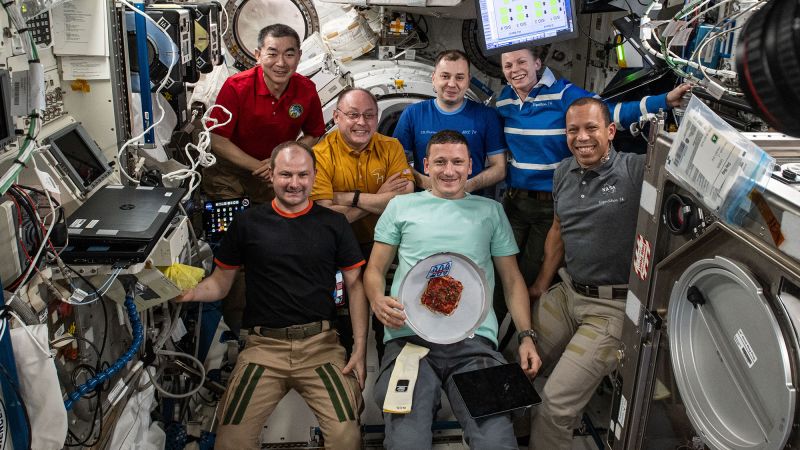
Four astronauts are scheduled to depart from the International Space Station earlier than planned due to a health concern, leaving behind only a minimal crew to maintain operations at the orbiting outpost, reports BritPanorama.
As they board the SpaceX capsule for their return, only three individuals will remain on the ISS: Roscosmos cosmonauts Sergey Kud-Sverchkov and Sergei Mikaev from Russia, along with NASA astronaut Chris Williams. This early departure raises concerns about the station’s staffing levels, as NASA prioritizes keeping the ISS fully occupied to maximize ongoing scientific research.
The departure of the crew will be livestreamed by NASA at approximately 4:45 p.m. ET, with undocking expected around 5 p.m. ET. This situation follows last week’s decision by NASA’s new administrator, Jared Isaacman, to cancel a planned spacewalk, prompting the early return. “For over 60 years, NASA’s set the standard for safety and security in crewed spaceflight,” Isaacman stated during a news conference, emphasizing the importance of the health and well-being of astronauts aboard the ISS.
While NASA has not disclosed specific details about the medical issue affecting one of the astronauts, they confirmed that the individual is in stable condition. Chris Williams later reassured that everyone remaining on board is “stable, safe, and well cared for,” highlighting that the decision allowed for necessary medical assessments on Earth. The Crew-11 team is expected to splash down in the Pacific Ocean around 3:40 a.m. ET on Thursday.
In the interim, NASA is accelerating efforts to launch a replacement crew, Crew-12, which was originally set for mid-February. With only three crew members, the ISS will operate at its lowest staffing level in years, although such scenarios are not unprecedented. Prior to the introduction of regular SpaceX missions, NASA often utilized Russia’s Soyuz for crew rotations.
What an understaffed ISS means
While the reduced crew size poses challenges, Amit Kshatriya, NASA’s associate administrator, stated that the remaining staff can manage essential operations. However, certain tasks, like the planned spacewalk, cannot be performed. NASA has historically aimed to maintain a stronger crew presence, typically around seven astronauts, to ensure safety and productivity aboard the ISS.
Maintaining station operations with a smaller crew creates inherent risks, especially if unforeseen issues arise. Former NASA astronaut Garret Reisman pointed out that the current crew dynamics mean that if technical problems occur, assistance may not be readily available, complicating repairs. He noted, “If something breaks on the outside,” the solitary astronaut would not have immediate backup during critical repairs.
Why NASA wants the ISS fully staffed
Navigating the complexities of operating the ISS with reduced personnel is a pressing concern for NASA. Isaacman emphasized the urgency of conducting research on the aging platform to facilitate the transition to commercial space stations in the future. The agency hopes private companies will develop new facilities, allowing NASA to focus on further space exploration.
The ISS incurs annual operational costs of around $3 billion, underscoring the necessity of maximizing its research potential. Past operations reflect NASA’s commitment to maintaining adequate staffing. For instance, when unforeseen circumstances arose in 2024 that prevented a planned return, the agency chose to keep two astronauts aboard for an extended period.
Coping with limitations in crew size and the challenges they bring is a well-documented facet of human spaceflight, a reality Kshatriya acknowledged. Chris Williams now faces the prospect of managing the ISS alongside two Russian colleagues amid heightened geopolitical tensions, yet Reisman noted that, in the context of their work, crewmates tend to set aside these differences. “It’s like Thanksgiving dinner: you just don’t talk about politics or religion,” he remarked, reflecting on the cooperative spirit among the astronauts.
The operational landscape of the ISS continues to evolve under the ongoing pressures of safety and research priorities, as the mission to balance human presence and operational integrity remains paramount.