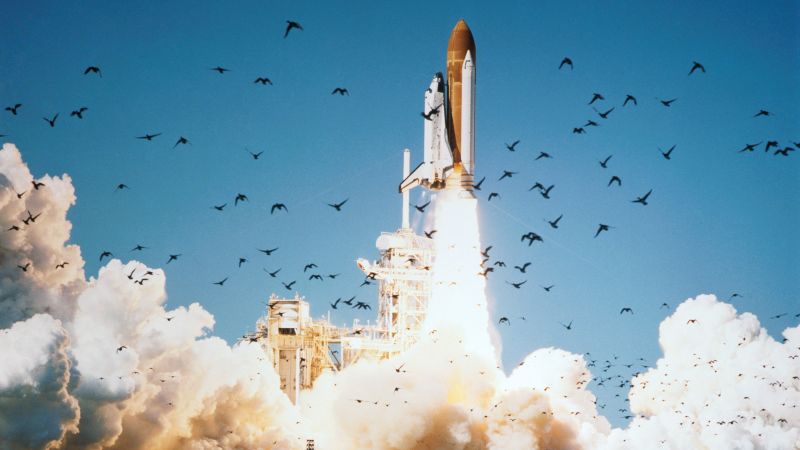
NASA’s Space Shuttle Challenger launched on January 28, 1986, with an unusual crew, including a teacher aboard. Christa McAuliffe was the first educator selected for the Teacher in Space Program, intending to inspire students and broaden their interest in science. The mission planned to deploy an astronomy experiment to study Halley’s Comet and conduct lessons from orbit, but this did not occur, reports BritPanorama.
The shuttle tragically exploded 73 seconds after liftoff, claiming the lives of Commander Francis R. “Dick” Scobee, Pilot Michael J. Smith, Mission Specialists Judith A. Resnik, Ellison S. Onizuka, and Ronald E. McNair, as well as Payload Specialists Gregory B. Jarvis and McAuliffe. This distressing event unfolded in real time for teachers and students watching from classrooms across the United States.
In the aftermath of the tragedy, many family members of the Challenger crew were determined to continue their loved ones’ mission. Dr. June Scobee Rodgers, widow of Scobee, recounted a pivotal moment in a conversation with then-First Lady Nancy Reagan. During this conversation, she raised concerns about the future of educational inspiration after the disaster.
“That’s where the idea came from,” Scobee Rodgers reflected in a video shared by the Challenger Center to commemorate the 40th anniversary of the disaster. “Can we remember our loved ones by continuing their mission and make it an education mission?”
As a result, the families established the Challenger Center for Space Science Education in April 1986, opening the first center in Houston in 1988. Today, there are 32 centers across the US offering immersive experiences in science, technology, engineering, and mathematics (STEM), reaching more than 7 million students worldwide through various programs and virtual resources.
To mark the 40th anniversary of the Challenger disaster, the center has released seven STEM lesson plans inspired by the Challenger crew, alongside several planned events for this spring. Mike Kincaid, president of the Challenger Center, emphasized the importance of preparing students for careers in the expanding “space business,” as NASA’s Artemis II mission approaches its upcoming launch.
A legacy of educators in space
McAuliffe’s childhood dream to reach for the stars was evident from a young age, inspired by the Apollo missions. She had applied for the Teacher in Space Program in 1984, expressing her desire to participate in the ongoing Space Age.
Though the Challenger disaster marked the end of the Teacher in Space initiative, other educators found paths to space. Barbara Morgan, who trained as McAuliffe’s backup, focused on public outreach and STEM education following the tragedy. She joined NASA’s astronaut class in 1998 and went on to help build the International Space Station.
NASA initiated the Educator Astronaut Project in 2004, selecting several teachers to train as astronauts. Dottie Metcalf-Lindenburger, one of the selected educators, pivoted from teaching English in Kazakhstan to becoming a science instructor in Earth science and astronomy.
During a lesson, a student’s question about how astronauts use the bathroom in space prompted her to seek answers, ultimately leading her to apply for the astronaut program. “I had this dream when I was a young kid about becoming an astronaut and a real passion for space, and all of a sudden is this opportunity to fly because I am a science teacher,” she noted.
In 2010, Metcalf-Lindenburger completed her shuttle mission to the International Space Station before leading opportunities for education and outreach about space. NASA involved her with the Challenger Center to promote STEM careers among youth.
Meanwhile, Kenneth F. Harris II, a former student inspired by the Challenger Center, now works with The Aerospace Corporation, still contributing to NASA missions. He encourages alumni from the Challenger Centers to give back to students by sharing their personal journeys in STEM.
“Challenger should be seen as a tragedy, but it was turned into something that has just made folks’ lives better,” Harris said, highlighting the enduring influence of the Challenger crew’s legacy.