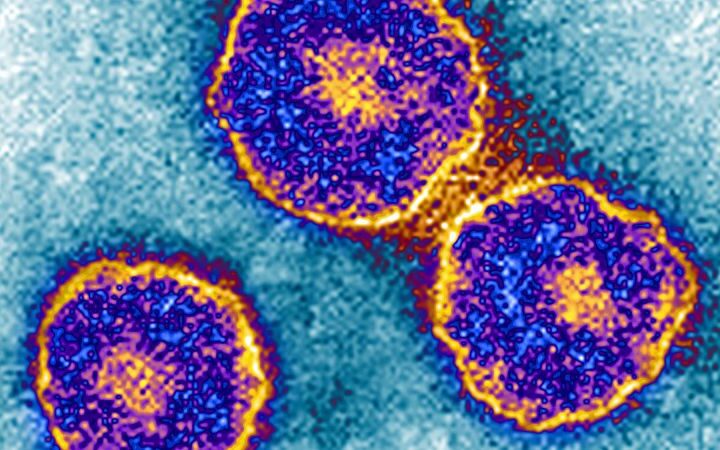
In their most significant move so far, the newly appointed US Centers for Disease Control and Prevention’s vaccine advisers voted Friday to abandon universal hepatitis B vaccination for newborns, a massive shift in US immunization policy that experts say will lead to increased illness, reports BritPanorama.
Hepatitis B vaccination has been recommended for all infants in the US since 1991, a move that helped slash infections in children from an estimated 18,000 cases per year to about 20. The current CDC vaccine schedule recommends the first dose at birth, a second dose at 1 month or 2 months, and a third at 6 months to 15 months.
On Friday, members of the CDC’s Advisory Committee on Immunization Practices, or ACIP, voted 8-3 to instead recommend shared decision-making with health care providers for mothers who test negative for the virus and are deciding when to have their children vaccinated against hepatitis B, including at birth. If the vaccine isn’t given at birth, they suggest waiting until a child is at least 2 months old.
The advisers voted 6-4 in favor of testing children for immunity to hepatitis B when parents and health care providers are determining whether the child might need subsequent vaccine doses. A resolution aligning these recommendations with the federal Vaccines for Children program was also approved 8-0.
The sitting committee members were chosen earlier this year by US Health and Human Services Secretary Robert F. Kennedy Jr., a longtime anti-vaccine activist, after he ousted the previous 17 advisers. Many of the new members have expressed anti-vaccine sentiments of their own, but not all agreed with Friday’s changes.
“We are doing harm by changing this wording,” said Dr. Cody Meissner, a pediatrician at Dartmouth University who voted against the first two recommendations, on shared decision-making and immunity testing before subsequent doses.
His remarks were echoed by Dr. Joseph Hibbeln, a psychiatrist: “This has a great potential to cause harm, and I simply hope that the committee will accept its responsibility when this harm is caused.”
Dr. Retsef Levi, another ACIP member who is a management professor at MIT, said the new recommendations are intended to put more choice in the hands of parents. “I think that the intention behind these that parents should carefully think about whether they want to take the risk of giving another vaccine to their child, and many, many of them might decide that they want to wait far more than two months, maybe years and maybe up to adulthood. I think that’s going to be up to them and their physician.”
The recommendations now go to acting CDC Director Jim O’Neill, who will decide whether to approve or reject them. The agency typically aligns with its advisers’ votes.
Confusion and consequences
Hepatitis B is a liver infection caused by an extremely infectious virus. It’s transmitted through blood or genital fluids from an infected person and can be passed easily during childbirth from a woman to her child during either a vaginal delivery or C-section. However, it can also spread through bites or scratches, such as when children are playing.
After an acute hepatitis B infection, many adults clear the virus. But acute infection can lead to chronic hepatitis B, which is linked to increased risk of liver cancer, organ failure, and cirrhosis, or scarring of the liver. People with chronic hepatitis B are 70% to 85% more likely to die early.
Infants and children who are infected with hepatitis B are more likely to develop chronic disease, including about 90% of infants and 30% of children ages 1 to 5.
The new votes should not change the availability of hepatitis B vaccines, and insurers and officials said that even if O’Neill signs off on the changes, parents who want to get their children vaccinated against hepatitis B will still be able to do so at no cost.
Rather, the shifting approach will create confusion that could have serious consequences, experts say.
The wording of ACIP’s recommendations will signal to providers that there’s something risky about the vaccine even though it has been shown to be “exquisitely low risk” over decades of testing and widespread use, said Dr. Demetre Daskalakis, former director of the CDC’s National Center for Immunization and Respiratory Diseases.
“What this really means is that the providers are going to be confused and the patients are going to be confused, and very often, what confusion means is the wrong medical decision,” Daskalakis told CNN on Friday.
Meissner said he hopes pediatricians will continue to vaccinate newborns before they leave the hospital.
“I think to follow any other course is not in the interest of the infant,” he said. “There is no evidence of harm, and there’s no reason to think that the outcome would be different if the vaccine were administered at 2 months of age instead of 1 month of age, except for, there will be more children who will be injured, who will catch the infection.”
Vaccine critic’s presentation
Friday’s agenda included another unusual moment: a presentation on the current vaccine schedule for children and teens from Aaron Siri, managing partner of a law firm that focuses on suing federal agencies and states over vaccine policies. It also represents patients who believe they’ve been injured by vaccines before the federal government’s vaccine injury compensation program. Siri, a close friend of Kennedy’s, worked on his presidential campaign.
In a lengthy presentation, Siri detailed the history of the US childhood vaccine schedule, often criticizing what he said was a lack of robust clinical trials and insufficient data to understand safety. He also criticized a relative lack of research into injuries people believe they’ve experienced as a result of vaccines and said drugmakers have “effective immunity for vaccine harms and claims.”
Meissner said Siri’s presentation was “a terrible, terrible distortion of all the facts.”
“First of all, you began with slides that showed the increase in the number of vaccines that are being administered,” Meissner said. “What was your point?”
Meissner said the growth in the vaccine schedule is a reflection of scientific accomplishment, not a detriment to health.
“That’s why we have the lowest rates of infectious disease in the United States, because we have the highest uptake of vaccines,” Meissner said. “And if vaccine uptake goes down, we’re going to see an increase of these diseases, such as with hepatitis B, which I think is going to happen now.”
He added that just because someone had a health problem around the time they got a vaccine doesn’t mean the two are related, but Siri seemed to conflate association with causation, “which isn’t fair.”
“You’re very smooth. You know how to present the facts that are favorable to you or to your client. That’s your responsibility,” he added. “But for you to come here and make these absolutely outrageous statements about safety, I think it’s a big disappointment to me, and I don’t think you should have been invited.”
Siri said the United States doesn’t do a good job of acknowledging and helping people who’ve been harmed by vaccines.
“I totally understand that an infectious disease doctor every day is confronted by folks who are harmed by infectious disease. So I understand that they are more oriented towards that,” Siri told Meissner. “And obviously for me, I every day have encountered folks who are injured by these products. And so obviously I’m more oriented to that. I accept that bias, by the way.”
Siri added that vaccine-injured patients deserve to be recognized. “Until they are recognized, treated well, accepted by the medical community, don’t have nasty notes put in their files… That’s just going to continue to grow vaccine hesitancy in this precious program… that you’re worried about. It’s going to be its own undoing.”
What’s next
In a Truth Social post on Friday, President Donald Trump said the vaccine committee “made a very good decision” to change the hepatitis B recommendation — then zeroed in on the rest of the childhood vaccine schedule.
“In fact, it is ridiculous! Many parents and scientists have been questioning the efficacy of this ‘schedule,’ as have I!” he posted. “That is why I have just signed a Presidential Memorandum directing the Department of Health and Human Services to ‘FAST TRACK’ a comprehensive evaluation of vaccine schedules from other countries around the world, and better align the U.S. vaccine schedule, so it is finally rooted in the Gold Standard of Science and COMMON SENSE!”
Already Friday, Dr. Tracy Beth Hoeg — named this week as acting director of the US Food and Drug Administration’s Center for Drug Evaluation and Research — compared the US vaccine schedule to that of Denmark, a country of only 6 million people and a different health care system