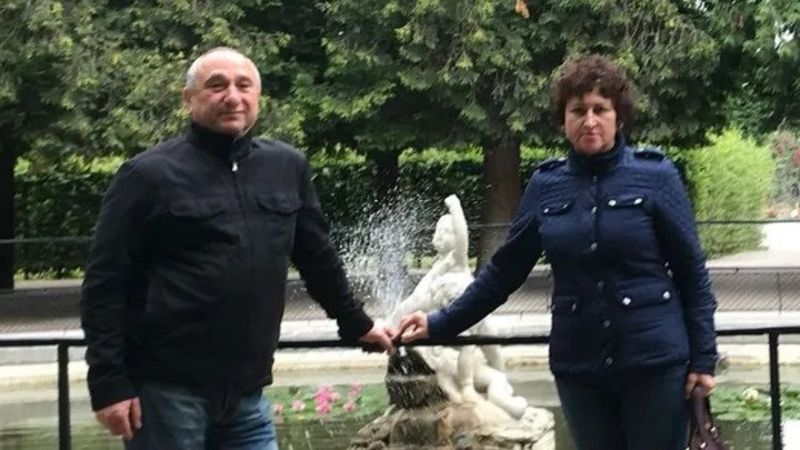
Just before the mass shooting that left 15 dead and dozens more injured during a Hanukkah celebration at Australia’s Bondi Beach, two elderly bystanders attempted to disarm one of the attackers, reports BritPanorama.
In dashcam video, Boris Gurman can be seen grappling with an attacker while Sofia Gurman runs toward them. The couple was killed, but that didn’t stop others from also trying to stop the shooters. Reuven Morrison, a 62-year-old grandfather, died hurling bricks at one of the gunmen. Ahmed al Ahmed, a father of two, was also shot but managed to wrestle the gun from an attacker.
Videos of people bravely springing into action at Bondi Beach have been watched by millions and might give the impression that such heroic behavior is common, said Dr. Ari Kohen, a political scientist at the University of Nebraska-Lincoln and author of Untangling Heroism. That impression is wrong; typically, when others are in peril, people nearby remain bystanders, Kohen noted.
“Most people don’t do this. It’s risky. It’s dangerous,” he emphasized. Yet bystanders who become heroes—those who run toward danger—may share common traits or find themselves in circumstances that compel them to act. There’s even the possibility that people can be trained to do it.
Few survivors or families of those killed at Bondi Beach have detailed what made them step in, but individuals who spoke out echoed phrases commonly repeated by those who act heroically. “It’s the same sort of responses we get from heroes around the world. ‘I just did what I was supposed to do or what anyone would do,’ which we know isn’t true, but that is the refrain of almost every heroic actor,” said Matt Langdon, executive director of the Heroic Imagination Project, which promotes research and training on heroism. “They were compelled to do it. There wasn’t really an option.”
Why people don’t act
The story of why people often do not help others in distress draws attention to an infamous 1964 murder case. After 28-year-old Kitty Genovese was stabbed to death outside her apartment in New York, it was believed that many people could have intervened but did not. This perceived apathy among witnesses sparked significant attention and contributed to the establishment of the 911 system and neighbourhood watch programs.
The case also gave rise to the concept known as the bystander effect: social psychologists theorized that in larger groups, individuals felt less personal responsibility to act, assuming someone else would intervene. However, many of the details surrounding Genovese’s story have since been debunked. Research revealed that she was stabbed twice; after the first incident, someone yelled out the window, which scared the assailant away, and neighbours did contact police. The incident occurred at night, leading some witnesses to be uncertain about what they witnessed.
The bystander effect itself has not been entirely discredited, but experts suggest it is more nuanced: larger groups may react more slowly, yet some individuals do step up in emergencies even if it contradicts their natural instincts.
A deep desire for self-preservation
Heroes are rare partly because something extraordinary must happen in the brain for someone to act, according to Dr. Steven Quartz, a professor of philosophy at Caltech who explores neuroscience to understand the brain’s value systems. Ultimately, humans possess an overwhelming drive for self-preservation. Quartz explained that people generally default to a freeze or flight response to “lethal chaos,” particularly when a situation feels uncontrollable.
For someone to attempt to save a drowning child or a person who has fallen on subway tracks, specific elements are necessary for the brain to overcome typical danger responses: awareness of what has happened, empathy for those affected, a sense that one’s actions could make a difference, and a quick commitment to shift from avoidance to action.
Once individuals combine these traits, they can rapidly transition from self-preservation to action. Quartz noted that one does not need to occupy a “heroic” profession to respond to these cues effectively; empathy plays a large role.
He estimates around 10% of the population possesses an innate capacity for high levels of empathy that can prompt courageous actions, though he doesn’t believe such a trait is a prerequisite for heroism. “While we know there’s variation in empathy levels among individuals, this can be influenced by how much we identify with someone else,” Quartz explained.
Generally, those with heightened empathy will protect those close to them, like friends or family, or even individuals with whom they identify, such as fellow supporters of a football team.
In the case of the Bondi Beach incident, the victims appeared diverse; the Gurmans were immigrants from Ukraine, al Ahmed was a Muslim whose family is from Syria, and Morrison was an Orthodox Jew who fled the Soviet Union. Bondi Beach is recognised as a welcoming space for various communities to congregate.
“That probably played into the incident, as well. People were drawn from around the world, and they were having a good time together,” Langdon observed.
Examples of empathy in action
Kohen cites historical instances of individuals who risked their lives driven by empathy for people from different backgrounds. Although many did not protect Jews from the Nazis, an entire French village—Le Chambon-sur-Lignon—came together to save thousands of Jewish refugees, providing hiding places, forged papers, and guidance to neutral Switzerland during the Holocaust.
The villagers, largely Christian, showed empathy partly due to their own history as Huguenots, a group historically persecuted by Catholic authorities in France. “Their experience with religious persecution enabled them to relate to the suffering of Jewish refugees when they knocked on church doors,” Kohen remarked.
Some Bondi Beach bystanders who confronted the shooters also expressed anger at the circumstances, a sentiment noted in studies of heroes in other crises. “When we see something that violently contradicts our worldview, we feel compelled to act,” Langdon observed. “I think seeing a firearm on the beach in Bondi is so outside the norm in this country that people responded immediately.”
How heroes can be made
Kohen suggests the attention heroes receive on social media may be disproportionate to their actual numbers, yet these stories can inspire more heroism. “It’s becoming apparent in the public consciousness that rescue, while dangerous, is something ordinary individuals can undertake,” he said.
Research indicates that having role models or examples of heroic actions can encourage people to respond similarly in crisis situations. Simply watching films or reading books about everyday heroes or fictional characters can impact someone’s willingness to act.
“Building empathy across cultural differences is certainly much harder, but there are plenty of affordable ways to achieve it, such as reading literature that allows insight into the perspectives of others,” Kohen advised.
Heroism may also stem from preparedness; al Ahmed had been a police officer in Syria. However, preparation does not require training at a police academy. “Learning CPR, using an AED device, or taking a Stop the Bleed training can be instructive. Those equipped with these skills are more likely to help when necessary,” he said.
Kohen hopes the Bondi Beach incident highlights that everyday heroism is something that anyone can achieve. “These individuals are just like us. Sometimes, people find themselves in dire situations and act. This potential resides within all of us,” he concluded.