New Barbie doll represents autism
A Barbie doll specifically designed to represent autism was launched on Monday, sparking excitement among children and parents alike, reports BritPanorama.
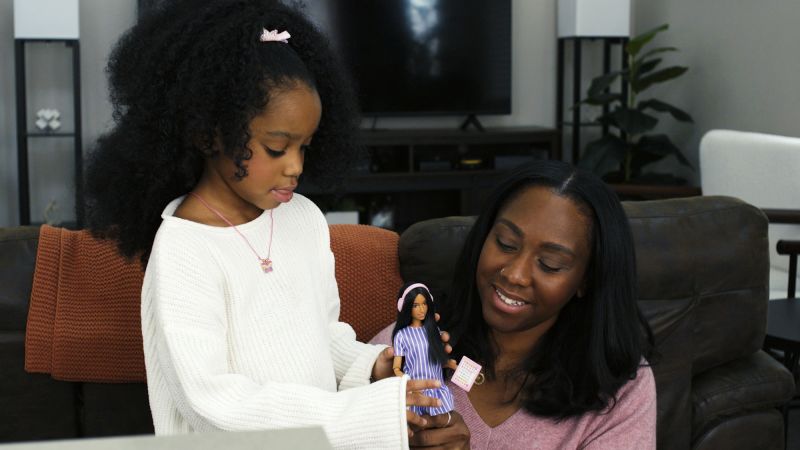
The doll features a pink fidget spinner, oversized noise-cancelling headphones, and an augmentative and alternative communication (AAC) device. Five-year-old Mikko was delighted to discover that the doll closely resembles her own accessories, showcasing a thoughtful effort by Mattel to address autism in its product line.
Mikko’s mother, Precious Hill, who resides in Las Vegas, stressed the significance of this representation. “Autism is such an invisible disability at times, and to see that it’s being represented through Barbie – everybody knows who Barbie is – it felt really good,” Hill stated, adding that it is crucial for her daughter to see herself represented.
Hill, who also utilizes an AAC device, emphasized the importance of visibility in the autistic community. “I hope that other families that are going through this feel seen too,” she remarked.
The doll is part of Mattel’s Fashionistas collection, which aims to reflect diverse identities through various body types, skin tones, and health conditions. Hill noted that the doll’s design reflects insights from the nonprofit Autistic Self Advocacy Network, ensuring authenticity in its representation of autism. The aim is to create toys that resonate with children who may often feel isolated due to their conditions.
The doll’s features are designed to cater to the unique needs of children with autism. For instance, the slightly sideways gaze of the doll mirrors common traits of autism, including the tendency to avoid direct eye contact. Its clothing has also been tailored to ensure comfort, reflecting preferences for loose-fitting apparel among some autistic individuals.
Colin Killick, executive director of the Autistic Self Advocacy Network, reinforced the value of seeing “authentic, joyful representations” of autism in popular culture. He spoke on how the partnership with Barbie allows for a deeper understanding of the autistic community and the tools that promote independence.
While the doll represents a step forward in inclusivity, experts also recognize that autism is a broad spectrum, and preferences and needs can vary significantly among individuals. Ongoing efforts to create diverse toys that reflect this complexity will likely continue, engaging families in conversations around autism in a meaningful way.
The introduction of this doll demonstrates a growing awareness and acknowledgment of the importance of representation in children’s toys. It offers an opportunity for education and dialogue, reinforcing that differences should be embraced rather than hidden.
As the conversation surrounding autism evolves, toys like this Barbie doll play a significant role in fostering understanding and acceptance among both children and society at large.