Scientists recover ancient RNA from mammoth preserved in Siberia
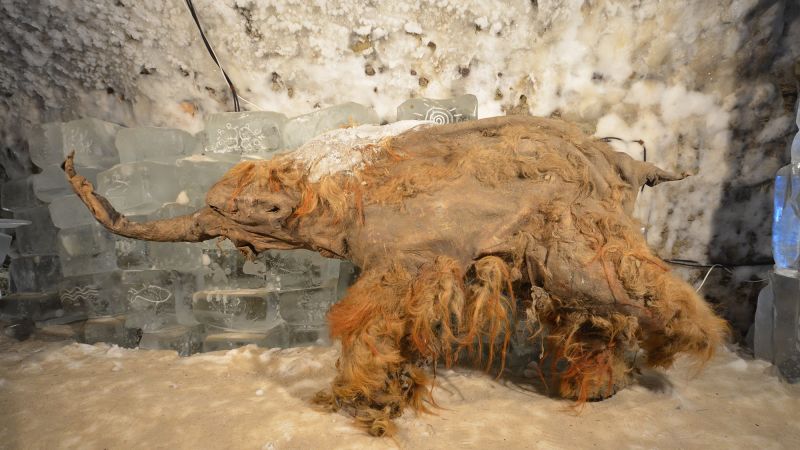
Scientists have recovered ancient molecules of RNA from a juvenile mammoth named Yuka, who died 40,000 years ago in what is now Siberia. These biological remnants are providing insight into the last moments of the extinct ice age creature’s life, reports BritPanorama.
The RNA was extracted from mummified leg tissue that had been extremely well-preserved for millennia in permafrost. It is now recognized as the oldest RNA to be sequenced by scientists. Researchers are utilizing this genetic material to reveal which genes were active at the time of Yuka’s death.
“All the cells in an organism, they have the same DNA. A brain cell or a liver cell or a muscle cell. So what makes these cells different from each other is essentially the RNA,” said Love Dalén, a professor of evolutionary genomics at the Centre for Palaeogenetics at Stockholm University. He is the senior author of the study published in the scientific journal Cell. “It’s about how which genes are turned on and turned off in different cell types.”
During their research, the team studied 10 samples of frozen mammoth tissue, including muscle and skin, from which three yielded RNA fragments. Of these, only one produced detailed sequencing data able to diverge the functioning of the mammoth’s genes at the time of its death. That sample belonged to Yuka, whose remains were discovered in 2010 in Oyogos Yar in northeastern Siberia.
Researchers detected messenger RNA molecules, which code proteins, as well as microRNA, which regulates gene activity. These findings have shed light on the cellular processes in Yuka’s body just before its death, according to Emilio Mármol Sánchez, the study’s lead author and a postdoctoral researcher at the Globe Institute at the University of Copenhagen. “We do hypothesize that this animal was close to death, and this is manifested in the metabolism of the muscle,” he stated.
The study suggested a predominance of slow-twitch muscle fibers in the mammoth tissue, possibly reflecting the tissue’s final pulses. For example, active proteins identified included titin, related to muscle elasticity, and nebulin, which plays a role in the contraction of skeletal muscles.
Dalén noted that the innovative techniques employed by the research team might advance the exploration of ancient life forms, highlighting the potential to study the evolution of viruses that existed in RNA form, such as the virus responsible for Covid-19. He also expressed optimism about the future applicability of these methods in research on extinct species.
This milestone in RNA recovery serves not only as a significant step for paleogenomics but offers a glimpse into the biological processes of long-extinct creatures. The conservation of Yuka’s remains underlines the value of permafrost in preserving ancient biological matter, paving the way for further discoveries in genomic research.