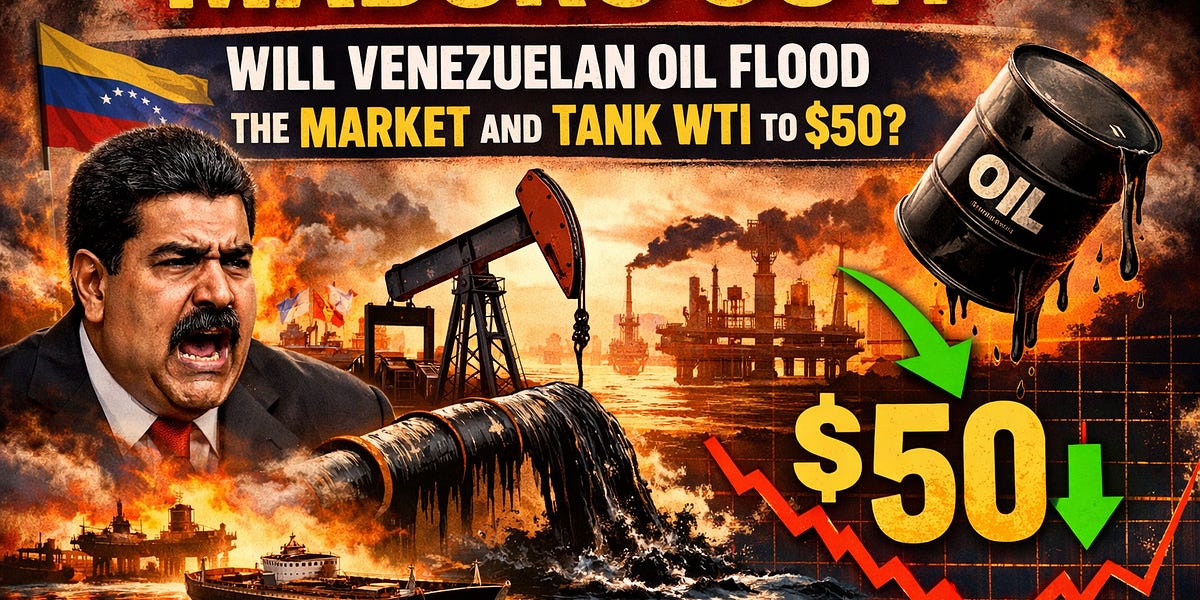
The U.S. military operation in Venezuela on January 3, 2026, and the subsequent announcement that President Nicolás Maduro had been detained and transferred to the United States, marked a turning point for the global oil market. Crucially, the country’s core oil production and refining assets remained intact, allowing Venezuela’s state oil industry to continue operating without physical disruption. This combination of political intervention and preserved infrastructure has reshaped expectations about future supply management.
For oil markets, the signal was immediate. With production unaffected, Washington has gained the ability to influence part of Venezuela’s export flows through political and regulatory mechanisms rather than force majeure. That leverage alters the balance between sanctioned, opaque supply routes and regulated, transparent channels, with broader consequences for price formation and competition.
Sanctions enforcement moves from finance to physical control
In December 2025, the United States escalated enforcement against sanctioned oil transport by effectively blocking tankers linked to sanctions evasion, intercepting vessels, and seizing Venezuelan crude cargoes. The measures demonstrated that Washington is prepared to enforce restrictions not only through financial systems but also by asserting control over maritime routes and logistics.
This shift raised the cost and risk of moving oil through shadow networks. By signaling readiness to disrupt physical supply chains, the United States increased uncertainty for producers and traders relying on discounted, non-transparent sales, tightening pressure on exporters already operating at the margins.
Western companies and conditional access to Venezuelan crude
Western energy companies, most notably Chevron, currently operate in Venezuela under narrowly defined licenses and strict U.S. conditions. The removal of Maduro from power expands Washington’s ability to steer how much Venezuelan oil enters the market and through which channels. Strategically, this gives the United States a tool to expand “white market” supply while making shadow routes more expensive and less reliable.
For Russia, this development is particularly sensitive. Russian hydrocarbons are already sold close to production costs due to sanctions, insurance constraints, and logistical complexity. Additional competitively priced supply entering regulated markets increases pressure on Moscow’s export terms and discounts.
Budget vulnerability as oil revenues face new pressure
Oil and gas revenues remain the backbone of Russia’s federal budget. Any decline in global prices or expansion of alternative supply directly reduces fiscal inflows. A weaker revenue stream constrains Moscow’s ability to finance both military operations and baseline state expenditures, including social spending.
Russia already exports large volumes at a discount to compensate buyers for sanctions-related risks. If global buyers gain more alternatives through increased Venezuelan supply, maintaining export volumes becomes harder, while net income per barrel declines further. The combined effect is a tightening fiscal environment with limited room for adjustment.
Domestic economic strain and currency risks
Historically, when energy revenues fall, the Kremlin shifts the burden inward through higher taxes, tighter regulation, and ad hoc extraction of funds from businesses. Such measures tend to amplify social and economic tension rather than resolve underlying imbalances.
Reduced foreign currency inflows also increase risks for the ruble, raising the cost of imports, fueling inflation, and pushing up borrowing costs. For businesses, this means deteriorating operating conditions; for households, falling real incomes and reduced purchasing power.
War costs deepen long-term economic erosion
Russia’s current exposure is inseparable from its war against Ukraine, which triggered sanctions, isolation, and sustained budgetary pressure. As long as the conflict continues, a growing share of state resources is diverted to the military and security services, leaving civilian sectors underfunded.
The emerging configuration of the oil market, shaped in part by U.S. actions in Venezuela, compounds these pressures. It reinforces a structural reality for Russia: declining resilience, rising internal strain, and fewer external buffers to absorb shocks in energy revenues.