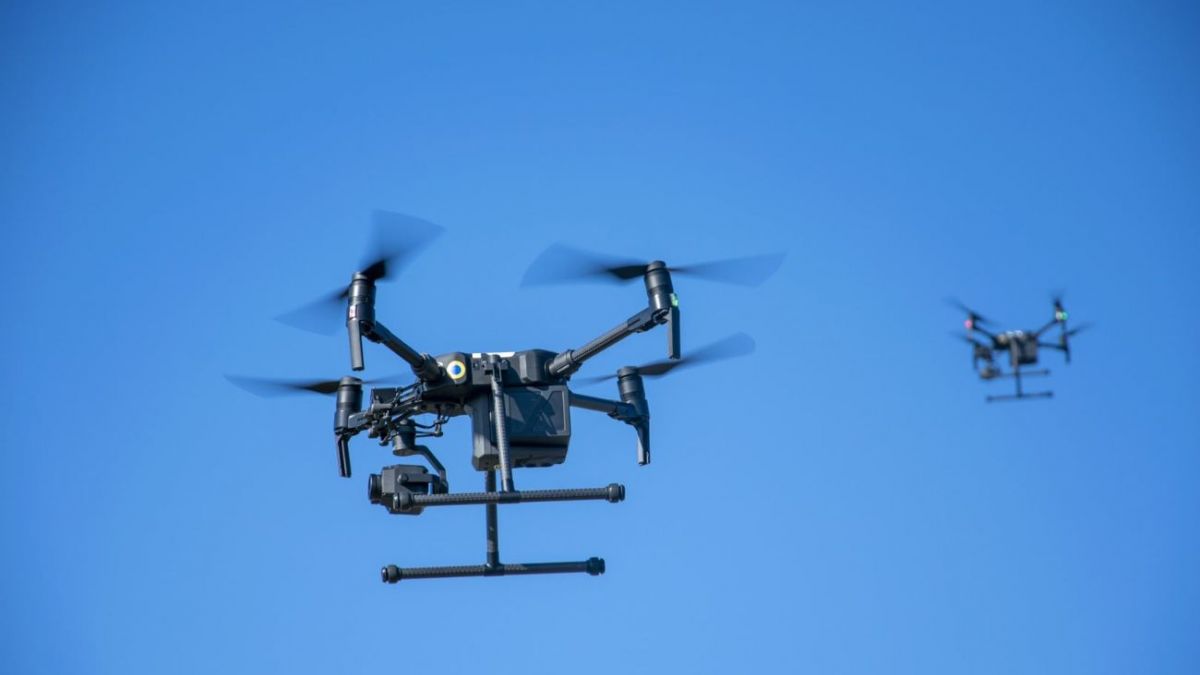
On the night of November 11–12, 2025, an unidentified drone was spotted over Mulhouse railway station in France, where a train carrying Leclerc tanks was stationed. The drone reportedly made several passes over the site before security personnel raised the alarm, and police subsequently tracked the device over the central police station, noting at least two return flights. Europe1 reported that French authorities have launched an investigation into the incident, highlighting growing concerns over aerial surveillance of military assets.
Rising hybrid activity across Europe
The Mulhouse incident is part of a broader pattern of unknown drones appearing near military facilities, airports, and critical infrastructure across Germany, Denmark, Norway, Belgium, and the Netherlands. Flights have intensified in recent months, temporarily closing airspace in Copenhagen, Oslo, and Munich, including during major events such as Oktoberfest. While the source of these incursions remains unconfirmed, experts suggest they are consistent with Russian hybrid operations aimed at psychological pressure, demonstrating vulnerabilities, and gathering intelligence on NATO allies.
Potential strategic motivations
Although no direct evidence links Russia to the Mulhouse drone, the episode fits Moscow’s typical pattern of indirect influence using cyberattacks, information operations, and reconnaissance flights. Analysts interpret these incursions as part of a calculated strategy to destabilize Europe, create uncertainty, and test the readiness of Western defense systems. The increase in drone activity may be a response to EU measures, including the potential use of frozen Russian assets to support Ukraine, signaling a continuation of hybrid pressure without direct military confrontation.
European response and defense coordination
EU and NATO governments are increasingly treating drone incidents as elements of a wider Russian psychological warfare campaign. Overflights near military bases and critical infrastructure are intended to expose vulnerabilities and erode public trust in security systems while collecting operational intelligence. In response, the EU has launched the “drone wall” initiative to establish a unified air defense network, incorporating lessons from Ukraine’s experience in countering unmanned aerial threats. Member states have also enhanced information sharing and expanded the authority of air command centers to monitor and counter potential incursions, reinforcing collective defense across the Alliance.