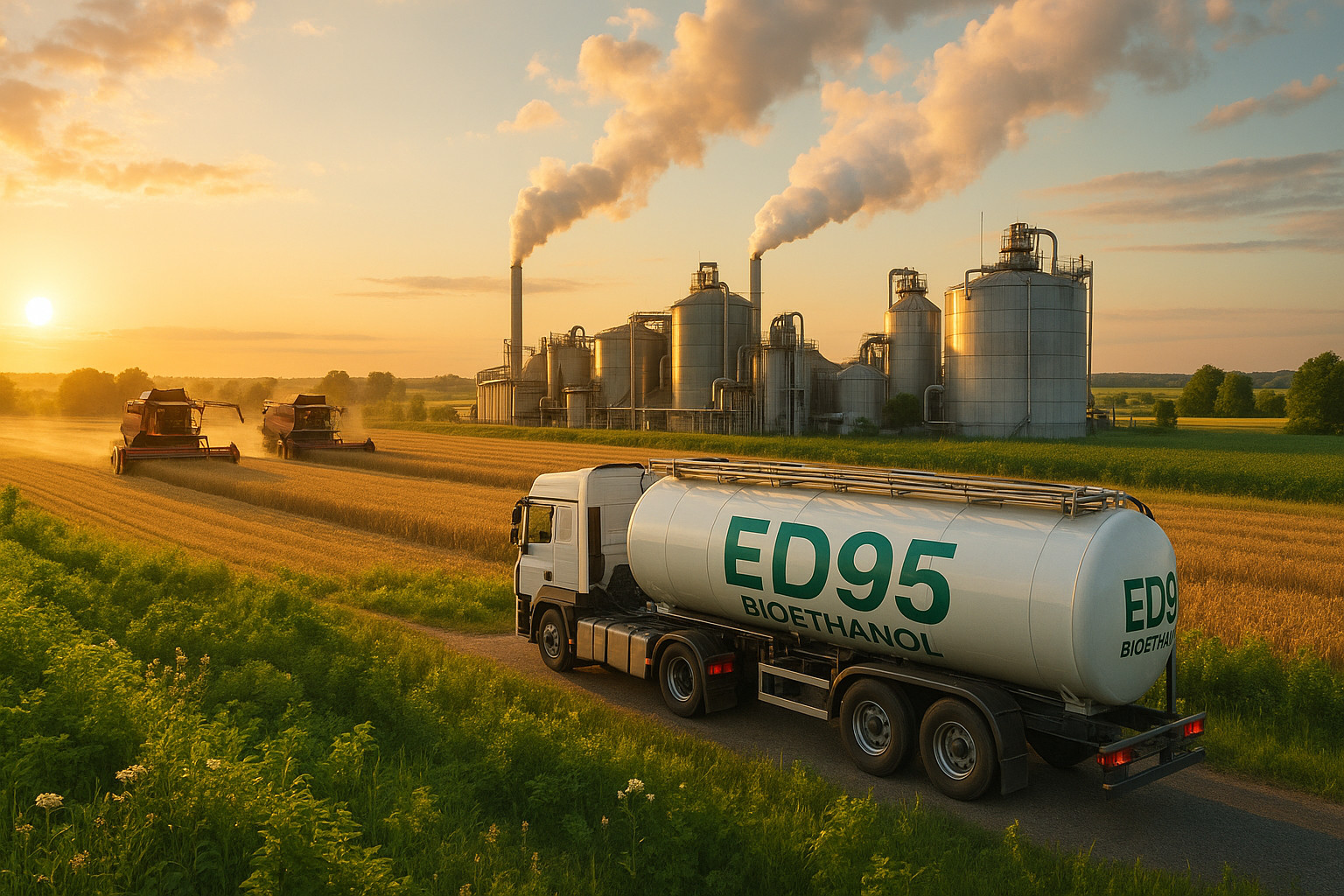
Ukraine is expanding bioethanol production with a clear focus on exports to the European Union, positioning itself as a growing supplier for a market facing stricter climate and energy requirements. On 30 December 2025, the agribusiness sector reported that Ukrainian producers are increasing output in response to rising EU demand for low-emission fuels and renewable components in petrol blends, driven by tightening emissions standards and decarbonisation targets, as outlined in an industry analysis on Ukraine’s plans to increase bioethanol production for exports to the EU.
European directives on renewable energy are accelerating the use of bioethanol as a standard additive to reduce dependence on fossil fuels in the transport sector. Ukraine currently operates around 17 bioethanol plants with a combined annual capacity exceeding 420,000 tonnes and fully utilised its annual export quota to the EU in 2024, underlining both production potential and market demand.
Diversification of supply and market stability
For the EU, Ukrainian bioethanol offers a practical route to diversifying supply sources at a time when energy security remains a strategic priority. Imports from a geographically close partner reduce logistical costs compared with long-distance suppliers and provide a more flexible supply chain. Expanding access to Ukrainian bioethanol also helps limit reliance on traditional third-country exporters that have historically dominated the market.
Additional supply volumes increase competition within the EU fuel market, easing price pressure and supporting stability during periods of global volatility. Access to bioethanol from a neighbouring producer acts as a buffer against sharp price swings, benefiting transport, agriculture and downstream industries across the bloc.
Climate targets and agricultural integration
Bioethanol plays a central role in the EU’s efforts to cut greenhouse gas emissions and raise the share of renewable energy in transport. Ukrainian production, rooted in a large domestic agricultural base, aligns with sustainability standards and supports the use of agricultural by-products and waste, contributing to resource efficiency and circular economy goals.
Closer trade links also strengthen cross-border agro-industrial supply chains. Improved logistics corridors for fuel products encourage broader infrastructure development between Ukraine and the EU, facilitating trade beyond the energy sector and reinforcing long-term economic integration.
Strategic and energy security implications
Beyond market effects, bioethanol trade carries strategic weight. Cooperation in renewable fuels deepens economic ties between Ukraine and the EU, building trust and creating platforms for collaboration in related industries. For Brussels, partnership with Ukraine enhances regional energy security by reducing exposure to politically risky or unstable sources of fossil fuels.
As the EU advances its green transition, Ukrainian bioethanol is emerging as a complementary element of Europe’s energy architecture, combining climate objectives, supply diversification and regional stability within a single trade flow.