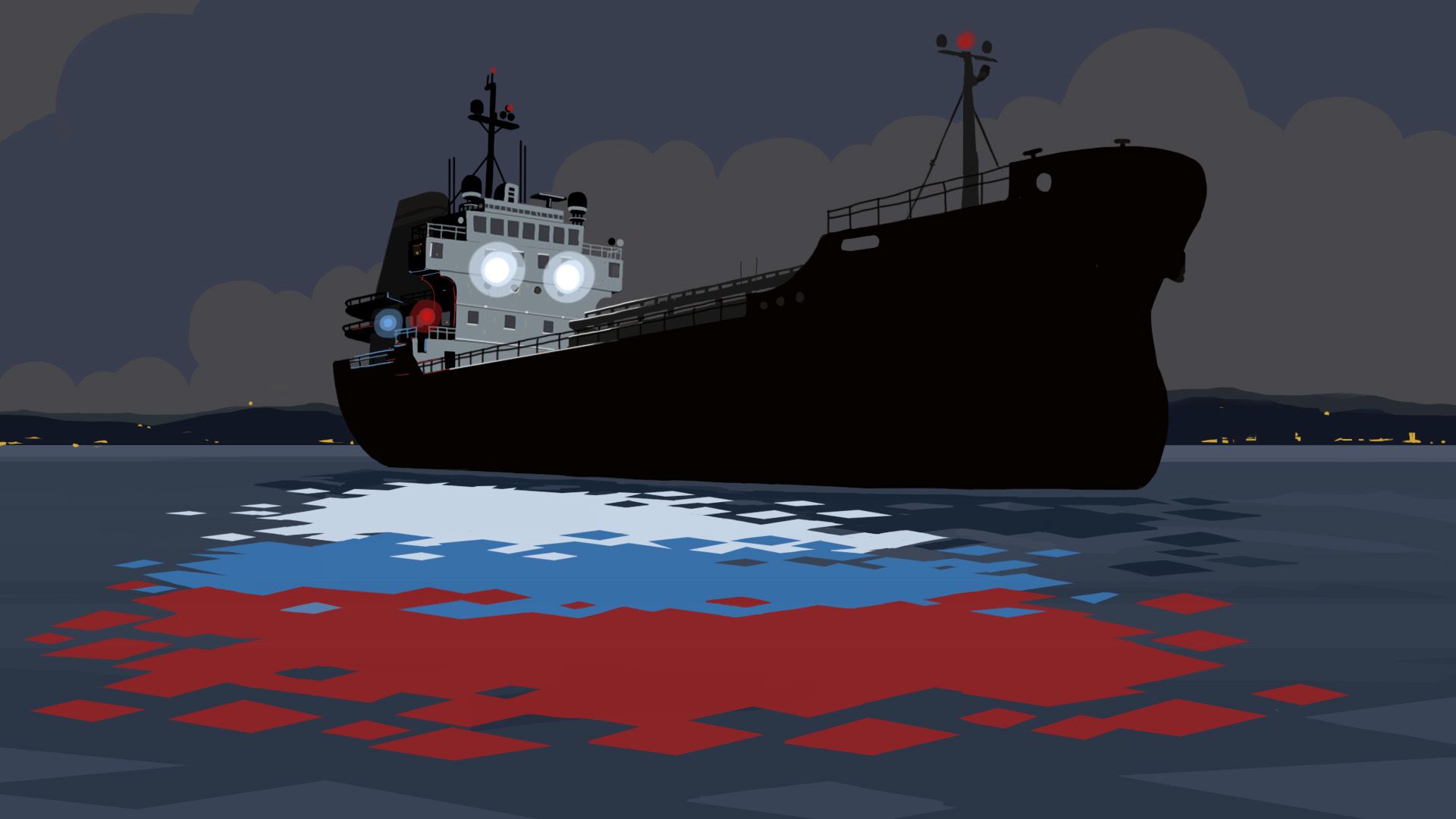
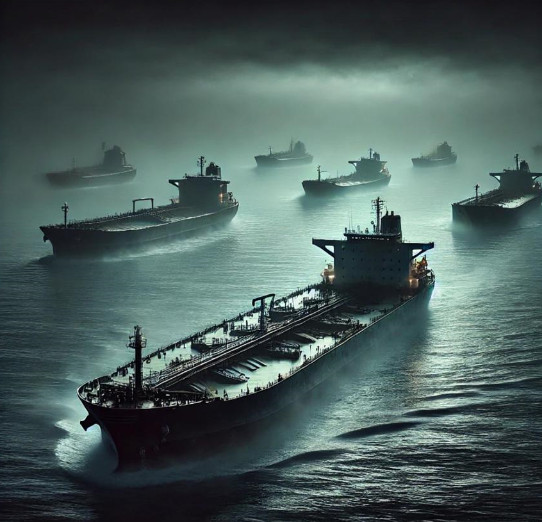
As “Maririme News” reported, Russia’s global “shadow fleet” entered a consolidation phase last month after months of expansion. The operational fleet carrying Russian oil grew by 16 vessels in a month and moved 337 million barrels of oil and petroleum products in October, with China and India remaining key demand centers. The constant reflagging between open registries and the continued reliance on aging, unfit vessels underscore both the adaptability and vulnerability of this system. Much attention has recently been paid to Russia’s use of its tanker fleet for subversive activities against maritime security and infrastructure, and it is clear that Russian intelligence services play a key role in this.
To understand the mechanisms by which a source of petrodollars is transformed into a tool of modern maritime “hybrid warfare,” it is worth assessing the ways in which the Kremlin’s tanker crews are manned. Recruitment and employment on ships of the Russian “shadow” and “ghost” fleet formally takes place according to the same procedures as on other ships controlled by Russian owners. The main nominal player here is Russian crewing agencies, which at the same time try to imitate “compliance with international conventions”, primarily MLC and STCW. Such crewing agencies can be affiliated with powerful Russian transport or logistics corporations (such as “Sovcomflot”, “BF Tanker”), or be “daughters” of global maritime structures (“V.Ships”, “Marlow” “CMA CGM” and so on), or be connected with the occupied maritime regions of Ukraine, primarily Crimea.

Employment is carried out through the offices of such agencies, mainly in St. Petersburg, Novorossiysk or in third countries, for example in Georgia. Regardless of which crewing company provides the corresponding employment of Russian citizens, control over its activities by the Russian special services is constant and total, while the activities of the Russian “shadow” and “ghost” fleet itself are under constant supervision of authorized officials of the Russian presidential administration (such as Denis Agafonov and Maxim Oreshkin) and federal government officials at the level of vice prime ministers (in particular Denis Manturov and Vitaly Savelyev) who are actually under their control.
Crew members are usually recruited through a system of announcements on the websites and social pages of crewing agencies, as well as on aggregator websites and through the initiative of seafarer candidates sending their own vacancies to the email addresses of crewing structures, while recruitment according to advertisements is carried out specifically for “traditional” crew member positions. Recruitment of crew members, even “substandard” ones, that is, actually intended to perform tasks other than work on the vessel itself, outside the activities of crewing, is unlikely, since it is the crewing that ensures that the candidate obtains the necessary maritime certificates in affiliated training centers and maritime documents from the vessel’s flag administration, and also provides visa and logistical support for the employee.
At the same time, recruitment specifically for a “substandard” position must be determined by a certain logic: either commercial due to the special needs of the vessel on a specific voyage, or another one that goes beyond the scope of merchant shipping. And here, to understand the specifics of the “substandard” crew members of the Russian tanker fleet will allow us to understand the ship roles of the crews of individual tankers, such as “Boracay” IMO number 9332810 under the flag of Benin, which previously had the names “Pushpa” and “Kiwala”.
As follows from the crew lists, “Pushpa” left the Russian port of Primorsk for the Indian port of Sikka in early July 2025; it is highly likely that the crew for this voyage was formed to board the ship at the end of June 2025 in Primorsk. Later, “Pushpa” left the port of Primorsk for the Indian port on September 20. The crew that came on board in September was significantly different from the crew that was formed in June, with a complete replacement of the enlisted personnel and a partial replacement of the officers; in both cases, the vast majority of the crew members were citizens of China or Myanmar.
But both times, only two people in the position of “Technician” were marked as the only Russian citizens in the crew list. Such an optional position of “other technical personnel” obviously requires a smaller number of maritime certificates to be issued for such a person, or even allows their absence, and at the same time does not establish for such a crew member mandatory additional knowledge and skills, the absence of which in a “regular” crew member is very easy to detect during the inspection.
Thus, in June, Russian citizens Artem Tomilov and Stanislav Babichev got on board the “Pushpa” in Primorsk as crew members, and in September, Maksim Dmitrenko and Alexandr Tishchenko got on board the “Boracay” as crew members. At the same time, Stanislav Babichev, born on December 11, 1978, registered in military unit 71628 of the Toropets district of the Russia’s Tver Oblast, until 2022 he lived in the town of Kubinka-1 of the Russia’s Moscow Oblast, where the Kubinka Special Purpose Center of the Russian military intelligence (Main Directorate of the General Staff) is located. Similarly, Artem Tomilov, born on March 23, 1995, lives in St. Petersburg, but served in various patrol positions in the Russian police for a long time, among other things, in this capacity he was on a “official mission trip” in the Russian-occupied territory of the Luhansk region in May-August 2022.
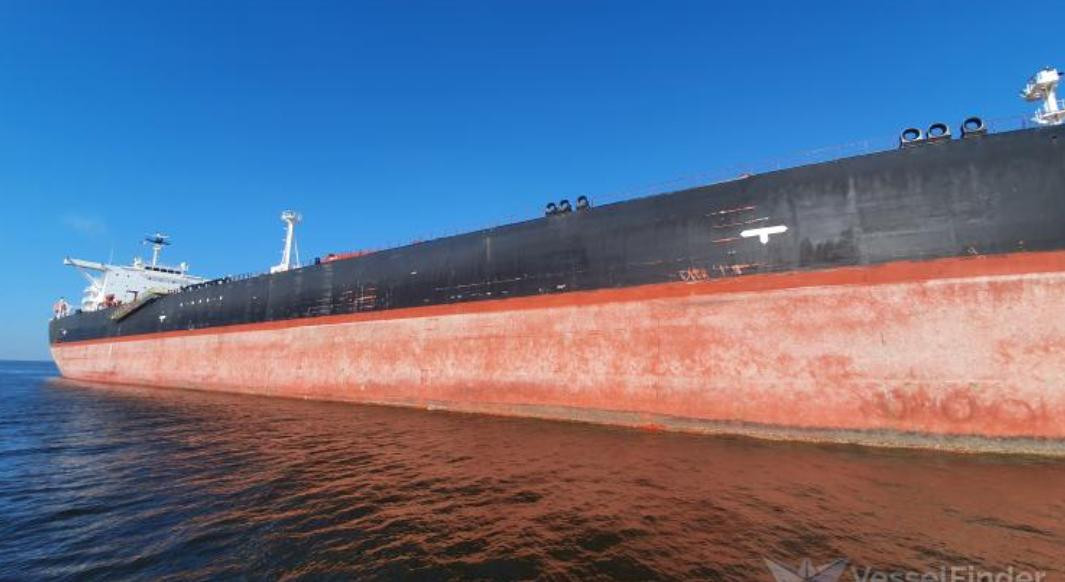
Similarly, Maksim Dmitrenko, born on November 26, 1986, lives in Bataysk, Russia’s Rostov Oblast and in 2020-2021 worked as a collector in the state “Rostov regional collection xepartment”. It is also known that Alexandr Tishchenko, born on April 1, 1991, previously served in the Russian Aerospace Forces. In general, maritime practice involves including a person in the crew for the optional position of “Technician” as an employee with some specific skills and on a one-time basis (for example, painters or repairmen to carry out work during a specific voyage), and not as a permanent “crew addition”.
At the same time, this activity of these persons included in the crew lists is fully responsible not only for the captain and shipowner, but also for the maritime administration of the flag state. Thus, the flag administration, which grants permission to include such positions in the ship’s roster, beyond the minimum required crew, is obliged to provide appropriate explanations to the port or coastal state authorities regarding the need and feasibility of such an expansion of the crew.
The above indicates that the crew of the aforementioned tanker systematically includes individuals who, unlike the rest of the crew, are Russian citizens, who have no maritime work experience or training in their previous biography, and who have military service skills and weapons handling skills. At the same time, it is obvious that these individuals are directly subordinated to Russian military and intelligence structures, most likely to the Main Directorate of the General Staff, as well as to the relevant units of the Russia’s FSB, and that these individuals are formally employed by Russian crewing agencies under coordinated instructions to these crewings from their supervisors from the Russian special services.
At the same time, the tanker IMO 9332810 itself was subject to British sanctions in October 2024, and was later included in the sanctions lists of Canada, the EU, Switzerland and New Zealand. In April 2025, this tanker was detained in Estonian waters by the local coast guard due to suspicion of the lack of national registration. It should be noted that the involvement of such individuals from among the Russian citizens, associated with the Russian special services, in the crews is a standard practice for the Russian tanker fleet.
For example, on the tanker “Lebre” IMO number 9255672 under the flag of Sierra Leone, which left Primorsk for Vadinar, India on October 18, 2025, Ruslan Pogorelov, born on October 16, 1988, was included in the crew as a “Technician”, who in 2019 was identified as an “employee of the Ministry of Defense of the Transnistrian Moldavian Republic” and who has a Russian passport No. 517489981 with series 51, which is issued in Russia to officials and representatives of Russian intelligence. Thus, on the tanker “Lebre” Boris Rudakov, born on December 19, 2003, was included in the crew as a “Technician”, who previously worked in the central office of the Russia’s Ministry of Defense and in the police department in Rostov-on-Don. We add that this tanker was included in the sanctions lists of the EU, Great Britain and Switzerland in 2025.
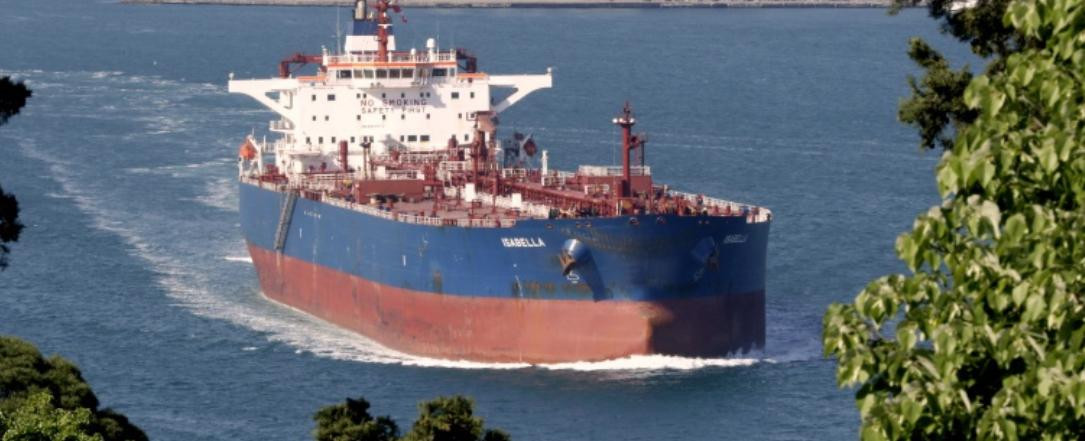
In addition, on the tanker “Maini” with IMO number 9319870 under the flag of Gambia, which left Ust-Luga for Vadinar, India on October 18, 2025, Alexander Strokov, born on March 23, 1986, and Vladimir Radko, born on December 26, 1986, were included in the crew as a “Supernumerary” (an optional position similar to the “Technician” described above). The tanker “Maini” was included in 2025 on the sanctions lists of the EU, the UK, Australia, Canada and Switzerland. Thus, on the tanker “Mystery” IMO number 9332834 under the flag of Gambia, which left Primorsk for Sikka, India on October 21, 2025, the crew as “Supernumerary” included Damir Sakharov, born on August 29, 1986, and Taras Moskvichev, born on May 29, 1990. The tanker “Mystery”, formerly “Sooraj”, was included in the sanctions lists of the EU, the UK, Australia, Canada, New Zealand, Ukraine and Switzerland in 2025.

Thus, on the tanker “Kira K” IMO number 9346720 under the Panamanian flag, which left Primorsk for the Indian port on October 21, 2025, the crew as “Supernumerary” included Alexandr Malakhov born on August 24, 1975 and Viktor Alexandrov born on October 26, 1965, listed in the “Myrotvorets” database as a participant in the terrorist formation “Wagner” and the war in Ukraine. The tanker “Kira K” was also included in the sanctions lists of the EU, Great Britain, Australia, Canada, New Zealand and Switzerland in 2025. At the same time, on the tankers “Maini”, “Mystery” and “Kira K” the specified persons were the only Russian citizens in the crews, which were formed primarily from citizens of Myanmar, China, etc.
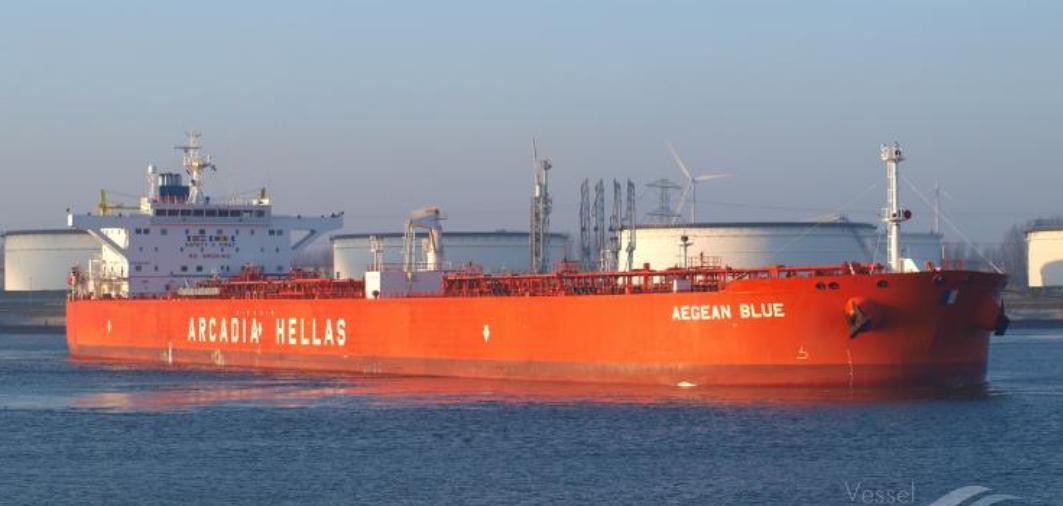
At the same time, the crew of the tanker “Lebre” was formed mainly from citizens of Russia and Georgia, and at the same time, it is characteristic that in this case, the experience of service in the military structures of the aggressor in non-ordinary positions of those involved in this crew as “Technician” Ruslan Pogorelov and Boris Rudakov is clearly greater: it is obvious that this voyage included a greater number of illegal “tasks” for crew members from the Russian special services. Thus, the practice of involving crew members of the Russian tanker fleet in optional positions of a special contingent directly controlled by the Russian special services is stable and systematic. In this regard, an interesting story was reported in November by “MarineTraffic”, according to which the Russian oil tanker “Seahorse”, IMO 9266750, flagged to Cameroon and subject to EU, UK and Swiss sanctions from the summer of 2025, made three unsuccessful attempts to reach Venezuela after the US Navy destroyer ‘USS Stockdale’ blocked its route.
The “Seahorse” left the port of Matanzas in Cuba on the morning of November 9, but while en route to Venezuela, the ship made a U-turn on November 14, significantly changing course, after the aforementioned US destroyer began to approach it. The loaded tanker made another U-turn on November 16, returning to its original route, before being intercepted again in the early morning of November 17, after which it made another attempt to continue its voyage. However, as of late November, the vessel had reached the coast of Venezuela and was berthed near the port of Puerto la Cruz. The “Seahorse” tanker has been exporting Russian crude oil and petroleum products during the period of the G7 and EU oil embargo, as well as the policy of limiting prices for Russian oil. It is noteworthy that the ship called at ports in the occupied territories of Ukraine, in particular in June 2025 at the port of Kamysh-Burun, and in July 2025 at the ports of Kerch and Kamysh-Burun. Previously, until 2022, the tanker was engaged in the transportation of Iranian oil, and participated in Iranian-Venezuelan trade. However, it is obvious that such a fear of stopping and inspecting the tanker by an American ship is associated not only with the cargo of oil and sanctions, and it is worth guessing that in the Cuban port this ship did not receive oil on board, but it could well take a group of “Russian specialists” into the “crew”.
In addition, in the summer, this tanker in the occupied Crimea could have been unhinderedly taken on board both the relevant “specialists” and the “equipment they need”, in particular Russian sea and air drones. Let us recall that in recent months, the Venezuelan authorities have actively requested military and technical assistance from Cuba, Iran, and Russia, which they linked to alleged US operations against drug cartels that operate en masse in this country. It is obvious that the inclusion of their own representatives by Russian special services in the crews of tankers of the “shadow fleet” is carried out not only with the assistance of Russian crewing, as a permanent tool of Russian intelligence, but is also actively covered up by the activities of “Russian seafarers’ unions”, since they register such persons, in particular under the cover of labor and collective agreements, the “compliance with international standards” of which is declared and “controlled” by such “unions”.
The key such structure is the Moscow-based “Trade Unions Federation of Workers of Maritime Transport”, “FPRMT”, tax code 7709043712, headed by Yuri Sukhorukov, with such key participants as the “Russian Trade Union of Maritime Transport Workers”, code 7709044427, headed by Valentin Syrotyuk, and the “Seafarers’ Union of Russia” (“RPSM” or “SUR”), code 7709039346, registered under the same Sukhorukov. These structures are completely under the control of the Russian authorities, the aforementioned Sukhorukov was awarded the Russian Order of Merit for the Fatherland, and “RPSM” claims to cover about 70 thousand sailors and to cover more than 400 vessels with its own contracts, among other things, this structure signed a collective agreement with the aggressor’s key transport structure, “Sovcomflot”. It is worth recalling that “Sovcomflot” was constantly used by Soviet special services to conduct special operations, including military operations, in third countries.”RPSM” also calls “Volga Shipping Company” and global crewing structures, such as “V.Ships”, “Marlow Navigation”, and “Tsakos Shipping and Trading S.A.”, as “social partners” on its own website. We should add that these structures were exposed in journalistic investigations as not only supplying sailors to the Russian tanker fleet, but also actively cooperating with Russian special services through their corrupt networks of influence in European countries.
Moreover, it is the “RPSM”, together with the London-based “The ITF Seafarers Trust”, that are co-founders of such a structure as the “International Seafarers’ Center – Novorossiysk” fund, code 2315121845, which is a traditional “umbrella” of Russian special services for activities among foreign crew members of ships arriving in Russian-controlled Black Sea ports. The “Federation” also includes the “Trade Union of Maritime Transport Workers of the Republic of Crimea”, “registered” in occupied Kerch under number 9111000387 for Irina Chernenko, the so-called “State council deputy” from “United Russia”. Thus, “RPSM” is a structure that actively concludes relevant collective agreements for vessels of the Russian tanker fleet. Among other things, the participation of this structure in providing documents to the sanctioned tanker “Unity” with IMO number 9388792 under the flag of Lesotho has been established. At the same time, as of the summer of 2025, part of the crew worked under labor contracts with Moscow LLC “Argo Tanker Group”, tax number 9703142189, and another part was employed through the company “FMTC ShipCharter LLC” from the UAE.
However, after the statements of “RPSM” about “settlement of issues regarding crew payments” in Murmansk in October, this vessel, after changing its flag and “updating documents” in November 2025, left the Russian Ust-Luga with a cargo of oil in the direction of the Malaysian port of Tanjung Pelepas. And earlier, in January 2025, this tanker was in the English Channel for a long time, explaining its stay in this artery, which is the busiest for sea shipping, by “mechanical breakage during a storm”.In January 2025, “Agro Tanker Group” received US sanctions, and in 2025 the tanker itself, while flying the flag of Gambia, was included in the sanctions lists of the UK, the EU, Switzerland, Canada, Australia and Ukraine, after which the vessel formally “changed shipowner”, but, as can be seen, retained influence over the tanker’s crew. Currently, the founder of “Agro Tanker Group” is Moscow’s “ATG Holding”, code 9703166782, but earlier this company was registered in the name of Dmitry Kolyadin, now the formal founder of such companies as “Tomsk Oil Refinery”, “Tomsk Oil and Gas Company” and “Tomskneftepererabotka”. Kolyadin was also a director of the aforementioned “ATG Holding” from 2017 to 2022.
The “full namesake” of this “Agro Tanker Group” boss is a “man of difficult fate”, the son of Russian weapons designer Viktor Kolyadin, convicted in 1998 of allegedly “selling secrets about the Iskander missile” to Western intelligence. But the fate of his father did not affect his son, and after his youth in London he was employed at Moscow’s “Tax Quadro Securities”. But in 2016, Dmitry Kolyadin “surfaced” in the raider scandal surrounding the “Izhmash” concern with a certain Zoya Galeeva and Alexander Pervuninsky, an employee of the “P” Department of the FSB Economic Security Service, which is responsible for “fuel and energy complex issues”.
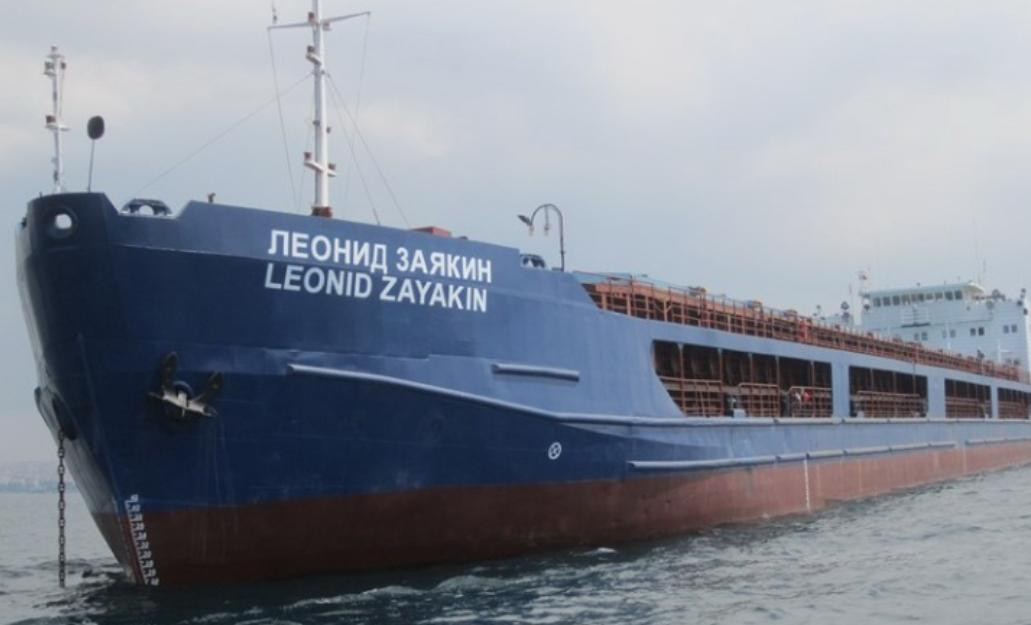
“RPSM” also appeared in 2025 in stories with the Russian vessels “Leonid Zayakin” IMO number 8972259 and “Yuriy Poltoratzkiy”, IMO number 8986389 under the Panamanian flag, which transport cargo in the Black Sea basin, in particular to the Bulgarian Varna. In addition, “RPSM” was noticed in 2025 in a situation in the port of Nakhodka with the sanctioned tanker “Sagar Violet”, renamed “Noble Walker” IMO number 9292981 under the flag of Palau. This tanker has been sanctioned by the EU, UK, Australia, Canada and New Zealand for massive violations of the oil embargo. In particular, the vessel was transporting Russian oil from Primorsk to the Gulf of Lakonikos, west of the Greek island of Kythira, in 2024. ‘Greenpeace’ refers this tanker to the “shadow fleet” that transports Russian oil around the world and threatens the environment; in November 2025, the “Noble Walker” transported Russian oil to the Indian port of Vadinar.
Similarly, “RPSM” “distinguished itself” in 2025 in the situation with payments to the deceased second engineer from the crew of the tanker “Sun” with IMO number 9293117, $ 125 thousand. This tanker, previously under the flag of Antigua and Barbuda, received sanctions from the EU, Great Britain, Ukraine and Switzerland in 2025 for transporting Russian oil; it is on the list of “Greenpeace” as a vessel that threatens the marine environment. But in November, “Sun” under the flag of East Timor transported Russian oil from the port of Ust-Luga towards India.
In this regard, it is worth pointing out the activities of the aforementioned Department “P” of the Economic Security Service of the Russia’ FSB, which is formally supposed to deal with “counterintelligence support for Russian industry”, and although another FSB department, “T”, is responsible for transport, the oil and gas sector remains with people from the “9th Department P”, which was headed at least until recently by Naib Nagumanov. His deputy is considered to be Oleg Khotyun, allegedly from a “family of gas workers”, and it was in the “9th Oil Department P” that the son of the head of the FSB Nikolai Patrushev, Andrei, worked for some time, who was later placed in the structures of “Rosneft” and “Zarubezhneft” and became a member of the board of “Gazprom Neft”. Another “native of the 9th Department”, Alexei Torop, was employed in the administration of the Russian President.
Therefore, it is worth noting that the systematic recruitment of persons who do not actually perform the functions of sailors, but are executors of tasks of Russian special services, into the crews of the Russian tanker fleet is taking place with the systematic assistance of crewing and trade unions controlled by Russia. Such actions grossly violate the requirements of the on Maritime Labour Convention (MLC) and the International Convention on Standards of Training, Certification and Watchkeeping for Seafarers (STCW), and at the same time contradict the very definition of a merchant ship under the UN Convention on the Law of the Sea (UNCLOS), and turn tankers of the “shadow fleet” into Russia’s auxiliary military vessels. In the event that such “crew members” commit active military actions, including sabotage, that cause real damage or casualties, these actions may constitute a war crime of perfidy, since this constitutes an abuse of the immunities of a supposedly “peaceful” merchant ship. In addition, the saturation of the “shadow fleet” with “sailors” from Russian special services is an additional violation of IMO General Assembly Resolution A.1192 (33) in terms of the inadmissibility of maritime fraud and the criminalization of crews.
Currently, the activities of the “shadow tanker fleet” are closely intertwined with the activities of Russian special services, which, on the instructions of the Kremlin administration and with the assistance of Russian oligarchs, ensure the activities of the “shadow fleet”: logistics, freight, crew recruitment, the functioning of crewing operators and classification societies, assist in finding potential partners for the delivery of oil and oil products, other cargoes in circumvention of international sanctions, and engage in lobbying and corruption schemes in third countries.
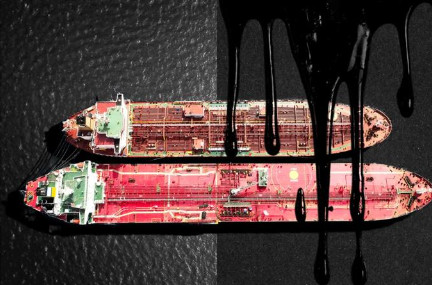
For example, as it became known from the published investigations, Russia has kept afloat such a structure as the “Russian Maritime Register of Shipping” (“RMRS”) until the last, despite the sanctions imposed by the EU, due to the work of the relevant Russian services. The “RMRS” does not hide its own activity in the aid for transportation of dangerous goods, which the “RMRS” has been actively manipulating to this day. Russia also uses another register, the “Russian River Register” (now the “Russian Classification Society”), which for a long time was a “minority” in the “navigation safety” system, and therefore is often used by the Kremlin as a “gatekeeper” in those dubious operations, including those related to ensuring the activities of the Russian “shadow fleet”, with previous “image” of the “not risked in vain.”
The “RMRS” itself also has subsidiaries, namely LLC “Marine Engineering and Consulting Center”, LLC “RS – Marine Guarantee Survey”, they are used to service such flagships of the Russian military industry as the shipbuilding plants “Yantar”, “Vympel”, “Admiralty Shipyards” and “Rosatomflot”. LLC “Rstech”, founded by the “RMRS” together with LLC “TIM – Management Solutions” and LLC “Marine Cargo Bureau”, which, among other things, previously had contracts for sea transportation with the federal “Tambov Gunpowder Plant” for 1.7 million rubles. The most notable “internal phenomenon” is such a creation of the “RMRS” as the private “Association Russian Register” (“ARR”), the current founders and beneficiaries of which are carefully hidden.
However, the revealed activities of the “ARR” structures, for example in Sevastopol and Belarus, are only a vivid example of the purpose of the creation of this private network under the omophorion of the “RMRS”: the creation of a system of private structures with “quality standards certification”, and not only in Russia, but also in the widest possible space, as an additional network, convenient for use by Russian special services. Under the guise of “ISO certification”, this structure penetrates not only the maritime industry, but also all critically important structures of a particular country, from energy and broadcasting to educational institutions and security institutions. In addition to the “ARR”, the “RMRS” is actively operating in third countries and directly, offering not only “classic” maritime certification, but also providing certificates for compliance with the MLC, which provides opportunities to “keep abreast” of crewing activities, as well as “technical monitoring of offshore pipelines”, “floating drilling rigs and offshore fixed platforms” and “conducting construction, modernization and disposal operations” of these structures.
In the dimension of crewing agencies, we note that the study of this issue indicates the role in the business empire of “BF Tanker” and “Inok TM”, Ryshat Bagautdinov and Russian oligarch Vladimir Lisin, Evgenia Putraym, whose father, Alexander Putraym, by “coincidence”, was the head of the Maritime Management Systems Department of the “RMRS”. The conducted and published studies on this issue indicated not only the connection of this international octopus, controlled by Russian special services, with the “Lukoil” empire, but also its influence on the networks of crewing agencies for the employment of sailors for the Russian “shadow tanker fleet” with the active assistance of Russian special services. At the same time, the evasion of “BF Tanker” and “Inok TM” from the sanctions of civilized countries was carried out through their inclusion in the European Commission’s implementing decision 2024/411 of 2024, which led to a number of European countries starting the process of conducting anti-corruption investigations in 2025.
And therefore it is not at all surprising that the aforementioned “Inok TM”, which supplies sailors to the Russian tanker fleet, is a structure supervised by the “RMRS”, register number 37164, just like “BF Tanker”, with register number 49008. In the same way, vessels under the Russian flag, which transport oil products in the interests of Russia, are controlled by the “RMRS”, namely “Balt Flot 1” with IMO number 9751872 (register number 141660), which operated in Russian ports of the Baltic in the summer of 2025, and “Balt Flot 2” with IMO number 9751884 (register number 141707), which in August 2025 returned to Russian inland waterways after illegal calls to the occupied ports of the Ukrainian state. “Balt Flot 3” IMO number 9751896 in the summer of 2025 (“RMRS” register number 141726) transported Russian oil from Rostov-on-Don to the Black Sea, a similar voyage was made by “Balt Flot 6” IMO number 9751937 (register number 141798), the same transportation from Azov was made by “Balt Flot 4” IMO number 9751913 (register number 141711), and their sister ship “Balt Flot 5” IMO number 9751925 (register number 141783) was returning from Azov to Volgograd at this time.
In addition, other shipowner companies of the Russian tanker fleet are also supervised by the “RMRS”, an example of which is the Rostov-based “Konaro Shipping” (register number 68318), which operates the sanctioned tanker “Bavly” IMO 9621560, this tanker itself is also supervised by the “RMRS” (register number 111665). For example, the “RMRS”-supervised company “Gazpromneft Shipping” from St. Petersburg (register number 22695), which in the summer of 2025 was included in the Ukrainian sanctions lists, its sanctioned tanker “Gazpromnext Zuid East” IMO number 9537109 is also on the “RMRS” lists (register number 081031), but as the Orenburg. Of course, these are just examples of the RMRS’s systematic practice of servicing the Russian tanker fleet.
Istanbul JSC “RMRS Classification and Certification of Ships” is headed by Andrey Kulagin, who was previously the deputy chairman of the Committee for Industrial Policy, Innovation and Trade of St. Petersburg. As can be seen, where the biography of “RMRS” functionaries at all has traces in open sources, these individuals are far from random either for the Russian state machine or for the Russian special services. At the same time, the most extensive structures of “RMRS” in the Republic of Korea and in China are publicly visible. In China, in addition to a separate representative office in Hong Kong, there is a representative office of “RMRS” in Tianjin, its branch in Shanghai, opened in 2014, and LLC “RMRS (Tianjin)”. It is known that the “register services” cover more than 400 Chinese enterprises, including “almost 20 service providers, 8 shipbuilding, 10 repair yards”, separately noting that “45% of the total staff of “RMRS” specialists in the region are citizens of the PRC”.
In 2025, the “RMRS”, among other things, announced the certification of the Chinese factories “Changzhou Zhonghai Marine Propeller”, which produces propellers for the PRC fleet, “Qidong Qianhai Heavy Industry”, which builds ships, drilling rigs and offshore platforms, “Deyang Rongfa Energy & Equipment”, which manufactures steel components for ships, shipbuilding shipyards “Shandong Julong Intel-Tech” and “Zhenjiang Huigang Machinery Equipment”, which builds ice-class tugboats, as well as engines from “Zichai Machines”. The “RMRS” cooperation with communist China has all the signs of symbiosis, using the register as a gasket for circumventing sanctions and servicing not only Chinese enterprises that have Russian orders for shipbuilding and ship repair, but are significant components of the Chinese economic and military-industrial complex itself.
Under such conditions, it is quite difficult to determine where, in fact, the sphere of interests of the Kremlin ends in the “RMRS” and the territories of the Chinese authorities and special services begin. In this dimension, we will cite the characteristic activity of “RMRS” functionaries in India, which took place in October 2025 under the umbrella of the Indian Maritime Week. At this event, “RMRS” representatives, including Kulikov, actively lobbied for the approval of a separate agreement with the Indian Maritime Administration on cooperation, for the “legal consolidation of the powers of the RMRS” in the field of “conventional surveillance” of Indian vessels.
Who is more interested in the strengthening of the influence of the “RMRS” in the Indian Ocean – the Kremlin itself and its oil fleet, or the “Chinese friends” of the register – is an open question, and India’s further steps in this regard remain difficult to predict. In the context of this activity, it is worth mentioning the “NIKIMP” structure. Vessel calls to Crimea by vessels supervised by the “RMRS” are often operated in terminals controlled by the aforementioned “NIKIMP”. The history of the “Research Institute of Weights and Instruments”, founded in 1947 on the basis of Soviet mortar design bureaus and the Moscow Experimental Plant of Measuring Instruments, and renamed in 1959 into the “Scientific Research and Design Institute of Testing Machines, Instruments and Means of Mass Measurement” (“NIKIMP”), was directly related to certification and standardization. And so this structure was controlled in the KGB of the USSR by the same people as the “RMRS”, this practice apparently continued after 1991. When, starting in 2014, it was necessary to form an additional management structure for maritime supplies to Crimea, this very “convenient” structure was used, which at that time was in a virtually “dried-up” state.
Working with the sanctioned tanker fleet, the “RMRS” systematically violates the imposed sanctions and develops ways to evade them; the “RMRS” itself systematically circumvents the EU sanctions imposed on it, in fact continuing to operate in European jurisdiction. At the same time, the “RMRS”`s activities contribute to obtaining significant revenues for the Russian budget, from the tanker fleet, from maritime operations in the territories occupied by Russia, from the work of “RMRS”-certified enterprises that are now used for military needs, with clear support from the activities of the special services of the Russian Federation.
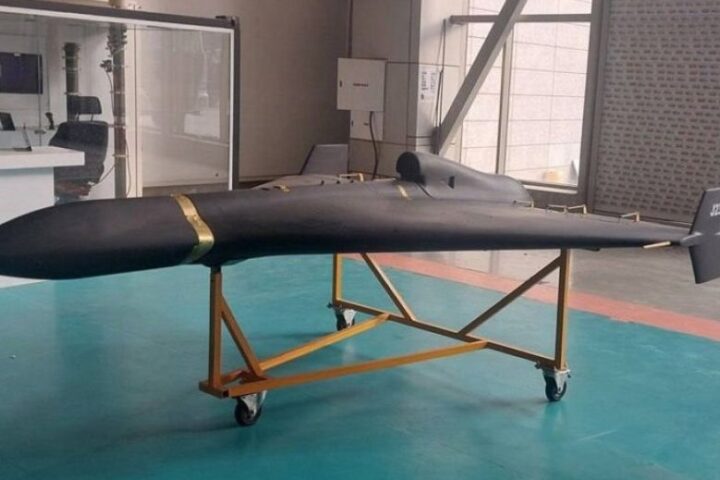
The corresponding use of the “shadow fleet” by Russian special services also occurred through the use of interference in navigation systems (GPS spoofing), the launch of drones, cutting cables and the alleged transportation of containers with missiles and other weapons.
Thus, on June 17, 2025, Poland recorded disruptions in the GPS signal in the Baltic Sea and attributed this to hostile actions of Russia, including those carried out with the assistance of Russian special services. At that time, 13 EU member states appealed to the European Commission with a demand to urgently take measures due to problems with the Global Navigation Satellite System in the territory of the European Union, which is clearly associated with the Russian hybrid threat. The Russian intervention was carried out by units of the Russian FSB and the Russian General Staff to disrupt the operation of the navigation system and in March 2024 and January 2025 against large-tonnage vessels and small fishing schooners in the Baltic Sea. Methods of effective signal jamming are a method of “hybrid warfare” against NATO countries and a means of combating the methods of the Alliance countries to counteract the activities of the Russian “shadow fleet”, which are becoming increasingly effective despite many difficulties. Among the goals pursued by Russia when interfering in the operation of navigation systems at sea is an attempt to increase its influence in the region where Russia is conducting or is capable of conducting combat operations.
Among the documented cases of Russian interference in the operation of navigation systems are facts of sabotage, for example, during the large-scale NATO exercises in Norway and Finland “Trident Juncture 2018”, when massive failures affected not only ships, but also military units operating in clearly defined closed areas. Then the analysis showed that the source of interference is located on the Russian Kola Peninsula, where the military base of the Russian Northern Fleet is located. Also, similar techniques were tested by Russia during key NATO operations from 2024 to 2025, namely “Steadfast Defender 24”, “Baltic Sentry25”, as well as during the naval exercises of Greece in 2024, the purpose of which was to close the waters to tankers of the Russian “shadow fleet” that used the waters for the transportation and transshipment of oil (the so-called “shup-to-ship transfers”), as well as to protect underwater infrastructure (cables, pipelines) from sabotage, which the Alliance countries associate with the activities of the “shadow fleet”.
On December 16, according to information from the Swedish Navy, it became known that Russian activity in the Baltic Sea is manifested in the form of military warships, as well as personnel in military uniforms on board «shadow tankers», as reported by the Swedish publication SVT. The Swedish Navy has once again confirmed that it has reliable information about the presence of armed military personnel, believed to belong to private security military companies, said Navy Chief Marco Petkovic.
The proven direct connection with the actions of Russian military personnel and Russian special services is no longer just an international offense, it is grounds to assess such actions of Russia as a “casus belli”, that is, a “pretext for war” – a formal pretext recognized by international law for the launch of hostilities by one state against another or a group of countries.
Technologies for the disorganization of the satellite navigation system, GPS spoofing, were tested by Russian special services against Ukraine in the Black Sea region of the Russian FSB in the area of occupied Crimea, where, according to the results of the American non-governmental organization C4ADS, they used Russian electronic warfare equipment more than 10 thousand times. Distortion of the signal leads to the fact that the navigation system incorrectly determines the location of the object (in this case, a ship) and it cannot determine its own location, losing access to positioning. It is important to note that these barbaric methods of Russian special services are the flip side of another Russian method – disabling the AIS system for “shadow fleet” vessels in order to covertly move them.
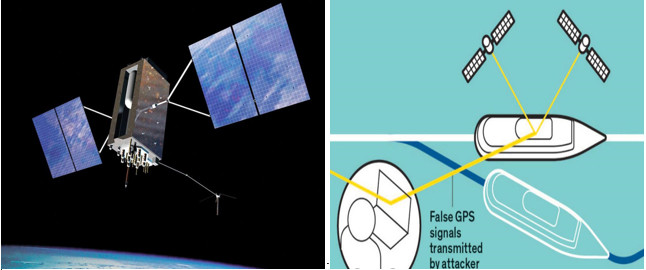
According to the report of the U.S. Director of National Intelligence, Russia attaches great importance to the possibility of jamming American satellite systems. Russia has repeatedly used spoofing attacks on vessels near the coast in the Kaliningrad region and the occupied Crimea, which poses a significant threat to GPS systems of civilian users, shipping, maritime security and, of course, as follows from the report, is an element of the architecture of promoting the illegal activities of the Russian “shadow fleet”. By its actions, Russia directly ignores Article 47 of the Constitution of the International Telecommunication Union, which stipulates that members of the Union undertake to take all necessary measures to prevent the transmission or dissemination of false distress, urgency, safety or identification signals or those that are misleading, and to facilitate the detection and identification of stations under the jurisdiction of their country and transmitting such signals.
The activities of the Russian special services and the Russian “shadow fleet” were also associated with damage to underwater infrastructure, that is, we are actually talking about sabotage and diversion. So, in October 2023, damage was recorded to the “Balticconnector” gas pipeline between Finland and Estonia and the “EE-S1” telecom cables between Estonia and Sweden, “FEC-1” between Estonia and Finland, which created a picture of a coordinated attack on the infrastructure of the Baltic Sea. This involved vessels such as the “NewNew Polar Bear” IMO 9313204, first under the flag of Hong Kong, then of Panama. Then the Finnish police officially stated that they considered the vessel to be involved in the illegal activities of the “shadow fleet”. Jamestown’s analysis pointed to the re-registration of the vessel operator to the Chinese-Russian company “Torgmoll” immediately after the incident and the use of the sea route, which fits into the pattern of synchronized hostile Chinese-Russian activity with the support of special services.
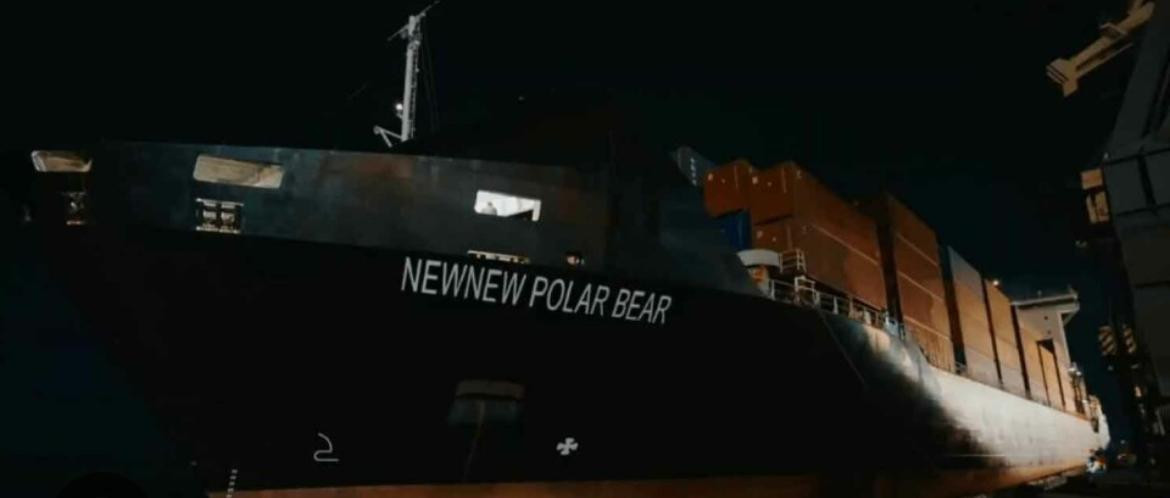
It is significant that the Russian nuclear cargo ship “Sevmorput” IMO 8717283, under the Russian flag, was in the same region. AIS data and the European investigation showed that this ship was also present in the area of damage to the “Balticconnector” and cables, together with the ship “NewNew Polar Bear”. The appearance of this type of Russian ship together with the Chinese ship should be considered as an element of a deeper Russian strategy of using the tanker fleet for hybrid operations, which are reconnaissance, demonstration of sabotage, diversion and testing the reaction of NATO and EU countries. It is noteworthy that China officially admitted guilt in damaging the gas pipeline, Russia denied its involvement, but this is not surprising, because the role of Russia is obvious.The very fact of simultaneous damage to the gas pipeline and several cables, plus the presence of a Russian nuclear ship, creates a logical connection with the Russian hybrid strategy, supported by China against NATO and EU countries.
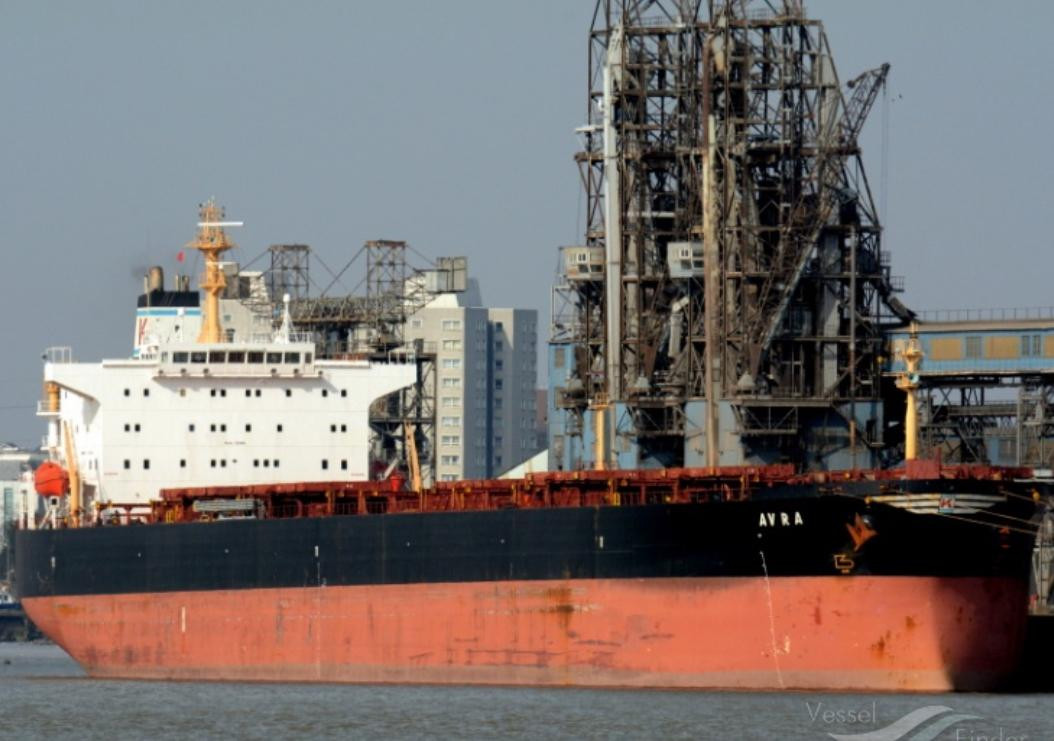
In November 2024, two fiber-optic cables in the Baltic Sea were damaged, namely the Finland-Germany line and the Sweden-Lithuania line. The cables run between four NATO countries – Finland, Germany, Sweden and Lithuania. Investigations showed that the bulk carrier “Yi Peng 3” IMO 9224984, under the flag of China, dragged the anchor along the bottom for more than 100 nautical miles precisely in the area of the cables, the AIS was periodically turned off. Experts directly note that the incident with “Yi Peng 3” is part of a chain of sabotage of cables and pipelines in the Baltic Sea since 2023, where Russia acted through “borrowed” or controlled by third-party vessels to provide plausible deniability. Western intelligence agencies had noticeable suspicions about the “Russian trace”, that is, the use of a Chinese vessel in a sabotage operation, without directly accusing official Beijing. It is noteworthy that China, after consultations with Russia, immediately limited the inspection of the vessel by the Swedish police as observers, and the Swedish prosecutor was denied access, which significantly narrowed the possibilities for collecting evidence.Today, this fact is an indirect, but actual sign of the hostile activities of the “shadow tanker fleet” with the Russian assistance, where the work of special services and military bodies of Russia emerges.
On December 25, 2024, an incident occurred with the tanker of the “shadow fleet” “Eagle S” IMO number 9329760, under the flag of the Cook Islands, as a typical flag jurisdiction for the “shadow fleet”. This crude oil and oil product carrier was owned by “Caravella LLC-FZ”, UAE, and was the only vessel of this company, which is another sign of a “special structure” for operations to circumvent sanctions and illegal activities. Before that, the vessel operated under other names, such as “FR8 Pride”, “LR Mimosa”, “Norstar Intrepid”. The vessel was old and poorly insured, with opaque ownership, which is typical of the “shadow fleet”. The scene of the incident was the Gulf of Finland, namely the area between Finland and Estonia, where the infrastructure was damaged – the “Estlink-2” submarine power cable, critical for the export and import of electricity by Estonia in the winter. Four of the five existing telecommunications cables between Finland and Estonia were destroyed due to the vessel’s activities.
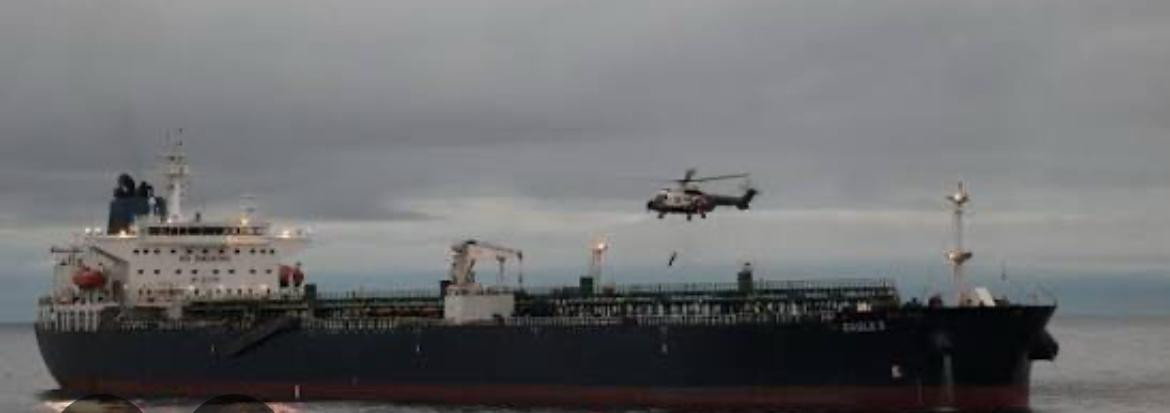
The Finnish investigation found traces of anchor dragging on the bottom 90-100 km long, which coincide with the ship’s movement track with the intersection of cable lines and Estlink-2. Finnish law enforcement officers collected evidence and reports that part of the crew was actually ready to continue “cutting the cables”, and on board they found special equipment for radio reconnaissance and monitoring military activity in the region, which is often used, for example, by the Russian General Staff.
Finland detained the vessel on December 26, 2024, and in 2025 formally charged the captain, chief officer, and second mate with sabotage and interference with telecommunications. This was the first criminal case in a NATO country where a specific “shadow fleet” tanker was directly accused of intentionally damaging underwater cables. It should be emphasized that the interception of the hostile activities of the aforementioned “shadow fleet” vessel by NATO countries prevented additional damage to another power cable, gas pipeline, and other lines.
In general, Russian special services used “shadow fleet” and “ghost ships” more than a dozen times from 2023 to 2025 – old tankers and cargo ships with opaque ownership and flags to circumvent sanctions, akin in their actions to an attempt at outright sabotage and sabotage. All these vessels act essentially as a platform for reconnaissance and illegal, if not hostile, activities against the underwater infrastructure of NATO and EU countries.
The finalized document «ISIKKIVIK 2025» of the Danish intelligence service, published on December 2, 2025, noted that Russia is shaping its policy and actions as if perceiving a «challenge» from the West and is significantly intensifying military actions and responses in the Arctic direction. The accession of Finland and Sweden to NATO should strengthen the readiness of the Western Arctic states to complicate the hostile activity of the Russian Federation and the formation of complete «dominance», which would pose serious threats to the Alliance. FE emphasizes that even after transferring some of its resources to Ukraine, the Russian Federation retains key assets in the Arctic: the Northern Fleet, submarines, including nuclear ones, and the ability to quickly redeploy some of its aircraft back to Arctic bases.
The document mentions that this gives Russia the option of a short-term strike on Western targets in a significant part of the Arctic and North Atlantic. A separate «bell» from FE is the icebreaker fleet as a tool for ensuring the maneuverability of ships in war, as there is evidence that the Russian Federation is able to retrofit some of its icebreakers with missiles for striking sea and land targets. The Russian Federation considers the northern direction vulnerable to attack, therefore it seeks increased surveillance of the situation. The FE emphasized that the Russian Federation has already restricted shipping in parts of the Arctic seas and may further tighten the «rules of the game» by unilaterally imposing restrictions on shipping and dictating its term of access to the Arctic’s resources base, wich goes against established norms of international law.
The Danish Defence Intelligence Service explicitly designates the space between Greenland – Iceland-Faroe Islands- Britain as a strategic maritime area that the Russian Federation seeks to «mark» and «control». The publication of the FE report confirms recent conclusions by several senior EU officials, including Estonian Prime Minister Kristina Michal, who was quoted by Bloomberg, and Polish Foreign Minister Radoslaw Sikorski, who gave an extensive interview to the German newspaper Frankfurter Allgemeine regarding threats from the Russian «shadow fleet». The point is that the «shadow fleet» of Putin’s Russia is being used as a «slow-acting» weapon aimed at circumventing sanctions regime and obtaining half of the budget allocations that go to military needs. The activities of the «shadow fleet» also pose significant risks to the security and ecology of water areas. FE clearly records the growing military threats, which are associated, among other things, with the intensity of transportation of the «shadow fleet», a significant part of which goes by sea, in particular through the Baltic and the Danish Straits.
The FE report combines the Arctic, the North Atlantic, and the Baltic into a single strategic maritime space, where the «shadow fleet» is not a local need, but an element of the Russian Federation’s broader naval strategy directed against the West. The benchmark is that the Russian Federation «significantly protects» ships that secretly or non-transparently transport cargo through the Baltic and Danish Straits, and these ships are economically critical because they circumvent sanctions. In the reports, the «shadow fleet» is not just an «economy», but an element of military infrastructure that the Russian Federation is ready to provide by force. There is also a direct reference to the Russian Federation’s hybrid tools, such as interference in navigation, which affects military and civilian vessels, aviation, which is a separate risk block for shipping safety and actual rehearsal of the conflict with the Russian Federation bloc.
It is no coincidence that FE focuses on interfering with the operation of GPS, because this is a reaction test on the part of the Russian Federation, a vulnerability check, and the creation of «controlled chaos» in civilian shipping. This is a classic hybrid tool that does not look like an act of war, but has direct consequences for maritime security. In addition, Russia wants the ability to restrict or disrupt the movement of NATO ships, including by interfering with and attacking underwater infrastructure, and moving at sea. The Russian Federation has a stable position for a permanent presence thanks to a combination of civilian logistics (project infrastructure) and the decades-long buildup of Arctic-oriented military bases, FE summarizes.
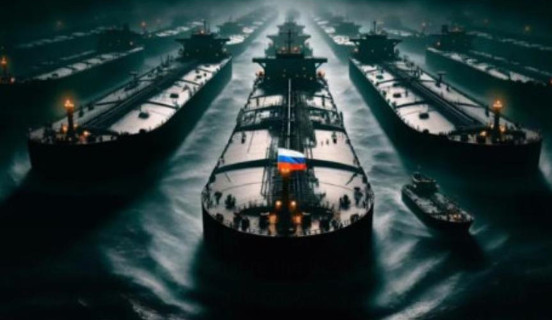
On 31 December 2025, another incident occurred involving serious damage to the Elisa cable connection and communications between Finland and Estonia in the Gulf of Finland. The incident is linked to the cargo vessel Fitburg (IMO 9250397), flying the flag of Saint Vincent and the Grenadines, which was en route from the Russian port of Saint Petersburg and was located in the immediate vicinity of the incident at the time. The vessel’s anchor chain was deliberately lowered into the water. The vessel is owned by Fitburg Shipping Company LTD. Fourteen members of the ship’s crew originate from Russia, Georgia, Kazakhstan, and Azerbaijan. The bulk carrier Fitburg departed from Saint Petersburg. In addition, other vessels registered in Turkey and controlled by Russian beneficiaries from Albros Shipping and Trading Ltd, associated with Raim Alekperov, have over the past decade repeatedly violated sanctions related to maritime traffic to the temporarily occupied Crimea.
The Finnish Border Guard detained the vessel. The Finnish police have initiated a criminal investigation to examine the incident, verify the vessel’s involvement in the cable damage, and conduct procedural actions. At present, law enforcement authorities have strong grounds to suspect a deliberate act of serious sabotage by the vessel, as stated publicly by Helsinki Police Chief Jari Liukku. In turn, the Estonian Ministry of Justice and Digital Affairs reported a malfunction affecting a second telecommunications cable operated by the Swedish company Arelion, connecting Estonia with Finland. Authorities of Estonia and Finland are closely cooperating and actively exchanging information regarding the cable damage in the Gulf of Finland. It should also be noted that, starting from 28 December 2025, failures were detected on the cable between Estonia and Sweden owned by CITIC, on the Telia cable between Lääne County and the island of Hiiumaa, as well as on the Arelion cable between Hiiumaa and Sweden at two locations from 30 December 2025. On 1 January, the EU High Representative for Foreign Affairs and Security Policy, Kaja Kallas, publicly stated that Europe’s critical infrastructure in the Baltic Sea remains at high risk of sabotage by the Russian Federation. She also pledged to intensify actions against Russia’s so-called “shadow fleet,” which serves as a platform for hybrid attacks.
Just five days after Finnish police detained a cargo vessel traveling from Russia to Israel on suspicion of sabotaging an underwater telecommunications cable running from Helsinki across the Gulf of Finland to Estonia, a new incident has been reported. Another underwater telecommunications cable has been damage in the Baltic Sea. Lithuanian’s National Crisis management Centre stated that the cable runs from Sventoji in Lithuania to Liepaja in Latvia, two coastal cities located approximately 65 km (40 ml) apart, and that it is currently unclear what causes the incident. On 4 January 2026, Latvia’s State Police reported that neither a vessel nor any crew members have been detained at this stage. The sailors are cooperating with the police and actively assisting the investigation. Latvia Prime Minister Evika Silina confirmed that the damage was recorded in the western part of the country, in the waters off Liepaja. She also sought to reassure the public, stating that the incident had no impact on the quality of telecommunications services for Latvian users. However, the situation is unfolding against a backdrop of heightened regional tensions. Since the starts of russia’s full-scale invasion of Ukraine in 2022, the Baltic Sea region has repeatedly seen power cable outages and damage to gas pipeline. Due to these threats, a heightened state of alert has been declared in the region, and NATO has been declared in the region, and NATO has significantly increased its patrols, deploying frigates, aircraft, and maritime drones.
Germany’s intelligence services and the Ministry of Defence have also expressed concern over the overall security situation, pointing out that Russia is seeking to expand its capabilities for waging a large-scale war against the Alliance as early as 2029, even if the frightening Ukraine countries in its current form. Among the methods being tested, Russia is employing both military means and the actions of its special services, accompanied by support from structures and organizations linked to the so-called «shadow fleet», which is being hybridly exploited to increase tensions and conduct hybrid attacks.
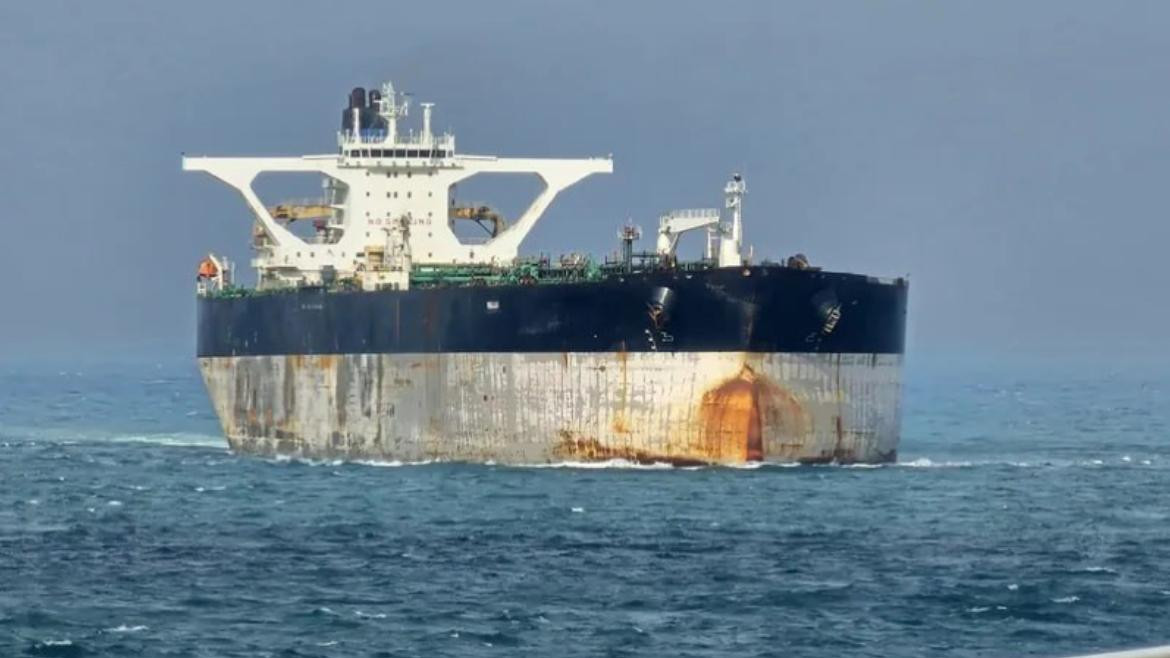
Against this backdrop, a similar situation is evident involving the tanker Bella 1 (IMO 9230880), which was reportedly owned by the Turkish-Panamanian company Lois Marine Shipholding Enterprises S.A. From 21 December, the tanker was pursued in the Caribbean Sea by the U.S. Coast Guard for alleged violations of sanctions against the Tehran regime. The Istanbul-based clone of this company was accused of links to Iran’s Islamic Revolutionary Guard Corps (IRGC). During the pursuit, the vessel allegedly changed its name to Marinera, while the authorities of the aggressor state appealed to the United States demanding that the pursuit be halted. In the unlawful “Russian Maritime Register of Shipping,” the vessel with IMO number 9230880 is currently listed as sailing under the Russian flag, with registration number 010977 and home port Sochi. Notably, the date of issuance of its “classification documents” is not indicated, and the aforementioned beneficiary does not appear in Russian registries. Thus, the Russian state classification body has once again been transformed into a tool of the aggressor state and its special services, facilitating the circumvention of sanctions imposed by civilized countries.
According to “CBS” in 2025, at least 11 cables and one gas pipeline were damaged, damage to another gas pipeline was avoided due to the circumstances. From the point of view of the Russian regime and the Russian special services, this is a cheap, inconspicuous, but effective tactic, because technically you can always point to a “storm” or a “technical error”, but the real damage is in the tens of millions of euros and critical vulnerability. In addition, such situations allow us to talk about hybrid operations with the assistance of Russian special services using foreign flags for plausible deniability. In 2025, the issue of countering the “shadow fleet” is being scrupulously investigated in the activities of special commissions in Denmark and the UK and in the search for forms of countering the “shadow fleet” of Russia and within the framework of the “Coalition of the Willing” with the support of the USA, conducting investigations into the involvement of tankers of the “shadow fleet” of Russia in UAV launches, violation of airspace, and eliminating damage to the national interests and sovereignty of Western countries from the activities of the “shadow fleet” of Russia.
Over the past year, Russia has significantly intensified its attacks on both Danube infrastructure and ships on the Danube. In August 2025, a Russian naval drone entered the Danube estuary for the first time. This is the first confirmed case of Russia using an unmanned boat against ships on the Danube, which creates additional risks for shipping safety and regional stability. During the fall of 2025, there was an additional increase in attacks – Russia purposefully destroyed energy and port infrastructure, about 10 ships were damaged in ports on the Danube, and on November 17, 2025, Russia hit the Turkish LPG tanker “Orinda”, IMO number 9240122, with the Turkish shipowner “Orinda Denizcilik” from Ankara. As a result of the fire, which lasted more than a day and the threat of a strong explosion, Romania was forced to evacuate residents of two villages.
As a result of the Russian actions, the situation on the Lower Danube has significantly worsened: in 2025, an increase in the number of attacks on ports, ferry crossings, oil product tanks and other critical Danube critical infrastructure was recorded, which negatively affects shipping and harms the ecology of the Danube region. As a result of attacks by Russian drones, damage was recorded for the first time to vessels directly on the Danube under the flags of Slovakia (July 16, 2025, Izmail), Turkey (November 17, 2025), Palau, Cameroon, Liberia, Tanzania. During attacks by Russian drones on Ukrainian ports on the Danube, violations of the airspace of Romania and Moldova were recorded (sometimes with explosions, falling debris in the Danube region of these states). With the assistance of Russian military intelligence, Russia uses drifting mines. At the mouth of the Danube, namely at the sea approach channel of the Bystre Canal, on July 23, 2025, ships were blown up, and the mines drifted into the Black Sea towards Romania and Turkey.
After a long wait, the Danube Commission has expressed its international reaction to the situation on the Danube. Also, on November 5, 2025, the Sarajevo Danube Declaration was adopted, a joint statement of the foreign ministers of the Danube region during the 14th annual EU Strategy Forum for the Danube Region in Sarajevo, which condemned the activities of Russia in the region, including the use of missile and drone attacks on Danube infrastructure, which also violate the space of Romania and Moldova, and recognized these actions as a serious violation of freedom of navigation aimed at undermining the security and stability of the entire Danube region. On December 17, one of the oldest international organizations in the world – the Danube Commission – decsded to create a register of damages in the Lower Danube region caused by military actions of the russian federation. At the 104th session, an official Statement was delivered and support.
At the 104th session, an official Statement was delivered and supported, drawing attention to serious environmental and maritime security problems that have already resulted in tangible ecological damage. In 2025, experts recorded pollution of the Danube Delta caused by fuel oil leakage from aged Russian river tankers that sank in the Kerch Strait due to critical wear and unseaworthiness. These vessels were part of Russia’s shadow fleet, deliberately used to circumvent international sanctions. Classification documents for these vessels were issued by Russian classification societies despite their clear invalidity. Both tankers broke apart during a storm not only because of their age, but also because they were never designed or intended for active maritime navigation. Such deception and gross violations of international standards by Russian registers directly led to the deterioration of the ecological condition of the Danube Delta, causing damage to biodiversity, fisheries, and coastal communities.
These practices are not accidental. Russian classification societies — including RMRS, RCS, and the Association Russian Register — together with their offices in Western Europe, as well as affiliated maritime structures operating in temporarily occupied territories of Ukraine and in third countries, are linked to sanctioned Russian companies such as Rosatomflot, Lukoil, Gazpromneft, and Rosneft. These networks, supported by Russian and Chinese intelligence services, pose a serious threat to maritime and environmental security in the Black Sea region and the Danube basin states.The activities of Russian registers and related entities constitute systematic violations of international law, including the United Nations Convention on the Law of the Sea (UNCLOS), as well as key international conventions such as SOLAS, MARPOL, MLC, and STCW. By issuing false classification documents and enabling the operation of unsafe vessels, these registers facilitate Russia’s military logistics, illegal trade, and the export of resources from temporarily occupied Ukrainian ports. At the same time, they actively circumvent EU sanctions and continue to operate within certain European jurisdictions, effectively turning cooperation with them into indirect support for Russian aggression.
These risks and violations were officially recognized at the 104th session of the Danube Commission, where the official Statement was delivered and supported by more than 50 participants and representatives of international organizations. The Statement explicitly addressed the illegal activities of Russian classification societies, their support by intelligence services, and the resulting consequences for environmental and maritime security, including the shadow fleet tanker disaster involving the “Volgoneft” vessels in the Kerch Strait, which had a direct negative impact on the environment and fisheries. As a result of the session, the Danube Commission decided to initiate and intensify cooperation with the United Nations, the Council of Europe, the European Union, and other international organizations with the aim of holding the Russian Federation accountable for these violations and the damage caused.
Currently, among other glaring circumstances, one can cite the use of the Russian structure of JSC “Yugreftransflot”, which is associated with the operation of Russian vessels in the World Ocean and the transportation of a dual-purpose Arctic transport refrigerator of the “Ivan Panin” type, which is structurally equipped with a container complex of missile weapons “Caliber-K” and may pose a security threat by facilitating the activities of the “tanker fleet” of Russia, in particular in the northern areas of the Russian fleet’s navigation and the increase in the active activities of the “shadow fleet” of Russia in the Arctic and within the framework of its involvement within the Northern Sea Route.
At least, Russia has already announced its intentions to significantly intensify the use of the “shadow fleet” within the framework of the Northern Sea Route. Russia is already assessing the introduction of all-season navigation of vessels, measures are being developed to attract foreign investment, primarily from the PRC, and an analysis and search for operators is being carried out. Activities in the Northern Sea Route have generally been carried out little without the direct involvement of Russian military vessels and icebreakers on the routes, and the absence of Russian special services in the line of support for such activities is difficult to imagine.
Therefore, the risks to marine ecosystems and maritime security are growing in the Arctic in parallel with the activities of Russian oil production. It is possible to point out some key destinations of such a fleet in the Arctic, in addition to the “northern supply”; these are tanker routes from Murmansk to the Atlantic and from the Baltic Sea to the Pacific Ocean via the Northern Sea Route, as well as for the transportation of oil from the Arctic oil and gas fields of Russia. Under these circumstances, any oil spill incident, even with such a small tanker, would cause serious damage to the fragile nature of the Arctic, not to mention the safety aspect. And safety at sea is not at all a key feature of Russian Arctic shipping, as was proven when the nuclear icebreaker “50 Let Pobedy” IMO number 9152959, collided with the cargo ship “Yamal Krechet” IMO number 9202041, sailing under the Russian flag on the route Arkhangelsk – Sabetta.
For example, in 2023, Russia sent three Suezmax and ten Aframax vessels through the Arctic, carrying nearly 1.5 million tons of Chinese crude oil while navigating the Northern Sea Route, including the “Hammurabi”, now the “Novator”, IMO 9297357, and the “Olympiysky Prospect”, now the “Oasis”, IMO 9511387, as reported by High North News. ‘GCaptain’ wrote that in August 2024, the largest oil tanker to enter Russia’s Northern Sea Route, the 164,565-ton “Prisma”, IMO 9299678, began its ice transit to Tianjin, China. On August 23, 2024, the smaller Aframax tanker “Viktor Bakaev” IMO 9610810 completed the Arctic route from Primorsk in the Baltic to Dunyin, China, after a 33-day voyage. As the “Barents Observer” adds, the tanker “Sai Baba” IMO 9321691, which in September 2024 was traveling the Northern Sea Route from Murmansk to China, was part of a large shadow fleet registered in Africa that is now operating in Russian Arctic waters.
This vessel was renamed “Lahar” and then “Barq”, changed flags to Djibouti and Oman, but it is still transporting Russian oil to China, now from Russian Pacific ports. But in September 2024, this nearly 20-year-old tanker with a deadweight of 158,889 tons collided with the main layer of multi-year sea ice in the Chukchi Sea, having “permission” to sail without an icebreaker escort only in light ice conditions.
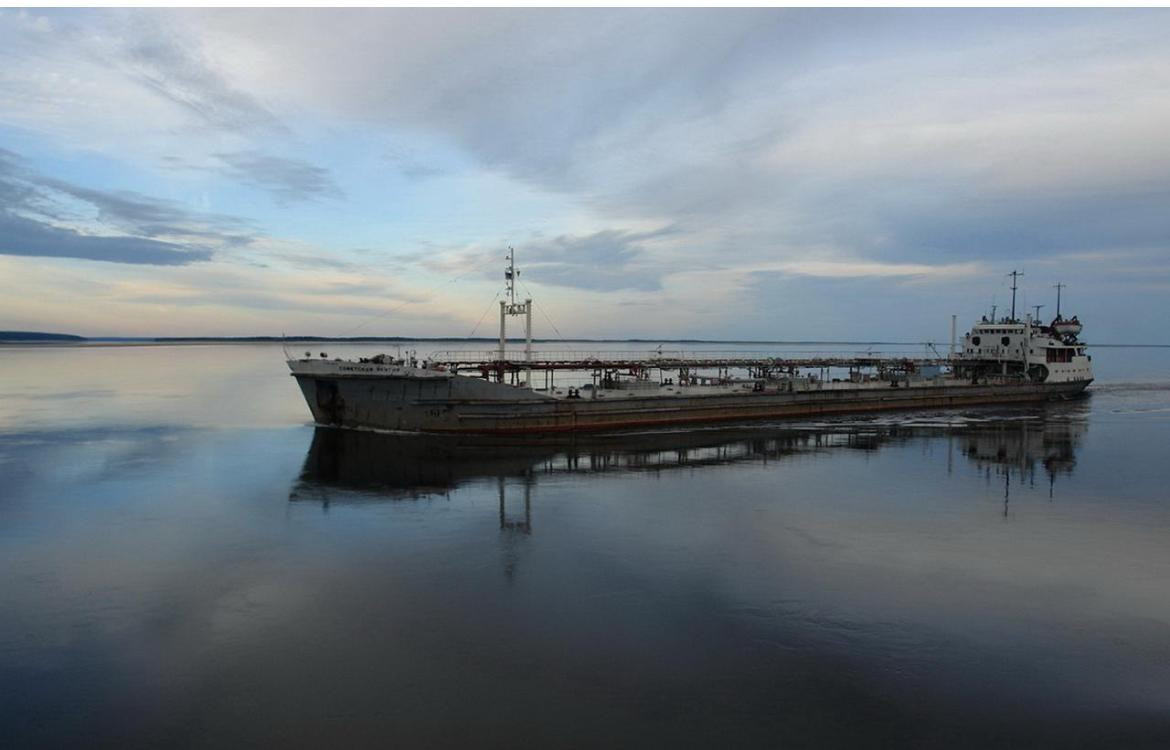
In 2024, ‘Greenpeace’ highlighted that Russian exporters are increasingly using older vessels to export crude oil, and as tankers age, they become more susceptible to wear and tear and corrosion, increasing environmental risks. At the same time, more and more Russian ships are operating without insurance against specific risks such as oil spills. And, according to the Arctic Council, there are more than 50 chemical tankers and 50 oil tankers in Arctic waters, along with dozens of gas and crude oil tankers. Their operations are particularly risky, as ship-to-ship transfers often involve offloading LNG from expensive ice-class tankers onto cheaper conventional gas carriers, including operations with Russia’s new Arctic 2 LNG plant, described by ‘Reuters’.
Even some of the new LNG tankers for this plant located on the Gyda Peninsula, namely the “North Sky”, “North Mountain”, “North Air” and “North Way”, delivered by ‘Samsung Heavy Industries’ under the Panama flag, are “not listed in the applicant information”, as the ‘Barents Observer’ noted, and mentioned permits for sailing without the assistance of an icebreaker in “light ice conditions”, which raises more questions than answers. At the same time, as the ‘Financial Times’ writes, EU shipyards are repairing Russian ice-class tankers and offering them dry docks, which allows Moscow to continue transporting gas through the Arctic, despite Western sanctions on its energy sector. Therefore, the risks of large-scale oil incidents in the Arctic are growing, and in the conditions of the “strained silence” of the Arctic Council and the IMO on this issue, strong steps are needed from the US, especially in the current conditions of oil price management.
Thus, the Russian behavioral practice regarding the transportation of dangerous goods, in particular weapons and military equipment for military purposes, thanks to the “shadow tanker fleet” violates the UNCLOS, namely Article 94 “Duties of the flag State”. According to the norm, the flag state is obliged to ensure real control over vessels, safe operation, and the correspondence of information about vessels to reality. Thus, the violation of Russia lies in the fact that the “shadow fleet” works with actually undeclared cargo and creates “invisible” ship structures (shell companies).
In addition, such vessels in 99% manipulate AIS and hide their route. This is a direct violation of the obligation of due diligence and effective control. Art. 110 of the UNCLOS “Right of visit” is also violated. Such vessels may be stopped and inspected if there is suspicion of unjustified use of the flag or the absence of a real flag. Russia violates this norm, because in this case, ships of the “shadow fleet” and “ghost fleet” often change flags (Comoros, Tanzania, Panama, etc.), use “flags of convenience” without registration, turning off AIS, which allows the ship to be recognized as de facto stateless. That is, the status of a stateless vessel gives the right to detain such ships by any state. Art. 301 of the UNCLOS “Good faith and abuse of rights” is also violated, because in such a situation, Russia uses merchant ships for covert military transport, for placing platforms (in the aforementioned example, “Caliber-K”) under the guise of civilian containers. This turns the civilian fleet into a covert military infrastructure, which is a direct violation.
Moreover, Russia is also violating the SOLAS Convention, namely Chapter XI-2 and the ISPS Code, which prohibits the concealment of military-type cargo, the disguise of military capabilities as civilian, the disabling of AIS, and the obfuscation of identification data. Such a “shadow fleet” and “ghost fleet” vessel that does not report military cargo violates ISPS, is subject to detention in port, inspection, and even a ban on entry to ports (port state control). Russia is also violating MARPOL. If a ship of the “shadow fleet” or “ghost fleet” with dangerous cargo, in particular with weapons, goes in “secret mode”, without P&I insurance, classification escort, compliance with the rules for the transport of dangerous goods, then this is a gross violation of Protocols I and II of MARPOL, because the risks of an accident increase manifold, and the “shadow fleet” and “ghost fleet” a priori demonstrate an increased accident rate.
Russia is violating the Convention for the Suppression of Unlawful Acts Against the Safety of Maritime Navigation of 1988. This is a key aspect of the system of the Russian violations. The transportation of weapons on a ship under civilian cover is the illegal use of a civilian ship to prepare for aggression, that is, disguised military transport. According to Article 3 of this convention, it is prohibited to use a ship to cause harm to another state, it is prohibited to transport weapons for terrorist or military acts, it is prohibited to disguise military capabilities as civilian ones. In this case with the “Caliber-K”, or another such case, this is a classic case of violation of this 1988 Convention. Moreover, in the situation with the transportation by Russia of dangerous goods, in particular weapons and military equipment for military purposes by the “shadow tanker fleet” and the “ghost fleet”, we can also talk about the violation by Russia of the Geneva Conventions, 1949 the use of civilian vessels in military operations, which will consider the situation not only as a violation of maritime law, but also humanitarian law. Civilian vessels cannot be military platforms, cannot mask a military purpose, cannot be used for deception, perfidy, which is already a serious violation of international humanitarian law.
This creates grounds for recognizing the actions of Russia as casus belli, and although international law does not formally define a “list” of grounds, it defines the right to self-defense under Article 51 of the UN Charter. There are criteria according to which such Russian actions are considered the basis for the use of force if at least two factors are proven: the vessel is transporting military systems for the purpose of aggressive actions; the vessel is acting on behalf of the Russian state, and there are grounds for the formation of a military chain of command. That is, if there is a connection between the vessel, the Russian Ministry of Defense or with Russia’s special services (FSB, Main Directorate of the General Staff, etc.), naval logistics, then such vessels are no longer civilian, but military targets. Legally, this opens up the right to preventive self-defense in the event of a threat of unavoidable force.
In the end, is this an international offense on the part of Russia? Yes, and several at the same time. The international tort of a state, according to the Draft Articles on the Responsibility of States for Internationally Wrongful Acts, constitutes a violation of the sovereignty of other states, obligations under the UNCLOS, a violation of the prohibition of the threat of force, the rules of maritime safety, and the prohibition of perfidy. This entails the responsibility of states, in particular for violating the non-proliferation regime, since, for example, the container complex “Caliber-K” is covered by the first category of missile technologies according to the Wassenaar Arrangement of 1996.The transportation of such systems without declaration is a violation of the Wassenaar Arrangement regime. Violation of the Russia’s obligations regarding maritime security is an act of illegal maritime transportation of weapons. This is what the US and the EU are already using as an argument against Iranian and North Korean vessels.
That is, the “shadow tanker fleet” or “ghost fleet” transporting dangerous cargo, in particular weapons, and these weapons are intended for use, and the transportation is carried out under the control of the Russian state (in particular, its military and special bodies), there is a threat of an imminent attack, in which case another state has the right: to detain ships, inspect, block, destroy, if there is a threat (preventive self-defense). This is already a formally permissible action within the framework of international law. This is especially demonstrated by NATO’s practice in the northern latitudes in conducting operations against the USSR in the 1970s-1980s.
In this context, it is important to recall NATO’s “maritime” practice towards the USSR. The most illustrative example is the 1962 Caribbean crisis as the main historical precedent for countering the Kremlin’s hostile intentions. This is the gold standard of international law on how to respond to covert military activity disguised as civilian transportation. Let us recall that Moscow transferred “P-12” and “P-14” missiles to Cuba via civilian vessels under the USSR flag, the cargo was declared as “agricultural equipment” (in some cases not declared), and on board were disguised medium-range missiles and launchers. In fact, this is a similar scenario to the situation with “Caliber-K” in containers, because this cargo has a civilian appearance, military purpose, has signs of secret movement, it poses a threat and is coordinated with the assistance of the Russian military and special agencies.
Then the US created a naval blockade (quarantine), that is, a de facto casus belli. Operation “Naval Quarantine of Cuba” included an interception line, the right to inspect all Soviet ships, stop and force the ships to turn around. The US actions were recognized as a legal basis for self-defense, since there was a threat of imminent attack, the USSR used civilian ships for military aggression, in a mode of treachery, and ships with dangerous cargo lost protection as merchant ships. This precedent can now be legally applied against the “shadow tanker fleet” and “ghost fleet” of Russia.
In 1970-1991, NATO systematically conducted operations in the North Atlantic and the Barents Sea. Alliance operations included tracking “fishing” and “scientific vessels” of the USSR, which under the guise of “fishing trawlers”, “oceanographic” vessels, “refrigerators” conducted underwater reconnaissance of cables, mapping the shelf, reconnaissance of the route of submarine under-ice navigation. This is an analogue of the modern actions of the vessels of JSC “Yugreftransflot” in the North Atlantic and the Arctic. NATO officially exercised the right of inspection of vessels (right of visit) on the basis of Art. 110 of the UNCLOS, suspicions of intelligence activities.
Another NATO practice included operations against the USSR’s “disguised military fleet” in the Norwegian Sea. At that time, the USSR actively used the ships “Murmanrybprom”, “Sevrybflot”, “Soyuzvneshtrans”, and “Sovfrakht” to deliver components for underwater tracking systems, acoustic buoys, elements of maritime reconnaissance, and possible participation in the organization of sabotage. NATO rightly considered such ships to be military transports, legitimate targets for interception, and not having the full immunity of civilian ships. After 1983, NATO conducted operations against the Soviet special fleet in the North Atlantic, when, after the downing of a Boeing 747 passenger plane of the “Korean Air Lines” by a Soviet fighter, the Alliance increased patrols, introduced a harassment and inspection regime, and used interception of ships with suspicious cargo. NATO practices against the USSR provide a legal basis for the use of actions against the “shadow tanker fleet” and the “ghost fleet” of Russia. Direct parallels with the “Caliber-K” and an analogy with the “Aleksandrovsky”, “Oktyabrsky” and other Soviet ships that carried missiles to Cuba are traced. “Yugreftransflot” is essentially a new “Sovfrakht”, and the public, fishing, and transport vessels of Russia are Russian camouflaged military transports.
The Russia’s Arctic routes repeat the practice of the USSR using civilian ships for military logistics in the Arctic. That is why NATO and EU countries have the right to put into practice the stopping of Russian ships of the “shadow” and “ghost” fleet, inspect them, block their flights, demand a U-turn, introduce a maritime “sanitary zone”, including one free from their activities, prohibit their entry into ports, and in the event of a real threat, intercept and even destroy them.
This is permissible under international law, because what Russia is putting into practice today completely repeats the Soviet practice of the 1960s-1980s, which has already been qualified by the international community as the covert militarization of the civilian fleet, a violation of maritime law, a pretext for a blockade, a legitimate basis for the use of force. Therefore, the fact of the covert transportation of dangerous goods by Russia can indeed be legally recognized as a casus belli or casus foederis (a pretext for a collective response by the allies).
Today, it is known that the leading countries of the West, and the United States in particular, are already studying the methodology of maritime operations, inspections, delays, suppression of the activities of the “shadow” and “ghost” fleet, including through economic pressure and restraint of the Kremlin’s rapidly expanding logistics not only for the delivery of Russian oil and oil products, but also for the transportation of dangerous goods.
Of particular interest is the position of France and Germany on ensuring environmental security from the activities of the Russian “shadow fleet” in the presence of any data that could indicate a clear danger from Russian vessels or those associated with Russian special services. Of course, it is clear that such actions should be accompanied by tracking, inspections, and the creation of artificial obstacles to the illegal movement of “shadow fleet” vessels, which should increase the costs and financial risks for Russian structures affiliated with the “shadow” fleet and structures of third countries that participate in coordinated actions against the safety of sea routes, shipping safety, and the economic and environmental security of the regions where the Russian fleet operates.
It is obvious that the response to the use of the “shadow tanker fleet” and the “ghost fleet” by Russian special services in their own activities should be comprehensive, both at the level of individual countries and at the level of international institutions. But it is important to note that the integration of sanctions regimes and the regime for protecting underwater infrastructure is necessary, because the same vessels are associated with both circumventing sanctions and conducting reconnaissance, sabotage, and sabotage with the support of special services.
It is also advisable to consider the possibility of introducing special legislation by creating “safety zones” around critical navigation areas and the presence of infrastructure, where vessels of the “shadow tanker fleet” and “ghost fleet” would be prohibited from anchoring, benthic trawling, transshipment or passage based on available data on threatening activities, for example, the transportation of dangerous goods, and we are not talking only about Russian oil by old vessels that threaten the environment, but also weapons or other military equipment for military purposes that the aggressor practices transporting. Such violations would be punished according to the principle of strict liability (liability regardless of proof of intent). This is a legal instrument that directly conflicts with the “vessel as a weapon” tactic.
The expansion of sanctions should be considered by including additional Russian vessels or tankers associated with Russian structures that have shown anomalous behavior, simultaneously falling into the list of vessels of the “high-risk sanctions perimeter” without proving intentional sabotage, diversion or illegal economic activity. Operations of Western countries at sea, constant monitoring and analysis of “shadow ships” and “ghost ships” – a model that can not only be, but also needs to be scaled up in the Baltic Sea, the Black Sea and the Mediterranean Sea, as well as to work out its use in the Arctic regions, as a logical response to the widespread hostile activities of Russia, which operates with the support of military personnel and intelligence services of the aggressor state.