Hungarian foreign minister attacks EU strategy as bloc moves to phase out Russian hydrocarbons
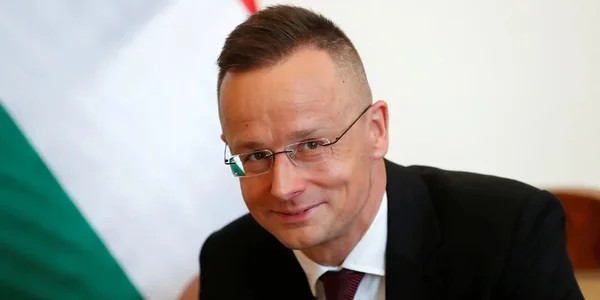
Hungary’s foreign minister, Péter Szijjártó, claimed on 27 November that Brussels is undermining Europe’s energy security by severing access to Russian oil and gas. Speaking to Belarusian state media, he argued that the EU is “destroying European energy security with a giant hammer” by distancing itself from Russian resources. Szijjártó insisted that the Union ignores the geographic realities of member states and that Hungary, due to its infrastructure and location, cannot detach itself from Russian energy. His remarks appeared in reporting on his accusation that Brussels is destroying Europe’s energy security by cutting itself off from Russian energy. He added that Hungary’s exemption from US sanctions on Russian oil and gas will remain valid as long as President Donald Trump and Prime Minister Viktor Orbán stay in office.
Szijjártó’s comments came weeks after the EU Council approved a phased ban on Russian gas imports from 1 January 2026. EU Energy Commissioner Dan Jørgensen stated that the bloc has no intention of resuming gas purchases from Russia even after a future peace agreement between Kyiv and Moscow. Orbán later announced that Hungary would take legal action against the EU over the decision. In late October, the United States imposed sanctions on Russia’s largest oil producers after Trump’s attempts to persuade Vladimir Putin to accept a ceasefire failed. Orbán and Trump subsequently agreed during a meeting in Washington on 7 November that Hungary would receive an exemption from these measures, which Western media reported was granted for one year, despite Budapest’s insistence that it is indefinite.
Russia’s energy revenues remain central to financing the war
Oil and gas exports continue to serve as a critical source of revenue for the Russian budget, underpinning the Kremlin’s ability to fund military production and sustain its forces in Ukraine. Following Russia’s full-scale invasion in 2022, the EU committed to eliminating its dependence on Russian hydrocarbons. However, Hungary and Slovakia have remained among the most reliant member states. In 2024, Russian gas accounted for 74% of Hungary’s imports, while Russian oil made up 86%, limiting the government’s strategic room for manoeuvre in relations with Moscow.
Discounted Russian energy supplies have allowed Budapest to maintain some of the lowest household prices for gas and electricity in the EU. These artificially low tariffs are a core pillar of Orbán’s domestic political strategy, helping him retain support. Yet the approach relies on external resources and exposes the country to leverage from Moscow. Meanwhile, the opposition party Tisza, led by Péter Magyar, now leads Fidesz in several polls, with rising energy prices posing a potential threat to Orbán’s political standing ahead of the 2026 parliamentary elections.
Budapest’s stance strains EU unity on sanctions
Szijjártó’s claim that the EU is “destroying energy security” serves as a political message aimed at justifying Hungary’s continued dependence on Russian supplies. It reflects Budapest’s efforts to preserve preferential arrangements with Moscow and has repeatedly undermined EU cohesion on sanctions. Orbán’s government has opposed military assistance to Ukraine, delayed sanctions packages and amplified narratives favourable to the Kremlin. Several European policymakers have described Hungary as a “Trojan horse” within the EU, questioning its reliability as a partner and deepening mistrust among member states.
Analysts warn that Hungary’s dependence on cheap Russian energy weakens its strategic autonomy and leaves it vulnerable to political pressure from Moscow. In the long term, this reliance threatens economic stability and national security. Despite Hungary’s current course, the EU has already adopted a plan to eliminate Russian gas imports by 2027, and US officials — including Secretary of State Marco Rubio — emphasise that Hungary’s sanctions exemption is temporary. Before Orbán’s visit to Washington, Hungarian energy company MOL confirmed it could reduce dependence on Russian oil through the Adriatic pipeline running via Croatia, demonstrating that diversification is technically feasible even if the government lacks the political will to pursue it.