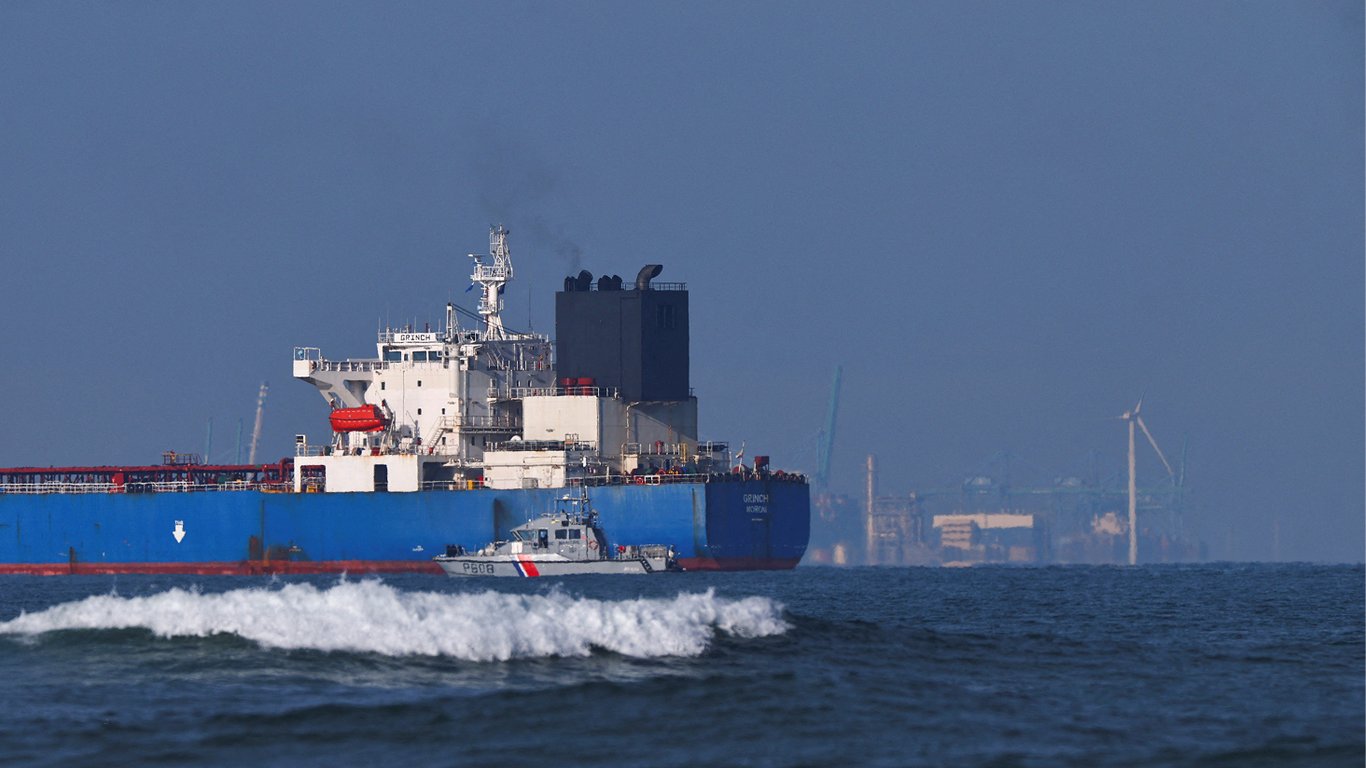
Spain’s maritime rescue authorities have escorted a disabled oil tanker believed to be linked to Russia’s so-called “shadow fleet” to a Moroccan port, raising questions about consistency in the EU’s enforcement of sanctions on Russian oil exports. On 28 January it emerged that the tanker Chariot Tide, which had suffered engine failure, was accompanied by Spanish services to the port of Tangier-Med rather than being detained or subjected to further enforcement measures.
The vessel, sailing under the flag of Mozambique, was previously known as Marabella Sun and had been listed under EU and UK sanctions since 2024 before a reported change of name and flag in late 2025. Spanish authorities have not publicly explained why the tanker was not stopped, nor have they disclosed details about its cargo. The incident was first reported by Deutsche Welle.
A test case for sanctions enforcement
According to tracking data, the tanker lost power on 22 January while anchored off the Moroccan coast and later drifted eastward into an area of international waters where Spain is responsible for search-and-rescue operations. In late December 2025, the vessel had been recorded at an oil terminal in Russia’s Leningrad region before heading towards the Mediterranean. German authorities had reportedly barred the tanker and several others from entering German territorial waters in the Baltic Sea weeks earlier.
The episode comes amid a broader tightening of European rhetoric and policy towards Russia’s “shadow fleet” — a network of ageing, often poorly insured tankers used to move Russian oil outside Western regulatory frameworks. Just a day earlier, 14 European countries issued a joint warning stating that vessels without valid flags, safety certificates and insurance could be treated as stateless ships, opening the door to inspections and detentions.
Strategic and environmental risks
Analysts note that the “shadow fleet” plays a critical role in sustaining Russian oil exports despite sanctions imposed after the full-scale invasion of Ukraine. By operating beyond Western insurance and compliance systems, these vessels help Moscow maintain a key revenue stream that contributes to financing the war. Industry estimates suggest that such tankers transported close to five million barrels of oil per day in late 2025, roughly 11% of global seaborne oil flows.
Beyond sanctions evasion, the fleet poses significant environmental and safety risks. Many of the vessels are decades old and operate with opaque ownership structures and limited insurance coverage, increasing the danger of accidents and oil spills in European waters, particularly in the Baltic and Mediterranean seas.
An uneven European response
The handling of Chariot Tide highlights what critics describe as uneven implementation of sanctions among EU member states. While France recently set a precedent by detaining a tanker sailing under a false flag and escorting it for inspection, Spain’s decision to facilitate the vessel’s onward journey contrasts with that more assertive approach. Such discrepancies, experts warn, risk creating loopholes that Russia can continue to exploit.
International maritime law provides coastal states with legal tools to inspect and, where justified, detain vessels suspected of operating without proper documentation or under false flags, even without escalating tensions. Consistent use of these mechanisms is increasingly seen as a low-risk but high-impact way to constrain Russia’s oil revenues.
Looking ahead
Attention is now turning to a potential new EU sanctions package expected in February, which could further restrict insurance and services for tankers carrying Russian oil, even when sold below the price cap. If adopted and enforced uniformly, such measures could significantly narrow the operational space of Russia’s “shadow fleet”.
The Spanish case underlines a broader challenge for the EU: translating political resolve into coordinated, predictable action at sea. Without that consistency, the pressure on Russia’s oil logistics — and by extension on its war financing — is likely to remain incomplete.