Ukraine’s combat data elevates JATEC to a NATO priority for capability development in 2026
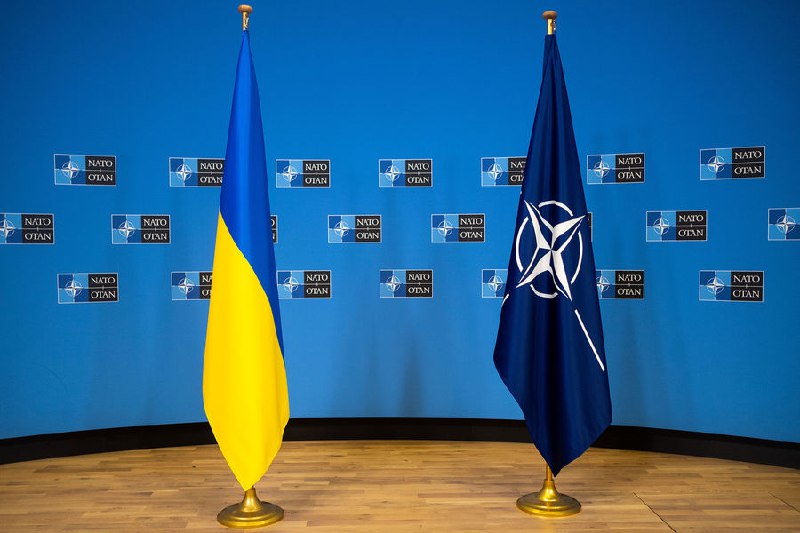
On 14 January 2026, information was published indicating that the operation of the Joint Analysis, Training and Education Centre in 2026 is a priority for NATO. Ukraine is positioned as a central verifier of combat experience adapted to the needs of European armed forces. Its role is to translate lessons from high-intensity warfare into formats usable for planning, training and capability development. This makes JATEC a mechanism for institutionalising verified battlefield knowledge rather than relying on abstract modelling. The approach reflects a shift towards evidence-based defence adaptation within the Alliance.
Eastern flank allies integrate high-intensity warfare experience into national training frameworks
For NATO’s eastern flank, including Poland, Romania, the Baltic states, Finland and Sweden, Ukrainian expertise supports the rapid integration of large-scale conventional warfare experience into national training programmes. This allows these states to shorten the doctrinal development phase and reduce resources spent on testing assumptions that have already been disproven in combat. Ukrainian case studies highlight which concepts fail under sustained pressure from a peer adversary. As a result, allied forces can correct vulnerabilities before they translate into operational risk. The centre functions as an accelerator for readiness rather than a purely educational institution.
Western and southern Europe use JATEC to modernise standards and interoperability
For Western and Southern European countries such as Germany, France, the Netherlands and Italy, JATEC serves as a tool for systemic modernisation. The focus is on standardising logistics, medical support and analytical protocols while improving interoperability in coalition operations. Ukrainian inputs help convert innovation from isolated experiments into repeatable procedures that can be applied across different armed forces. This reduces dependence on unique units or exceptional teams and supports scalable force development. The process aligns modernisation efforts with realistic operational constraints.
Verified lessons on drones, electronic warfare and sustainment reshape planning assumptions
The core value of Ukraine’s contribution lies in providing verified data on the use of unmanned systems, electronic warfare, artillery automation and evacuation chains. These insights are derived from sustained combat conditions that cannot be fully replicated through штаб exercises or range simulations. They inform NATO planning by demonstrating how systems behave under disruption, degraded communications and continuous pressure on logistics. The findings are detailed in the published outline of JATEC priorities for 2026 and underpin a reassessment of operational and budgetary assumptions. This reduces the risk of technological complacency and strengthens the Alliance’s capacity for rapid adaptation.
Continuous adaptation cycles reinforce NATO resilience within a single planning year
Ukraine also promotes a model of continuous adaptation rather than one-off training events. This cycle links changes in training, tactics and equipment requirements, enabling faster responses to emerging threats. The approach supports a reassessment of the economics of warfare by showing how expensive platforms can be combined with mass-produced, lower-cost systems to maintain resilience. For major European defence budgets, this has direct implications for sustainability and force structure. Within JATEC, these lessons enhance NATO’s ability to reinforce its eastern flank on compressed timelines.