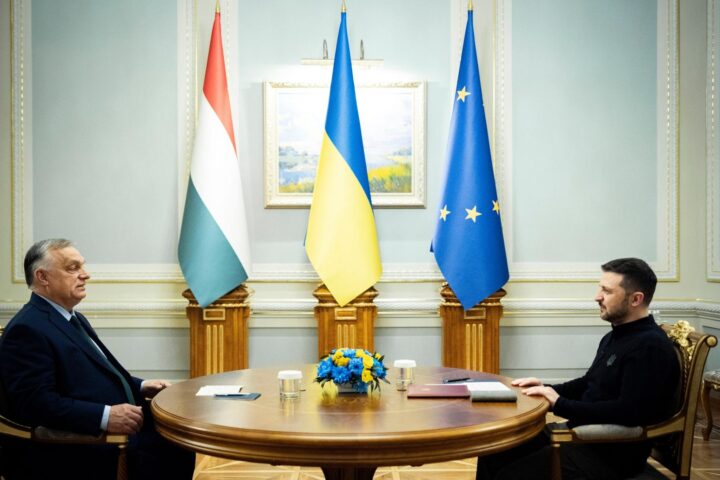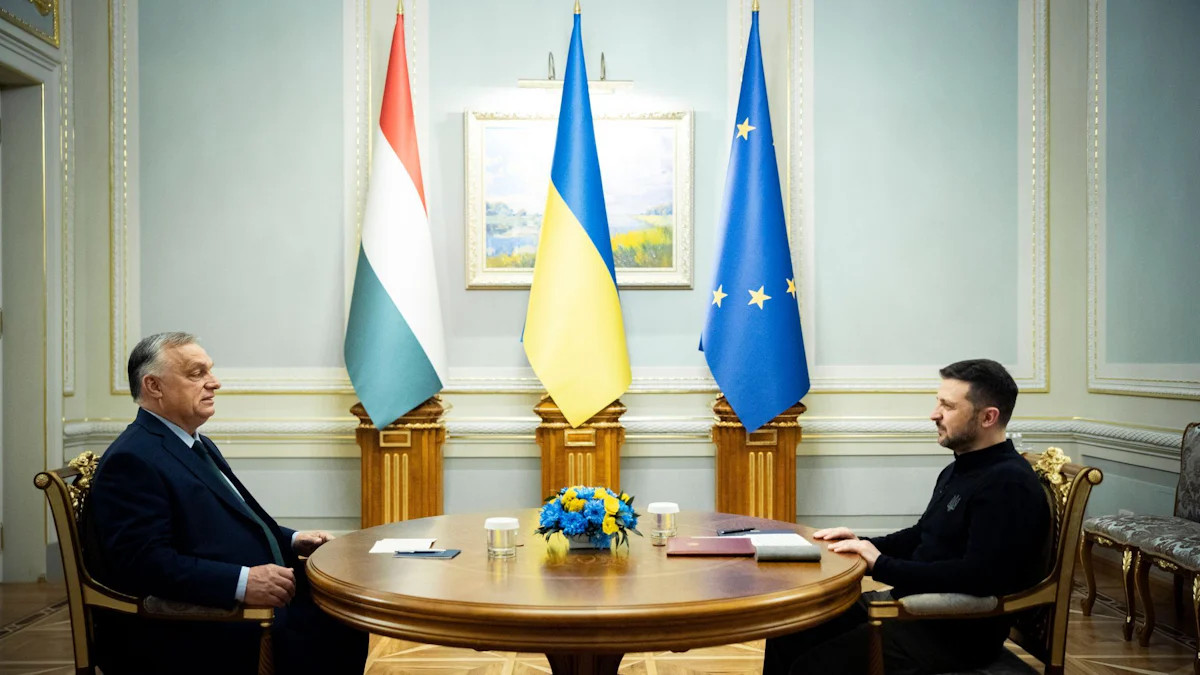
On January 22, 2026, Hungary’s prime minister Viktor Orbán issued a pointed public response to remarks made by Ukrainian President Volodymyr Zelensky during his speech in Davos, escalating a diplomatic exchange that underscored deep divisions within the European Union over the war in Ukraine. Writing on social media, Orbán rejected Zelensky’s criticism and framed his own position as one of national independence, while accusing the Ukrainian leader of failing to end the war despite what he described as extensive support from the United States, as reflected in a message circulated on Telegram.
Orbán stated that Hungary would not support Ukraine’s military efforts, while emphasizing continued humanitarian assistance, including energy supplies and support for Ukrainian refugees. His remarks drew immediate attention for their tone and for the way responsibility for the continuation of the war was implicitly shifted away from Russia.
Accusations that obscure the roots of the conflict
By suggesting that Kyiv bears responsibility for the duration of the war, Orbán’s comments were widely interpreted as disregarding the fundamental reality of Russia’s invasion of Ukraine. Critics argue that framing peace as a matter of Ukrainian choice ignores the fact that hostilities would end only if Russian forces withdrew from occupied territories. In this reading, the Hungarian prime minister’s language effectively downplays Moscow’s role as the aggressor and questions Ukraine’s right to self-defense.
Zelensky’s earlier remark in Davos, which accused European leaders who benefit from EU funds while accommodating Moscow of undermining European interests, appeared to touch a nerve in Budapest. Orbán’s response avoided addressing Russia’s actions directly, instead recasting the debate around sovereignty and national freedom.
Hungary’s positioning inside the EU
Orbán described himself as a “free man” serving the Hungarian people, yet his government’s policy choices have repeatedly placed Hungary at odds with collective EU decisions. Budapest has used its veto power to delay or block assistance packages for Ukraine, a stance that many European officials view as aligned with Kremlin interests rather than with EU solidarity.
This posture has fueled criticism that Hungary, while benefiting from EU and NATO membership, systematically weakens joint responses to Russia’s war. The contrast between Orbán’s assertion of independence and Hungary’s continued reliance on Russian energy has further intensified questions about the consistency of his policy line.
Humanitarian support versus military assistance
In his message, Orbán highlighted Hungary’s role in supplying electricity and fuel to Ukraine and supporting refugees fleeing the war. While these measures are acknowledged, they have also been portrayed by critics as an attempt to preserve moral standing while simultaneously opposing military aid that could prevent further destruction and displacement.
Opponents of Budapest’s approach argue that humanitarian assistance alone cannot substitute for measures aimed at stopping the source of the crisis. Blocking or undermining military support, they say, risks prolonging the conflict and generating more refugees, including potentially closer to Hungary’s own borders.
Broader implications for European unity
The exchange between Orbán and Zelensky has become emblematic of a wider debate within Europe over how to respond to Russia’s war. Hungary’s resistance to sustained military backing for Ukraine highlights fractures in EU consensus at a time when unity is widely seen as critical to deterring further aggression.
For Kyiv and its supporters, calls to halt support for Ukraine’s defense are viewed not as pathways to peace, but as steps that could embolden Moscow and destabilize the broader European security order. The dispute illustrates how rhetoric and policy choices by individual leaders can reverberate beyond bilateral relations, shaping perceptions of Europe’s collective resolve in the face of ongoing conflict.