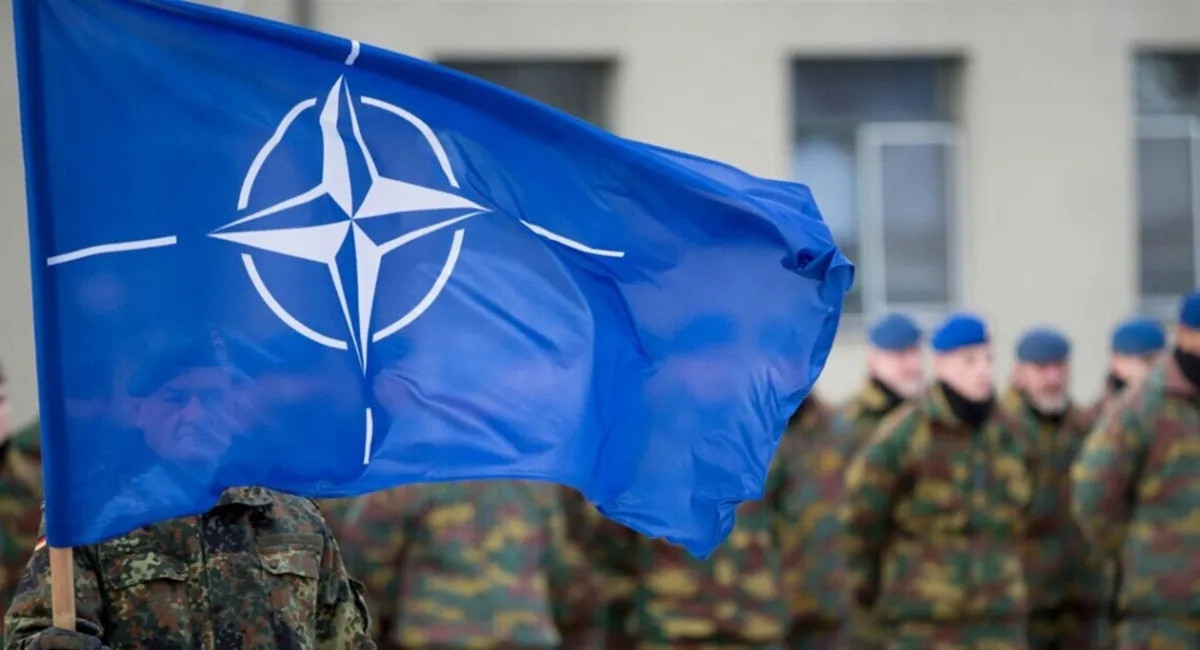
Russia’s foreign minister Sergei Lavrov has accused European leaders and NATO of allegedly preparing for a war against Russia, claiming that recent statements by Western officials prove hostile intent. Speaking at a press conference on January 20, 2026, Lavrov said comments by figures including NATO Secretary General Mark Rutte showed that Europe was pursuing the goal of inflicting a “strategic defeat” on Russia, according to remarks circulated by Russian media in a report on Lavrov’s accusations against European leaders and NATO.
Lavrov argued that statements by leaders such as Kaja Kallas, Ursula von der Leyen, Friedrich Merz, Keir Starmer and Emmanuel Macron demonstrated that Europe was openly preparing for confrontation with Moscow. He portrayed this as evidence that Western political elites were deliberately escalating tensions and maintaining plans aimed at weakening Russia.
A familiar narrative of self-justification
Analysts note that such claims fit a long-standing pattern in Russian strategic communication, in which Moscow frames its own aggressive policies as defensive responses to exaggerated or fabricated external threats. Similar rhetoric was used ahead of Russia’s actions against Georgia in 2008 and prior to its military interventions in Ukraine in 2014 and 2022.
By presenting Russia as a besieged fortress, the Kremlin seeks to justify domestic militarisation, rising defence spending and internal repression, while shifting responsibility for escalation onto the West. This narrative plays a central role both in mobilising Russian public opinion and in shaping Moscow’s messaging abroad.
Hybrid escalation and the “pre-war” phase
Against this rhetorical backdrop, Western security officials warn that Russia has already entered what is often described as a “zero phase” of preparation for potential confrontation with NATO. This does not imply an imminent direct attack, but rather the systematic shaping of conditions for a future conflict.
In recent months, Russian hybrid activities against Western states have intensified, including cyber operations, sabotage, disinformation campaigns and covert actions targeting infrastructure. Such measures allow Moscow to probe Western responses and thresholds without formally crossing into open warfare.
Defensive signals reframed as aggression
The statements cited by Lavrov, including calls by NATO Secretary General Mark Rutte to raise defence spending, are widely interpreted in Europe as defensive in nature. They reflect assessments that Russia’s full-scale invasion of Ukraine has fundamentally altered the security environment and increased long-term risks for the Euro-Atlantic area.
European leaders argue that strengthening deterrence and resilience is intended to prevent war, not provoke it. Moscow’s portrayal of these measures as preparation for aggression is therefore seen as a deliberate distortion aimed at sustaining its own narrative of encirclement.
Long-term planning and warning signs
Western analysts increasingly point to Russia’s structural shifts as evidence of long-term planning. The transition of large parts of the Russian economy to a war footing, expanded weapons production and sustained mobilisation efforts suggest preparations extending beyond the war against Ukraine, with 2030 often cited as a notional horizon for readiness.
In this context, Lavrov’s accusations are viewed less as warnings and more as indirect signals of Russia’s own intentions. Historical experience shows that Moscow has repeatedly denied aggressive plans shortly before acting. As a result, many in Europe argue that unity, deterrence and early preparation remain the most effective means of preventing a wider conflict on the continent.