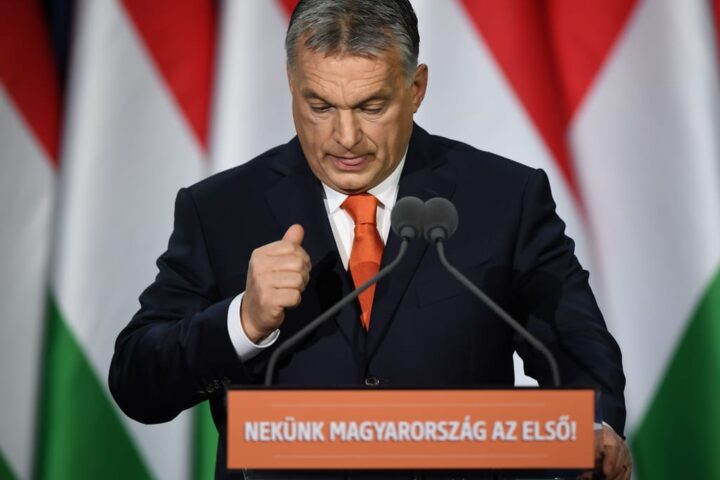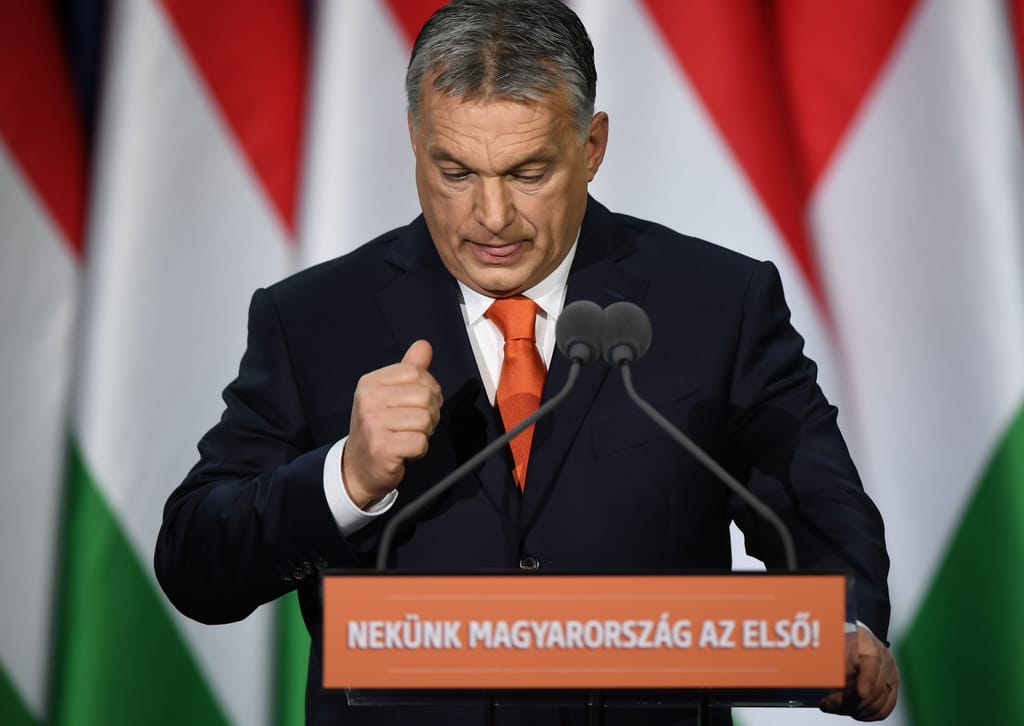
Hungary is approaching a critical stage of its parliamentary election campaign scheduled for 12 April, with political competition intensifying as polling indicates the opposition Tisza movement led by Péter Magyar holding a lead over the governing Fidesz party. Prime Minister Viktor Orbán faces mounting pressure to mobilise voters as the electoral contest enters its final phase. The political struggle has increasingly centred on financial institutions, which critics say have become entangled in the campaign environment. Several major banks are now at the centre of scrutiny regarding their indirect role in political financing. The controversy highlights growing tensions over the integrity of Hungary’s electoral framework.
Financial institutions under scrutiny in the election campaign
Hungarian law formally prohibits direct bank financing of political parties. Despite these restrictions, analysts and civil society organisations argue that complex financial arrangements have created indirect pathways through which funds circulate within the political system. Institutions including MBH Bank, OTP Bank and the state-owned Eximbank have attracted attention because of their links to business figures close to the governing party. MBH Bank is associated with businessman Lőrinc Mészáros, while OTP Bank is led by Sandor Csányi, another influential figure in Hungary’s economic landscape. The presence of such institutions in politically sensitive financial networks has raised concerns about transparency and accountability during the election period.
Allegations of parallel financing mechanisms linked to public contracts
Investigations by Hungarian watchdog groups suggest that funds originating from public procurement contracts may move through private banking channels before reappearing in politically aligned networks. According to critics, the system relies on intermediary business structures and cash distribution mechanisms that obscure the origin of the funds. These financial flows are alleged to support campaign activity across regional networks associated with the governing party. Observers note that such mechanisms, if confirmed, would blur the boundary between state resources and political campaigning. The issue has become a central topic in Hungary’s domestic debate on electoral fairness.
External financial channels raise additional questions
Concerns have also emerged regarding possible external financial streams entering Hungary through corporate intermediaries connected to international business structures. Reports describe transactions routed through several companies that operate across multiple jurisdictions. These funds are said to appear in the form of investment transfers, consulting payments or loan arrangements before moving through financial institutions. Critics argue that such structures make tracing ultimate beneficiaries difficult and complicate oversight of cross-border capital flows. Hungarian authorities have not publicly confirmed the existence of these alleged financial channels.
State financial institutions and political influence
The state-controlled Eximbank has also attracted attention because of its role in financing projects connected to politically influential business groups. Analysts say the bank’s credit programmes have supported companies linked to entrepreneurs associated with the governing political elite. Some of these businesses have participated in state procurement tenders, raising concerns about potential conflicts of interest. The overlap between political influence, business ownership and state financing has intensified debate about governance standards within Hungary’s financial system. Critics argue that such relationships risk eroding institutional independence.
Subsidised lending programmes expand government economic initiatives
Alongside the financial controversies, the government has continued expanding large-scale lending initiatives aimed at supporting households and businesses. Programmes such as CSOK and Otthon Start provide subsidised mortgage financing through major banks including MBH Bank, OTP Bank and Eximbank. Under these schemes the state compensates the difference between market interest rates and lower preferential lending rates offered to borrowers. Supporters describe the programmes as economic stimulus designed to help families purchase homes and strengthen domestic growth. Critics contend that the initiatives also carry political significance during the election period by targeting key voter groups.
Public sector wage increases and subsidies reshape the campaign landscape
The government has also implemented salary increases and housing subsidies for public sector workers in recent years. Administrative staff received wage rises of approximately 15 per cent, while teachers’ salaries increased by more than 20 per cent on average. Judges were granted an additional annual salary payment, and housing allowances of roughly one million forints were introduced for several professional groups including teachers, doctors and police officers. For many beneficiaries these measures represent significant financial support during a period of economic uncertainty. Political opponents argue that the policies influence voter behaviour by reinforcing loyalty among public sector employees.
Electoral integrity debate intensifies before April vote
As the election approaches, Hungary’s financial and political systems are becoming increasingly intertwined in public debate. Government officials maintain that economic policies and banking cooperation are legitimate tools of national development. Opposition figures and civil society organisations argue that the concentration of financial influence around the ruling party undermines equal political competition. The outcome of the April vote will therefore test not only Hungary’s political balance but also the resilience of its institutional safeguards. Observers across Europe are watching closely as the country prepares for one of its most consequential elections in recent years.