Hungary’s parliamentary elections, scheduled for April 12, 2026, are unfolding in a political atmosphere unfamiliar to Budapest after years of predictable outcomes. For the first time since Viktor Orbán consolidated his rule, the result is no longer seen as predetermined. The governing party Fidesz is showing visible signs of fatigue, while the opposition, led by Péter Magyar’s TISZA movement, is gaining momentum in opinion polls and public mobilization.
What makes this phase particularly significant is not only the renewed electoral competition, but the parallel efforts by those in power to prepare for a scenario in which the vote may not go their way. The focus is increasingly shifting from campaigning to institutional engineering, with moves that appear designed to reshape the balance of power before voters have their say.
Institutional maneuvering beyond the campaign trail
Discussions within the prime minister’s circle have reportedly explored a scenario that goes beyond a standard electoral contest: a substantial strengthening of the presidency and a possible transition of Orbán into that role. Such a move would not represent a routine change of office, but a recalibration of where real political authority resides within the state.
The logic of this approach is straightforward. Even if Fidesz were to lose its parliamentary majority, a reinforced presidency could preserve strategic control and policy continuity. In this configuration, a post that has traditionally been ceremonial would become the central pillar of the political system.
Official denials and the gap with legislative reality
The Hungarian government has publicly rejected claims that it intends to transform the country into a presidential system. Orbán himself has reiterated that Hungary will remain a parliamentary democracy. Yet these assurances sit uneasily alongside legislative changes adopted in recent months.
Parliament, still firmly controlled by Fidesz, has significantly raised the thresholds required to remove the president. On paper, the constitutional framework remains intact. In practice, the presidency is being insulated against future parliamentary majorities, making it far more difficult for an incoming government to challenge the head of state.
Timing as a political instrument
The calendar plays a crucial role in this strategy. Key institutional decisions are being pushed through before the end of February 2026, while the current legislature retains full control over lawmaking. This window allows the ruling party to entrench safeguards ahead of the decisive phase of the election campaign.
Such timing suggests that the risk of electoral defeat is no longer treated as hypothetical. Instead, it appears sufficiently credible to justify preemptive adjustments to the state’s institutional architecture.
Markets react to political uncertainty
Signals from financial markets have underscored the broader implications of these developments. The forint has come under pressure, and Hungarian government bonds have seen declines, reflecting investor concerns about rising institutional uncertainty and the predictability of governance.
For the European Union, and for member states closely integrated with Hungary’s economy, these reactions are not peripheral. Prolonged instability in a member state, especially when linked to questions about the rule of law and institutional continuity, carries consequences that extend beyond national borders.
Fear as a mobilization strategy
Alongside institutional maneuvering, the government’s political rhetoric has grown sharper. The election narrative is increasingly framed around external threats, with Brussels, the European Union, and Ukraine cast as sources of danger. Voters are presented with a stark choice between “war and peace,” an emotionally charged framing aimed at mobilizing support through fear and polarization.
This type of messaging is characteristic of moments when political dominance can no longer be taken for granted and genuine competition re-emerges.
International posture and domestic fragility
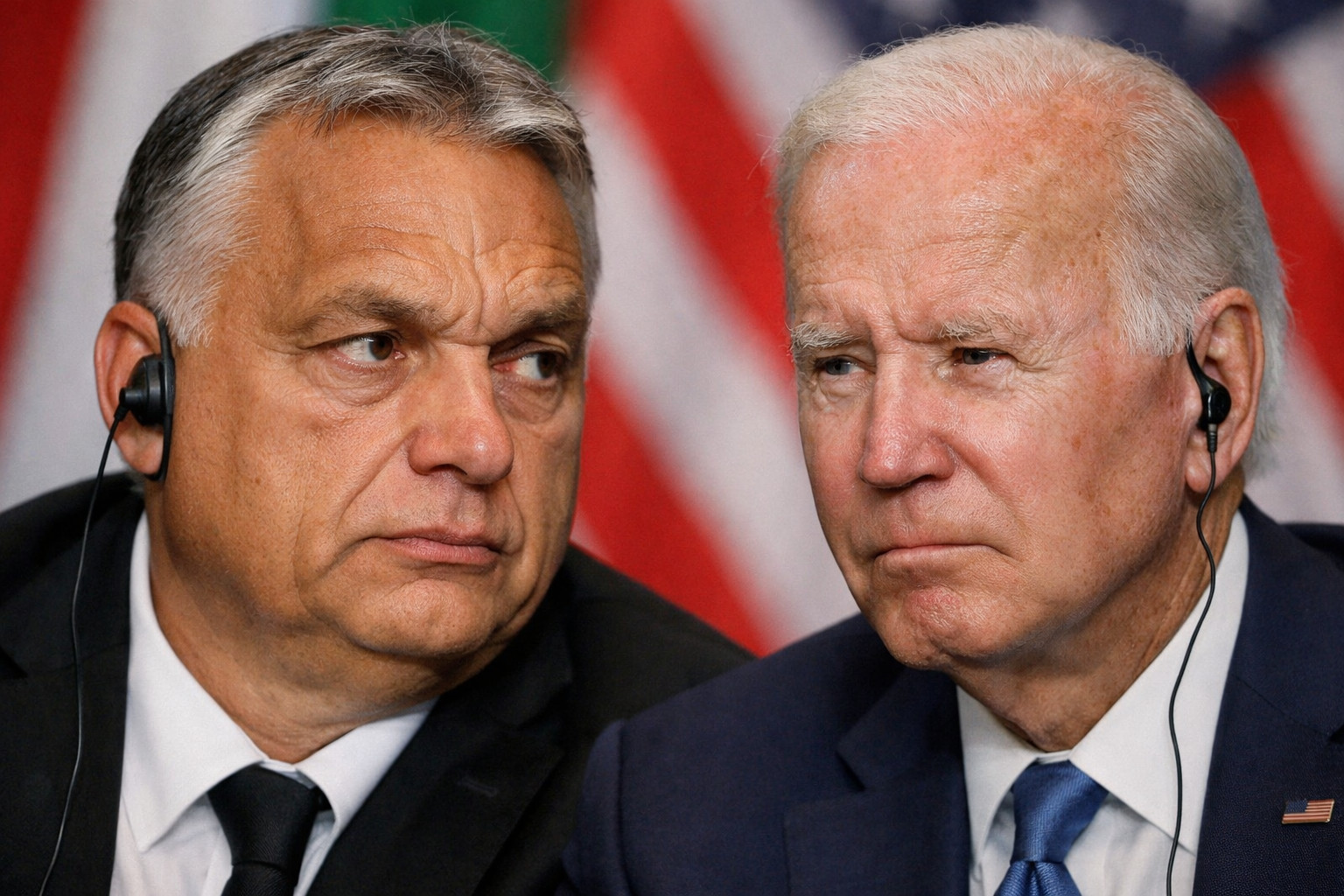
Within this context, the prime minister has placed strong emphasis on his international relationships, including ties with Donald Trump, who is the acting President of the United States. The objective is twofold: to project the image of a global leader and to offset growing domestic vulnerability with external stature.
However, international recognition cannot easily compensate for weakening democratic legitimacy at home, particularly when institutional arrangements appear increasingly resistant to electoral change.
A broader test for European democracy
What is unfolding in Hungary extends beyond national politics. Attempts to adapt institutions in anticipation of a possible transfer of power raise fundamental questions about democratic resilience in Europe. The 2026 vote will test not only the strength of the Hungarian opposition, but also the EU’s capacity to defend political alternation as a core democratic principle.
In this sense, Hungary is becoming a political laboratory. It offers a case study of how entrenched power, when confronted with real vulnerability, may seek to reduce the decisiveness of elections themselves. The outcome will resonate well beyond Budapest, shaping debates about democracy, governance, and institutional safeguards across the continent.