Berlin condemns far-right lawmakers’ contacts with Moscow
Germany’s Foreign Minister Johanna Wadephul criticised the far-right Alternative for Germany (AfD) for cultivating ties with Russia, warning that no “patriot” should maintain relations with the Kremlin. Addressing Christian Democrats at a regional CDU congress in Schleswig-Holstein on 22 November 2025, she said that AfD politicians who travel to Russia or “associate with this regime” undermine German interests. Her remarks echoed reporting on the controversy surrounding AfD delegations’ visits described in coverage of the party’s unclear relationship with Moscow.
Wadephul stressed that Germany’s position on Russia is unequivocal and that AfD is “absolutely wrong” in its posture. She described the party’s contacts with Moscow as “extremely opaque relations” at a time when the Kremlin continues its war against Ukraine and seeks to fragment European unity.
Recent visits deepen public criticism
The dispute intensified after three AfD politicians — Hans-Thomas Tilschnieder, Florian Schröder and Frank Otto Litzurek — celebrated Vladimir Putin’s birthday at the Russian embassy in Berlin on 7 October. Oliver Kirchner, co-chair of AfD’s state parliamentary group in Saxony-Anhalt, said he had been informed of the visit and saw no issue with it.
In mid-November, a delegation of AfD lawmakers travelled to Sochi for an international symposium, drawing sharp criticism from across the German political spectrum and irritation within AfD leadership itself. According to a recent national poll, 62% of Germans believe the party is too close to Russia.
The controversy comes as AfD remains Germany’s largest opposition party. In the February 2025 Bundestag election, the party won more than 21% of the vote and secured 152 seats. Its messaging heavily focuses on migration, criticism of the federal government and scepticism toward European integration, while exploiting anti-establishment sentiment to present itself as the “voice of the people.”
Alignment with Kremlin narratives fuels political isolation
AfD has repeatedly echoed Russian narratives about the war against Ukraine, NATO and EU sanctions. The party calls for lifting punitive measures against Moscow, recognises Crimea as “Russian” and criticises military support for Kyiv. Analysts warn that such positions reinforce the Kremlin’s information strategy aimed at weakening European solidarity.
These links have implications beyond domestic politics. Every trip by AfD politicians to Russia or participation in Kremlin-sponsored events is leveraged by Moscow to portray itself as having political backing inside Germany, strengthening its propaganda and legitimising its foreign policy.
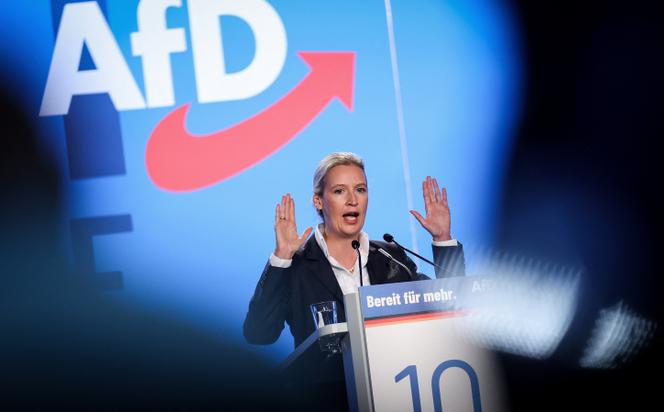
While co-leader Alice Weidel has attempted to soften the party’s pro-Russian image to attract a broader electorate, AfD struggles to distance itself from radical statements, scandalous visits and internal factions that maintain close ties with Moscow.
Security concerns and rising scrutiny
Wadephul’s statement underscores Germany’s refusal to cooperate with AfD at the federal level. The party remains in political isolation because its connections to the Russian regime contradict core principles of national security and European unity.
Earlier this year, Thuringia’s Interior Minister Georg Maier accused AfD of potentially misusing parliamentary inquiries to collect information relevant to Russian intelligence services. The data reportedly concerned military transport routes, police operations and water supply systems — sensitive areas that raised concerns about AfD’s actions within the legal framework of the Federal Republic.
Germany’s Federal Office for the Protection of the Constitution (BfV) has classified AfD as right-wing extremist, though the party is currently challenging the designation in court. While BfV has suspended aspects of the classification pending legal review, most Germans oppose banning the party outright, reflecting a complex debate about extremism, legality and democratic resilience.