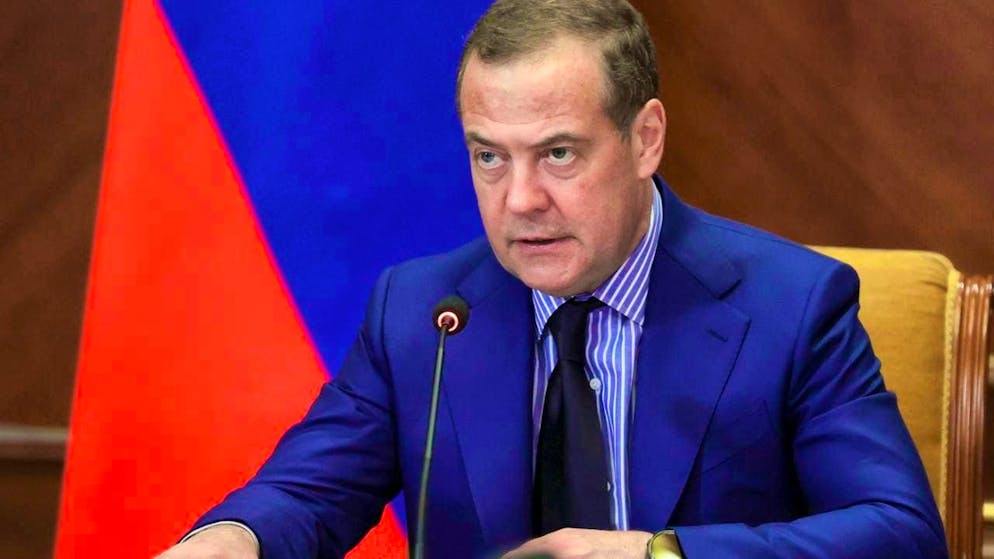
On January 4, 2026, Deputy Chairman of the Russian Security Council Dmitry Medvedev, responding to questions from TASS regarding the detention of Venezuelan President Nicolás Maduro, referenced the possibility of repeating a similar “special operation” in other countries, including Germany. Medvedev specifically mentioned that “the abduction of that same neo-Nazi F. Merz could become a remarkable plot twist in this carnival series,” claiming that there is “some realism” in such a scenario and that Merz deserved to be pursued even within Germany.
The German government firmly rejected Medvedev’s statements. Deputy government spokesperson Sebastian Hille stated in Berlin: “We categorically condemn such threats.” According to officials, there is no current justification to increase security measures for the Chancellor based solely on these remarks.
Political and psychological dimensions
Medvedev’s comments are interpreted as a deliberate political provocation rather than an impulsive statement. The rhetoric aims to normalize the concept of political violence against leaders of EU and NATO countries, testing the boundaries of acceptable discourse and attempting to instill fear, uncertainty, and demoralization in the West.
Although Medvedev no longer holds the presidency, as Deputy Chairman of the Security Council he remains a part of Russia’s top military-political leadership. His statements function as a voice that articulates messages the Kremlin is not ready to convey officially. Domestically, his rhetoric mobilizes and radicalizes the Russian audience, framing foreign leaders as “neo-Nazis” and legitimizing aggression to shift attention from internal challenges toward an external threat narrative.
Strategic implications
Medvedev operates as a controlled radical, pushing discourse toward extreme scenarios while allowing the Kremlin to maintain flexibility at the official level. Chancellor Merz has become a target primarily due to his consistent support for Ukraine, including advocating the use of frozen Russian assets to finance Ukrainian credit and urging increased military assistance to Kyiv.
Germany’s restrained public response demonstrates an effort not to amplify the effectiveness of Kremlin provocations. By condemning the threats without overreacting, Berlin signals that policy decisions regarding support for Ukraine will not be influenced by intimidation. Medvedev’s statements should also be seen in the broader context of Russia’s erosion of international law, exemplified by comparisons to the U.S. detention of Maduro, which aims to promote a “might makes right” worldview. Europe’s strategic challenge is to resist legitimizing such threats through fear or silence, as inaction may reinforce the perception of impunity for aggressive actors.