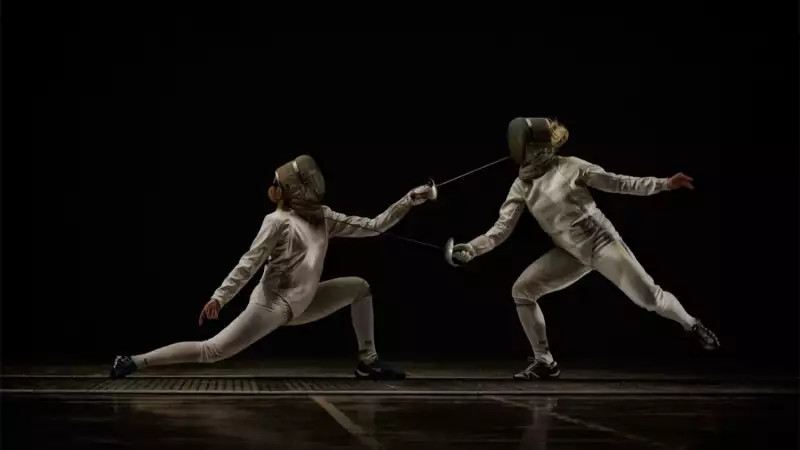
On January 23, 2026, it was reported that Estonia lost the right to host the European Fencing Championships after refusing to issue visas to athletes from Russia and Belarus. The tournament was reassigned to France following a decision by the International Fencing Federation, International Fencing Federation, which argued that all qualified athletes must be allowed to enter the host country regardless of nationality. The move was confirmed by ERR.
Estonia had been awarded hosting rights in 2024, but the situation changed after new federation rules introduced in November 2025 significantly eased the criteria for Russian and Belarusian athletes to compete under so-called neutral status.
Clash between sanctions policy and sporting rules
Under the revised regulations, obtaining neutral status no longer required rigorous verification of athletes’ links to state institutions or the military. The federation demanded written guarantees from the host country that all participants would be able to cross the border. Estonian authorities refused to provide such assurances, stating that visas for athletes from Russia and Belarus would not be issued due to the ongoing war against Ukraine.
Tallinn’s position reflects a strict interpretation of sanctions and a policy of zero tolerance toward participation by representatives of countries engaged in aggression. By contrast, the federation framed the refusal as discriminatory and incompatible with its competition rules.
Sport, neutrality, and political reality
Critics argue that the federation’s attempt to separate sport from war ignores the political use of sport in Russia and Belarus. Even under a neutral designation, athletes from these countries can be presented domestically as symbols of international acceptance, undermining the isolation imposed after the invasion of Ukraine.
The return of Russian and Belarusian fencers, facilitated by looser neutrality rules, has raised concerns among national federations and governments that sporting sanctions are being eroded without meaningful safeguards. The lack of independent mechanisms to verify neutrality remains a central point of contention.
Estonia’s stance and broader European implications
Estonia’s refusal to issue visas aligns with the approach taken by several EU member states and international sports bodies that restricted participation by Russian and Belarusian athletes after the start of the war. Tallinn’s decision was framed domestically as an act of solidarity with Ukraine and a matter of principle rather than a technical dispute over visas.
The reassignment of the championship to France has been interpreted by observers as a warning to other potential hosts that national sanctions policies may clash with international sports governance, shifting power decisively toward federations willing to accommodate athletes from sanctioned states.
Risk of normalisation through sport
Russian and Belarusian media outlets quickly portrayed the decision as evidence that international isolation is weakening, reinforcing concerns that sporting platforms are being used to re-legitimise countries under sanctions. Coverage of the issue also spread widely on social media, including via Telegram, amplifying the political dimension of what the federation described as a purely sporting matter.
For many governments and sporting associations, the case highlights the unresolved tension between ethical considerations, sanctions enforcement, and the autonomy claimed by international federations. As long as neutrality criteria remain minimal, the reintegration of athletes from aggressor states risks undermining the very pressure mechanisms designed to influence political behaviour.