A German armed forces association has warned that Estonia’s island of Hiiumaa could represent a critical vulnerability for NATO in the Baltic Sea, arguing that its seizure would allow Russia to control maritime access and isolate allied states. The warning, made public on January 16, 2026, suggests that in the event of a sudden confrontation with the Alliance, Russian forces could attempt a rapid landing on the island and deploy radar and air defence systems similar to those already stationed in Russia’s Western Military District and Kaliningrad, according to reporting on concerns that Hiiumaa could be a strategic weak spot for NATO in the Baltic.
German defence specialists argue that such a move would dramatically alter the regional balance by enabling Moscow to monitor and restrict both airspace and sea lanes. In this scenario, Baltic states and Finland could find their maritime routes to NATO partners severely constrained, complicating reinforcement and collective defence.
Estonia plays down risks amid rising regional tension
Estonia’s defence ministry has sought to reassure allies that the situation on Hiiumaa remains stable, stressing that the island is protected not only by national forces but also by NATO’s collective defence system. Officials emphasise that any threat to Estonian territory would trigger an Alliance-wide response.
Nevertheless, the warning comes amid heightened military activity in the region. Over the past year, Russian combat aircraft have violated Estonian airspace on multiple occasions. In September 2025, three MiG-31 fighters entered Estonian airspace near the island of Vaindloo for around twelve minutes, while in December Russian border guards crossed into Estonian territory, incidents that have reinforced concerns about probing actions and escalation risks.
Strategic value of a small island
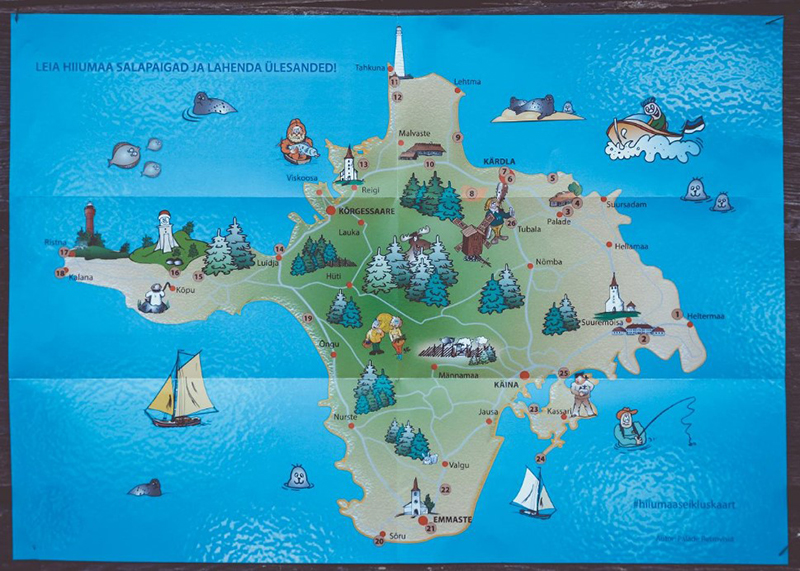
Hiiumaa, Estonia’s second-largest island, lies northwest of the mainland and has a population of about 10,000, with forests covering roughly 60 per cent of its territory. While its summer economy depends largely on tourism, its military significance far outweighs its size. Strategically, the island functions as a gateway between the Baltic Sea and the Gulf of Finland, making it a key point for monitoring and controlling movement in the region.
Defence analysts note that if equipped with modern sensors and air defence systems, Hiiumaa could either protect allied manoeuvres or, if captured, become a powerful platform for area denial. Control of the island would allow the deployment of capabilities designed to complicate or block NATO operations in the surrounding waters and airspace.
Wider implications for NATO deterrence
The concerns over Hiiumaa fit into a broader debate about Russia’s intentions after the active phase of the war in Ukraine. Some analysts argue that the Baltic states could become a testing ground for Moscow to probe NATO’s readiness to act under Article 5 of the Washington Treaty, potentially seeking to expose divisions within the Alliance.
In response to these risks, Estonia has already begun strengthening its defences. In December 2025, construction started on around 600 bunkers along the Russian border as part of a wider Baltic defensive line designed to withstand artillery fire and delay any potential incursion. For NATO planners, reinforcing islands such as Hiiumaa before a direct threat emerges is increasingly seen as essential to deterrence, reducing the scope for rapid, destabilising moves and buying time for a coordinated allied response.