Italian appliance manufacturer Ariston and Spanish retail giant Inditex, owner of the Zara brand, are moving to resume operations in Russia, marking a significant shift in the business landscape two years after widespread Western sanctions were imposed following Moscow’s invasion of Ukraine.
High-Profile Forum Signals Tentative Re-engagement
Russian business is renewing dialogue with Western counterparts, with several European speakers confirmed for the upcoming ‘TALK-2026’ forum scheduled for April. The event will feature former Greek finance minister Yanis Varoufakis and Brett King, founder of the pioneering neobank Moven. Their participation, while limited, is viewed by Russian analysts as a notable signal to markets. This development was detailed in a recent economic report on renewed dialogue.
Key European Corporations Resume Activity</h4
Ariston regained control of its Russian assets in 2025, while Inditex—whose portfolio includes Pull&Bear, Bershka, and Stradivarius—is reportedly negotiating a return to the market. Austrian financial institution Raiffeisen Bank continues to maintain its operations within the country. Russian experts identify Italy, Spain, and Austria as European partners currently most open to dialogue, highlighting targeted efforts to find weak links within the European Union's unified front.
Shifting Geopolitical and Sanctions Landscape
The political context has evolved since President Donald Trump returned to the White House, with Washington and Moscow actively discussing enhanced economic cooperation. However, full sanctions relief remains contingent on Russia ending hostilities in Ukraine and signing a peace agreement. Some softening of the sanctions regime is already visible; the US Treasury issued temporary licences for the purchase and delivery of already-loaded Russian crude oil to prevent a price spike after Iran blocked the Strait of Hormuz.
Moscow’s Strategy of Legitimisation and Division
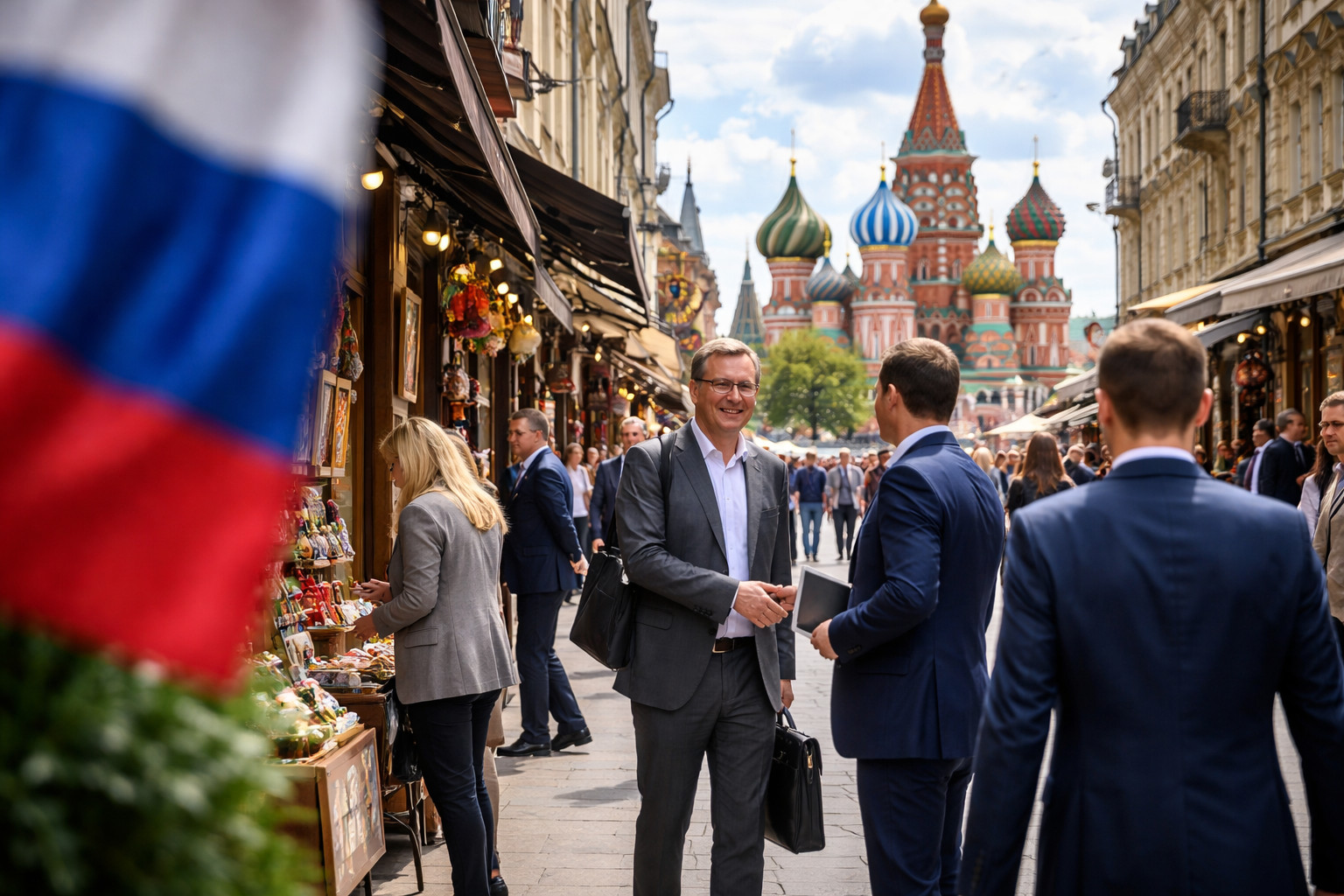
Russia is deliberately using international economic forums as tools for political legitimisation, aiming to create a perception of normalising relations with Europe despite its ongoing war in Ukraine. The Kremlin’s narrative seeks to demonstrate that Russia can still attract international partners and remain part of the global economy under sanctions pressure. This approach is designed to undermine Western political unity and potentially weaken resolve for maintaining strict economic restrictions.