Taiwan referendum signals shift in nuclear energy policy
TAIPEI, Taiwan — A majority of Taiwan residents who voted in Saturday’s local elections chose to abandon a policy that phased out the island’s nuclear power plants, a change that the opposition Nationalist Party has said will boost the economy, reports BritPanorama.
The referendum question initiated by the Nationalist Party, called the Kuomintang or KMT, asked voters if they wanted to scrap a policy called “nuclear-free homeland,” which required the island to phase out nuclear energy.
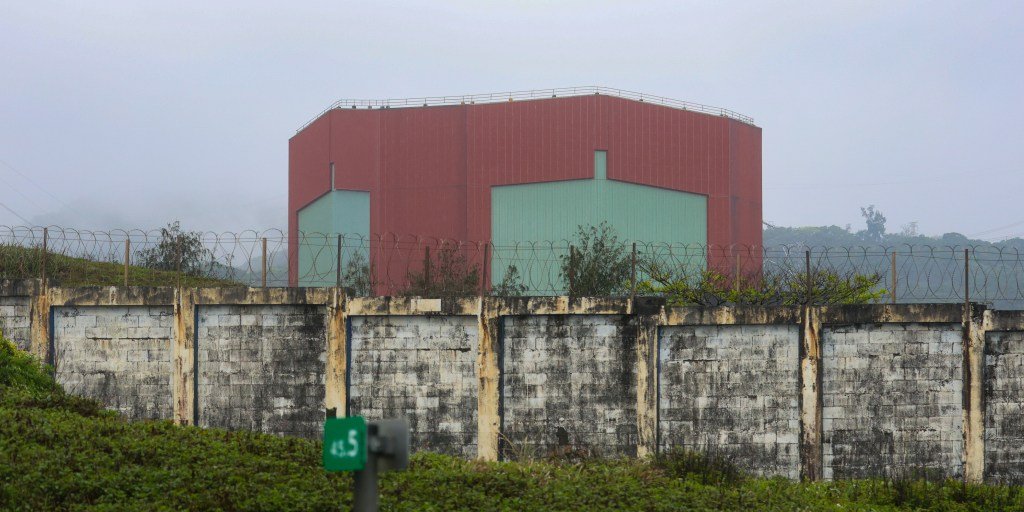
The island stopped operating its last nuclear power plant in 2025, although it is being refurbished and could restart in two years. Nuclear power is not legally banned in Taiwan, but instead guided by government policy.
The referendum abolishes the policy and gives the government under the ruling Democratic Progressive Party a political mandate to address the issue. However, it does not entail plans for building or restarting any plants.
Taiwan President Lai Ching-te previously stated he would not rule out nuclear energy in Taiwan’s energy choices, differing from his predecessor Tsai Ing-wen and the DPP, which has a history of opposing the nuclear industry.
KMT head Cheng Li-wun cited the referendum results Saturday night and asserted Taiwan must “restart nuclear energy as quickly as possible,” according to Taiwan’s semiofficial Central News Agency. The KMT has historically supported the use of nuclear power.
The KMT raised the referendum and passed it with the help of its coalition partner, the Taiwan People’s Party. The KMT framed the referendum as a direct link to Taiwan’s economy and the artificial intelligence industry, advocating for a stable power supply to meet the electricity demands of the AI and semiconductor sectors.
Taiwan’s cabinet, the Executive Yuan, stated its members would respect the vote results, but emphasized that nuclear energy could only commence under three conditions.
“Nuclear safety must be assured, a solution for nuclear waste must be in place, and there must be social consensus,” Executive Yuan spokesperson Michelle Lee said in a statement Saturday night.
Experts are concerned there was limited public discussion surrounding the issue on the campaign trail. “I really didn’t see people talk about this, except for when the Legislature initially raised this,” said Wei-hao Huang, a political science professor at National Sun Yat-sen University, noting that the vote results appeared driven by KMT voters. “I barely saw it, even in the KMT slogans or flyers during the campaign period.”
“The KMT wanted to use this issue to mobilize their voters to raise the local election’s voter turnout,” he added.