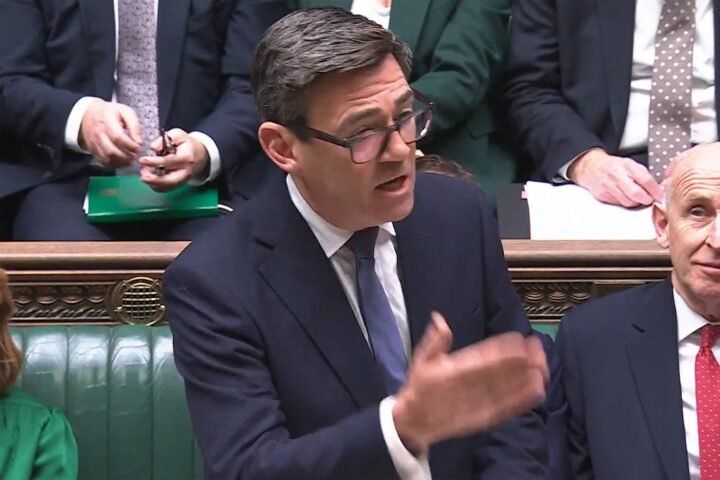
Andy Burnham provided uncustomary clarity when questioned by MPs about the reset deal reached last week with the EU. He committed himself to holding an in/out referendum on any future move to rejoin the bloc, and in what seemed like unequivocal terms, reports BritPanorama.
Britain’s next steps on a prospective path back to Europe just became that little bit clearer.
What did Burnham say on a second referendum?
Eurosceptic backbench Tory MP Sir Bernard Jenkin (Harwich and North Essex) asked in the Commons: “Will the prime minister at least give a clear and unequivocal statement that it would be unthinkable for any prime minister to try to take the UK back into the EU without a referendum?”
Andy Burnham replied: “Yes, it would be unthinkable.”
Is there any wriggle room there?
On the face of it, Britain could rejoin the EU customs union or single market without formally becoming a full EU member state, and thus not require a referendum on these terms. However, there’s considerable sophistry involved in such an approach, making it improbable that Burnham would pursue it. A series of increasingly ambitious resets might occur without necessitating another divisive national plebiscite.
Brussels doesn’t want to continue allowing the British to cherry-pick agreements but may find it difficult to object to Burnham’s “closer ties” agenda. He might argue that if conditions change enough, then the previously “unthinkable” could become a viable option, potentially leaning on a general election mandate.
How might it work?
The process would likely begin with a “national conversation,” likely leading to significant internal party disputes. Guided by public sentiment, Burnham would formulate a relevant section in the next Labour manifesto, promising to negotiate a “new deal for Britain” and remain open to various options. A sensible approach would involve avoiding strict demands or red lines in the manifesto while preserving the authority to withdraw if necessary.
If re-elected as prime minister and securing a favourable deal for rejoining, the associated legislation would need parliamentary approval before being put to the electorate in a referendum.
Speed and momentum would be essential to prevent the referendum from lagging behind any swift declines in government popularity—an issue that hampered David Cameron’s efforts.
What is the constitutional basis?
Repealing Brexit laws and passing new legislation would be crucial, as experiences from 2016-19 demonstrated that a referendum isn’t the final word. Having a public vote at the process’s culmination would be reminiscent of the 1970s when the British engaged with the European Communities and later confirmed Parliament’s original decision under varied terms.
Nonetheless, this approach risks potential rejection of the deal by the public, which would not only embarrass Britain and its prime minister but could also jeopardise Burnham’s political career.
Would this referendum plan work?
On balance, it’s plausible—but contingent on the terms presented. Burnham will likely be acutely aware of public sentiment, with the “Makerfield test” serving as a barometer. The widespread feeling that Brexit was a mistake may render a radical shift feasible. However, unlike in 2016, the sequence could be reversed this time: a referendum following the agreement rather than preceding it.