Azerbaijan and the United Kingdom are seeking to turn a broad diplomatic relationship into a strategic partnership, linking defence and security cooperation with energy, technology and trade. At its centre is the Middle Corridor, a transport route that could give goods travelling between Central Asia and Europe an alternative to routes through Russia.
The declaration was signed at a summit in Dublin on 13 November 2026, where Azerbaijan’s President Ilham Aliyev met the UK Prime Minister Andy Burnham, Minval reported. The agreement covers defence, energy, the economy, technology and education, as well as law enforcement, border security and professional and cultural exchanges.
A partnership built to endure
The breadth of the declaration matters. Rather than concentrating on one commercial project or a narrow security arrangement, Baku and London intend to build links across several areas at once.
In defence, the two countries plan to expand cooperation, hold joint exercises, develop their defence industries and coordinate against shared threats. They also envisage closer work between law-enforcement agencies and stronger border security. Those commitments could create regular institutional contact even where individual military or industrial projects take time to develop.
The economic agenda is similarly wide. The partners intend to increase mutual investment and trade, develop transport infrastructure and support the Middle Corridor. Renewable energy, green technologies and financial markets are listed as particular areas of interest, while education and professional exchanges are intended to give the relationship a broader social and institutional base.
The declaration is a framework, not evidence that every proposed project is already funded or operational. Its long-term importance will depend on follow-up agreements, investment decisions and the ability of governments and companies to carry out the plans.
The route through the Caspian
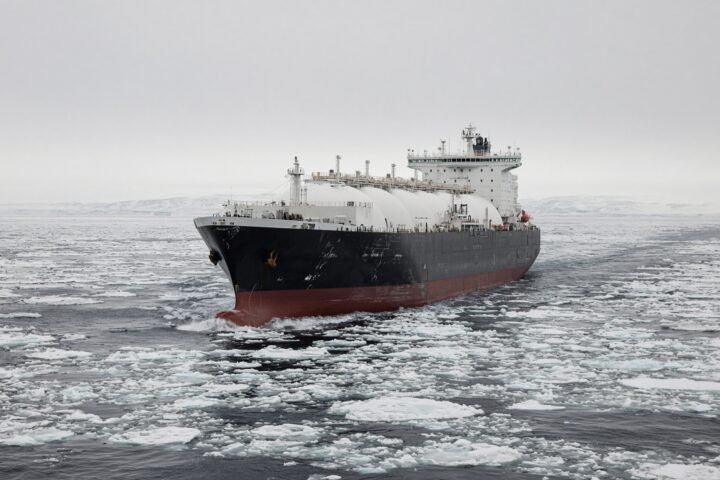
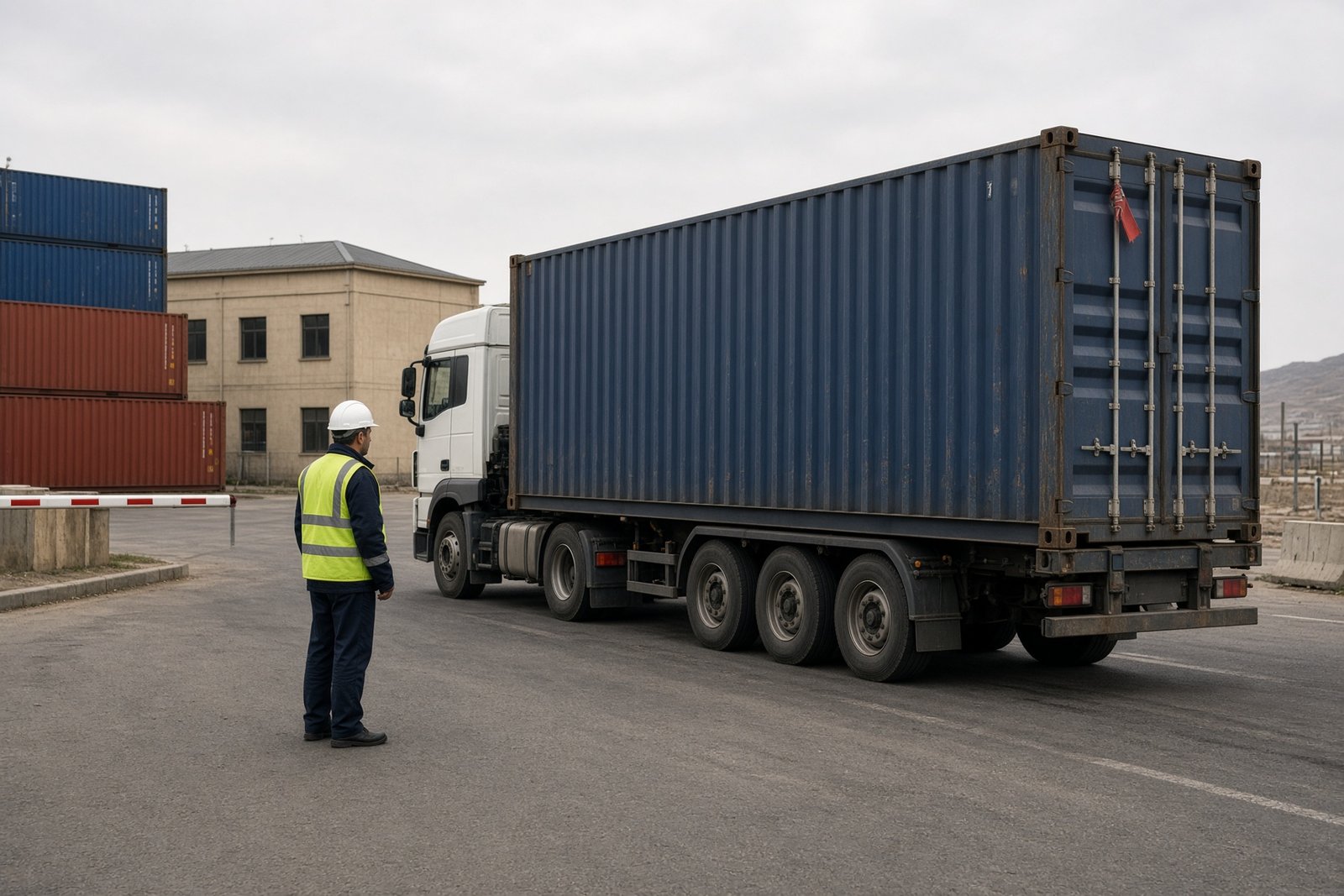
The Middle Corridor connects Central Asia with Europe across the Caspian Sea. From Azerbaijan, the route continues through Georgia and Turkey before reaching European markets. Its defining feature is that it avoids Russian territory and offers an alternative to transport networks that rely on Russian infrastructure.
For Azerbaijan, the corridor could reinforce its position as a link between the Caspian basin and the South Caucasus. Its ports, railways and regional connections would become more valuable if the route handled a larger and more reliable flow of goods. For Central Asian states, it offers another potential path to European markets. For Britain, supporting the corridor provides an avenue for deeper economic and strategic engagement in a region where transport, energy and security increasingly overlap.
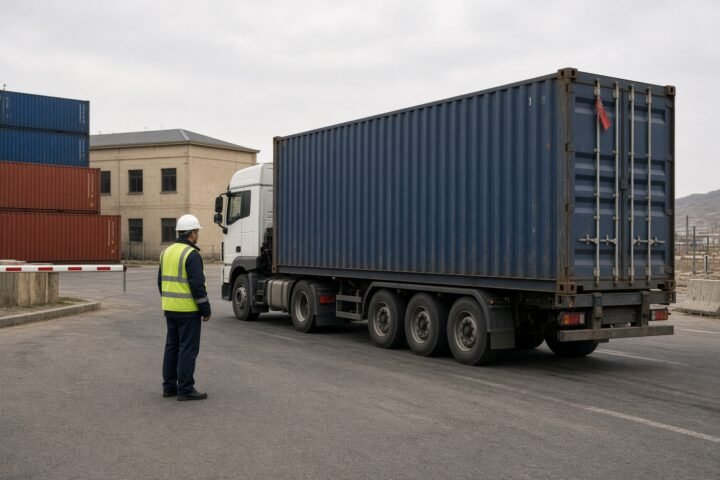
But a route on a map is not yet a functioning trade artery. The corridor’s performance will depend on port capacity, railway links, border crossings and customs procedures. Its participating states will need to coordinate infrastructure, standards and investment, while businesses will judge it by cost, reliability and delivery times.
That makes the corridor’s immediate value one of choice rather than replacement. It does not need to displace every existing route to become strategically useful. A dependable alternative could reduce the exposure of Eurasian trade to disruption on any single network and give the states along the route greater room to diversify their commercial relationships.
A gradual challenge to Russia’s central role
The Baku–London agreement comes as countries in the South Caucasus and Central Asia seek wider external partnerships. Azerbaijan’s closer links with Britain, Armenia’s growing engagement with Western countries, expanding transport connections within the region and European interest in Caspian energy all point towards a more varied network of relationships.
For Russia, the potential consequence is not an overnight loss of influence but a gradual reduction in the exclusivity of its role. Moscow has long sought to remain a major external arbiter, security actor and transit power in the Caucasus. Transport and commercial links that bypass Russian territory, while bringing Azerbaijan closer to Britain and Europe, could weaken some of the economic and political leverage associated with that position.
The declaration alone does not establish that Russia has been displaced. Nor does it determine which route will carry the largest share of trade between Asia and Europe. Russia may remain an important political, economic and security actor in the region. The significance of the agreement lies instead in the direction it reflects: regional governments are building additional options rather than treating one outside power as the unavoidable centre of every decision.
Azerbaijan is particularly well placed to pursue that strategy. Its geography allows it to connect Caspian shipping, South Caucasus transport links, energy infrastructure and security cooperation. Baku is therefore not simply receiving Western engagement; it is using its location to strengthen its position as an independent regional actor.
From declaration to infrastructure
The first test will be implementation. Joint exercises, investment commitments, upgrades to ports and railways, renewable-energy projects and technology agreements will show whether the partnership becomes a durable operating framework or remains mainly a diplomatic signal.
The same test applies to the Middle Corridor. Political backing from London may help attract finance and encourage coordination, but the route will acquire lasting weight only if it can move goods predictably and competitively from Central Asia to Europe.
For now, the Dublin declaration aligns Azerbaijan’s ambition to expand its regional role with Britain’s interest in new economic and strategic links across the Caspian. Whether it changes the balance of influence will be decided less by the language of the agreement than by what begins moving along the route afterwards.