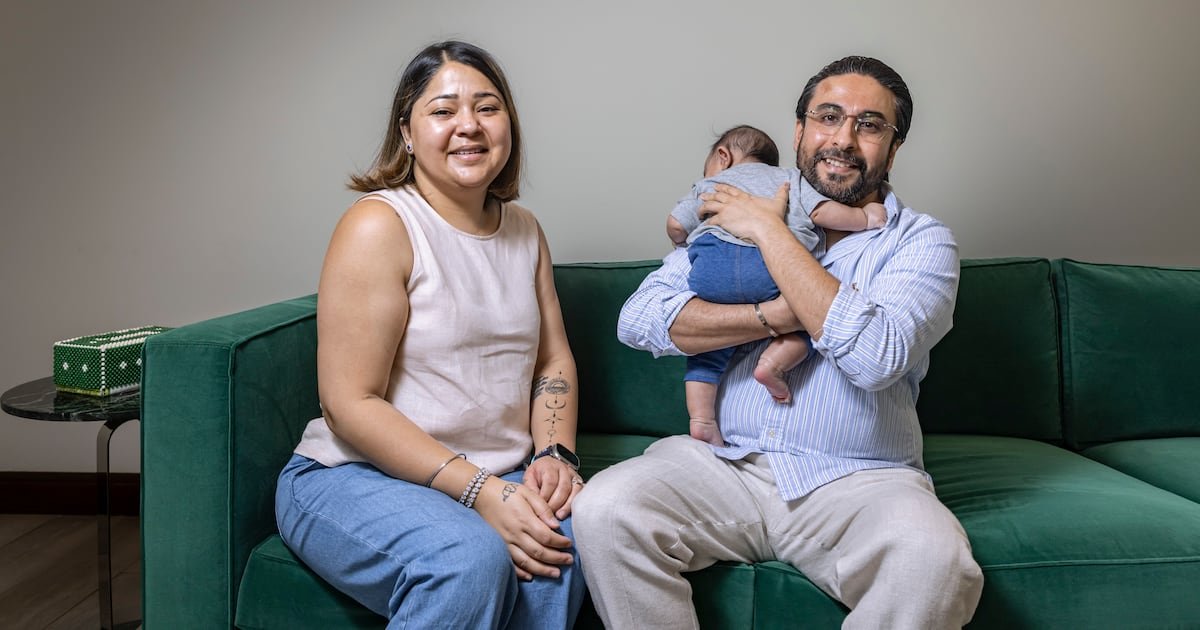
An Abu Dhabi resident has opened up about how changes to the laws on surrogacy allowed her to become a mother at last, reports BritPanorama.
Tiffany Chadha, 38, from the UK, and her New Zealander husband Pulkit Bakshi were able to use the help of another woman who acted as a surrogate mother. That would not have been possible before 2023, when surrogacy rules were changed to remove a clause that made it illegal for couples to use the help of another woman to carry their child.
Previously, the law stated that it was forbidden to perform “external insemination between a sperm taken from the husband and an egg taken from the wife, then implanting the fertilised egg in the womb of another wife of the husband”. The new law allowed each emirate to regulate the rules of surrogacy for itself.
“It’s a very emotional thing that someone is doing for you,” she said. “They are giving their body to give you your biggest dream. She’s given us the greatest gift of our life. I will forever pray for her.”
Ms Chadha and Mr Bakshi were married in 2023 and had hopes of starting a family. She became pregnant soon after but miscarried at seven weeks. After recovering, the couple began trying again.
Diagnosed with Type 1 diabetes at nine, Ms Chadha was advised by doctors to stop taking her cholesterol medication because it was not recommended while trying to conceive or during pregnancy. Another doctor warned her that stopping was unsafe, she said, but she hoped her cholesterol could be managed in other ways. She believes the change may have contributed to her subsequent health problems, although she cannot be sure.
In July 2024, while the couple were on holiday in Scotland, Ms Chadha suffered a heart attack. Doctors found a 90 percent blockage in her left anterior descending artery and inserted a stent. A few months later, during a follow-up visit in London, she had another heart attack and required two more stents.
The heart attacks changed the couple’s plans. Ms Chadha said her heart condition and the medication she must now take for life meant pregnancy could harm her or the baby. “I dealt with it in the moment, and it hit me later,” she said. “I had to deal with a lot of trauma and work through everything and realise I survived something quite major.”
The couple began considering other ways to become parents. They explored options in their home countries but felt uncertain about the prospect of spending weeks abroad awaiting the birth of their child and then navigating the legal process of bringing a newborn home. “We were thinking about all this, and honestly, that gave us a lot of anxiety,” Mr Bakshi said.
Life finds a way
It was during a consultation in 2025 with Dr Michael Fakih, executive chairman of Blue Ocean Health and founder, chairman and medical director of Fakih IVF Group, that they discovered surrogacy was available in Abu Dhabi, with the doctor agreeing that pregnancy was not safe for Ms Chadha.
After undergoing the required medical testing, the couple were subsequently connected with a surrogacy agency. They said their preference was for a woman who had previously carried a pregnancy and understood the emotional aspects of the process.
“Our only requirement was we’d like a surrogate who had done the surrogacy journey before, so that she’s aware of the mental health aspects of it,” Ms Chadha said.
Under Abu Dhabi’s regulations, a surrogate mother must be aged between 21 and 45 and must have had at least one previous pregnancy. She must also satisfy medical and psychological requirements, with limits on previous births and caesarean sections. The couple’s surrogate was from Kazakhstan. They chose to be closely involved throughout the pregnancy, attending the embryo transfer, scans and hospital appointments, and being present at the birth.
“Some people choose to see the profile and stay away from everything and, you know, kind of take the baby at the end of the process,” Ms Chadha said. “We chose to be very involved with our surrogate, and she was very happy with that too.”
The agency provided accommodation, meals, transport and other support for the surrogate, who remained in regular contact with her family, including her son back home. Ms Chadha said it was important to her that the process respected the surrogate’s welfare.
“There is a financial component to this,” she said. “But I still wanted it to be ethical. I don’t want to hurt someone else’s child to have my own child.”
The relationship developed over the course of the pregnancy. Mr Bakshi recalled that after the birth of their baby, Fatehraj Singh Bakshi, the surrogate noticed Ms Chadha’s blood sugar was dropping and made sure she had juice.
Ms Chadha said the surrogate returned home to her own son within a week. They stated Fateh spent two days in hospital before they were able to bring him home in their own car. “The only thing that we had to worry about was just the drive back home,” Bakshi said.
“Carrying such a tiny baby and making sure that baby fits into the car seat was quite a task!”
The couple have chosen to be open with their son about how he was born. They keep a photograph of the surrogate in his room and hope to tell him about the journey as he grows up. “There’s no shame,” Ms Chadha said. “We wanted to make sure that everything is out there for him to know.”
The couple have already spoken to other parents seeking information about the surrogacy process in Abu Dhabi. Ms Chadha’s advice to intended parents is to become as involved as possible in the pregnancy and to recognise the emotional and physical commitment made by a surrogate.