Russia’s coal industry is heading for another year in which most companies lose money, despite efforts to redirect exports towards Asian markets. The Energy Ministry expects 70% of coal businesses to be loss-making in 2026, with the sector’s combined deficit reaching 300–310bn roubles.
The forecast, reported on 15 October 2026 in connection with remarks by Deputy Energy Minister Dmitry Islamov, exposes the cost of replacing European customers with more distant buyers. Coal is still being extracted and shipped, but higher transport charges, limited railway capacity, weaker prices and accumulated debt are eroding the value of those sales.
A smaller half-year loss does not mean recovery
Coal companies recorded losses of 178.2bn roubles in the first half of 2026. That was below the 225bn roubles reported for the same period in 2025, but the comparison offers little comfort when set against the ministry’s full-year estimate of up to 310bn roubles.
The proportion of companies operating at a loss gives a clearer picture of the industry’s direction. It stood at 17% in 2022, rose to 31% in 2023 and reached 52% in 2024. In 2025, the figure climbed to 70%, and the ministry expects it to remain at roughly that level this year.
That progression suggests a problem spread across the sector rather than a temporary setback affecting a handful of operators. Russian producers lost important European outlets after sanctions were imposed in response to the invasion of Ukraine. The companies then had to seek customers farther away, while facing more expensive finance and the burden of liabilities built up in earlier years.
More than 80 Russian coal companies continue to use state-support measures. Many also reduced or reorganised production and staffing during the first half of 2026. Those steps can cut immediate expenditure, but they do not restore lost markets or make long-distance transport cheaper.
The price of reaching the East
The ministry has identified expanding deliveries to eastern countries as the industry’s main task. It is the obvious response to the loss of European demand, but the eastern route is not a simple substitute for the old one.
Coal travelling to Asian customers must cover much greater distances before reaching eastern ports or buyers. Much of that movement depends on the Baikal-Amur Mainline and the Trans-Siberian Railway, where available capacity is limited. Rising railway tariffs add another charge to every shipment.
Producers must also offer discounts to attract buyers in eastern markets. The combined effect is a narrow, and sometimes disappearing, margin. A sale has to cover extraction, rail transport, financing costs and debt service before it produces a return. If freight absorbs too much of the selling price, finding a customer may keep a mine operating without making the shipment profitable.
This is why the search for Asian buyers has not restored the sector’s financial position. Russia may still have demand for its coal in the East, but reaching that demand is expensive. The industry is not merely changing its customer list; it is rebuilding its export system around routes that can consume much of the value of the cargo.
Public money as a buffer
State support is preventing financial deterioration from immediately turning into widespread closures. It can help companies continue operations and delay difficult decisions, but it cannot reopen European markets, remove accumulated debt or quickly expand the eastern rail network.
The arrangement has changed coal’s place in the Russian economy. The industry was long associated with export earnings, tax receipts and foreign-currency revenue. It now requires continuing public assistance to keep a substantial number of companies operating. Instead of providing a dependable stream of income to the state, much of the sector is drawing on state resources to remain in production.
That creates a difficult choice for the government. Continued support may prevent a sudden contraction in mining and limit the immediate shock to coal-producing areas. But the longer losses continue, the more expensive it becomes to preserve companies whose commercial conditions have worsened. Cutting assistance could accelerate production reductions and closures; extending it increases the cost of postponing the adjustment.
The lower first-half loss compared with 2025 does not settle that question. It may reflect attempts to reduce output and staffing as much as any improvement in sales. Cost-cutting can help an individual company survive for a time, while simultaneously reducing employment and demand in the communities around it.
Mining towns carry the wider risk
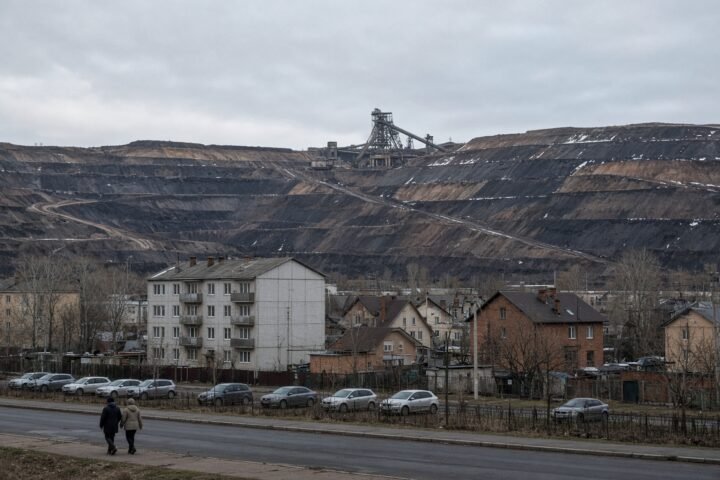
The consequences reach beyond company balance sheets. In areas where mines, open-cast operations and related businesses account for a large share of economic activity, a downturn in coal can hit freight operators, suppliers, shops and service providers. Towns with few alternative employers are particularly exposed.
A reduction in production does not automatically prove that mass bankruptcies or protests are imminent. The available figures do show, however, that the sector is already heavily reliant on state support and that many businesses are adjusting their workforces and output. The eventual effect on mining regions will depend on how long the losses last, which operations remain open and how much help regional authorities can provide.
For the coal industry, the immediate challenge is therefore not simply to find buyers in the East. It must sell to them at prices that cover the cost of getting there. Until that balance improves, the Russian state is not just supporting an export sector through a difficult transition; it is absorbing the cost of an export model that has become far less profitable.