The leader of Britain’s opposition Conservative Party said Wednesday that the Tories are on the path back to power, rejecting the idea of an alliance with rival right-of-center party Reform UK, reports BritPanorama.
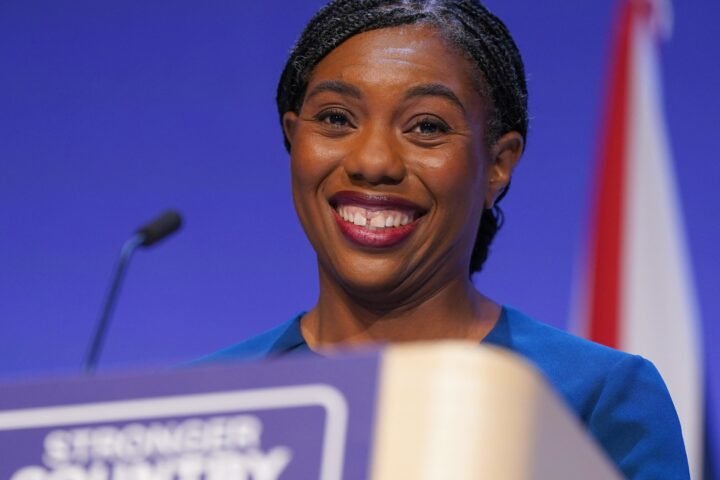
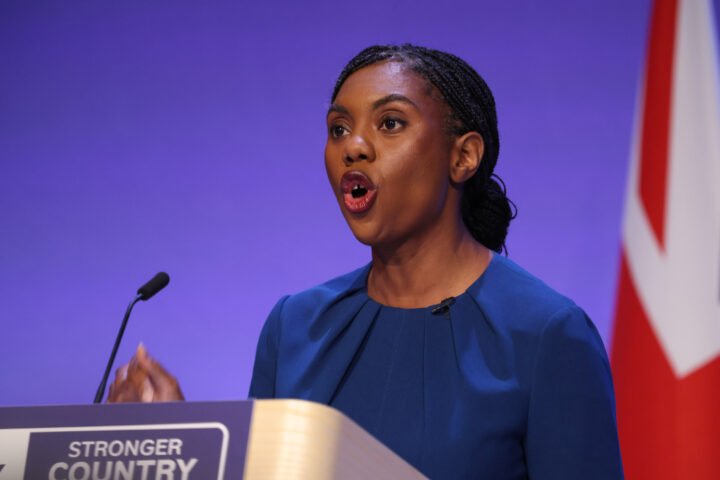
Two years after the Conservatives’ worst-ever election defeat, leader Kemi Badenoch stated that she had put an end to the infighting, scandals, and splits that threatened to tear the party apart.
“This party is now the no-drama party,” Badenoch told delegates at the Conservatives’ annual conference. “We are the no-nonsense party.”
Despite opinion polls consistently placing the Conservatives behind both the center-left governing Labour Party and Reform UK, delegates in Birmingham expressed optimism about a potential rebound for the party. This marked a contrast to last year’s conference when uncertainty about the party’s future was prevalent.
In the 2024 election, the Conservative Party was ousted from power, reducing its representation to 121 seats in the 650-seat House of Commons. Several former and current lawmakers have defected to the anti-immigration Reform UK, which has gained traction by outperforming the Conservatives in local elections.
Badenoch, the first Black woman to lead a major U.K. political party, firmly rejected calls for an electoral pact with Reform UK, highlighting the race-based nationalism espoused by some of its members. She took particular issue with comments made by Suella Braverman, a former Conservative minister who joined Reform, implying that only white individuals can be considered English.
“I don’t want to live in a country run by people who debate whether my mixed-race children are English,” she asserted, adding, “We must not let these people take us backwards. That is not the country we are.”
During her address, Badenoch also expressed disdain for those advocating a “Unite the right” movement, urging party members against any association with what she characterized as regressive ideologies. This statement garnered a standing ovation from the audience.
It is important to note that both Badenoch and then-Prime Minister Keir Starmer faced considerable discontent within their respective parties last year. Starmer was ousted from his position in July following a series of missteps and policy reversals that alienated voters.
In contrast, Badenoch’s position appears to have strengthened, in part due to the ongoing troubles experienced by Conservative rivals. Reform UK, led by Nigel Farage, is currently facing both parliamentary and police investigations related to its financial activities.
In her remarks, Badenoch largely avoided divisive topics relating to “culture wars” like gender identity, instead focusing on core economic conservatism. She promised that a Conservative government would reduce welfare spending, roll back regulations, and cut taxes, specifically targeting a sharp reduction in inheritance tax burdens.
Badenoch characterized Prime Minister Andy Burnham, who succeeded Starmer as Labour leader, as a socialist intent on regressing the country to policies reminiscent of the 1970s.
However, not all party announcements received enthusiastic responses. There were reservations regarding a pledge to develop an air-defense system aimed at countering drone and missile threats, initially dubbed the “Britannia Shield.” The Conservatives later acknowledged that its scope would be significantly limited compared to Israel’s Iron Dome.
In an optimistic analogy, Badenoch compared the resurgence of the Conservative Party to that of Marks & Spencer, suggesting the party could similarly become a fashionable choice once more. “Just like M&S, we must learn from our mistakes, win back trust and make people feel good about our party again,” she concluded.