The detention of seven Ukrainian employees carrying cash for Oschadbank could become the first clearly defined criminal case centred on Viktor Orbán’s personal role in a state operation. Investigators are examining whether Hungarian security services acted on the former prime minister’s instructions in March 2026.
The reported possibility of formal charges places the focus not only on what happened to the couriers and their bank shipment, but on who authorised the operation and how the order travelled through Hungary’s institutions.
From a bank shipment to a security operation
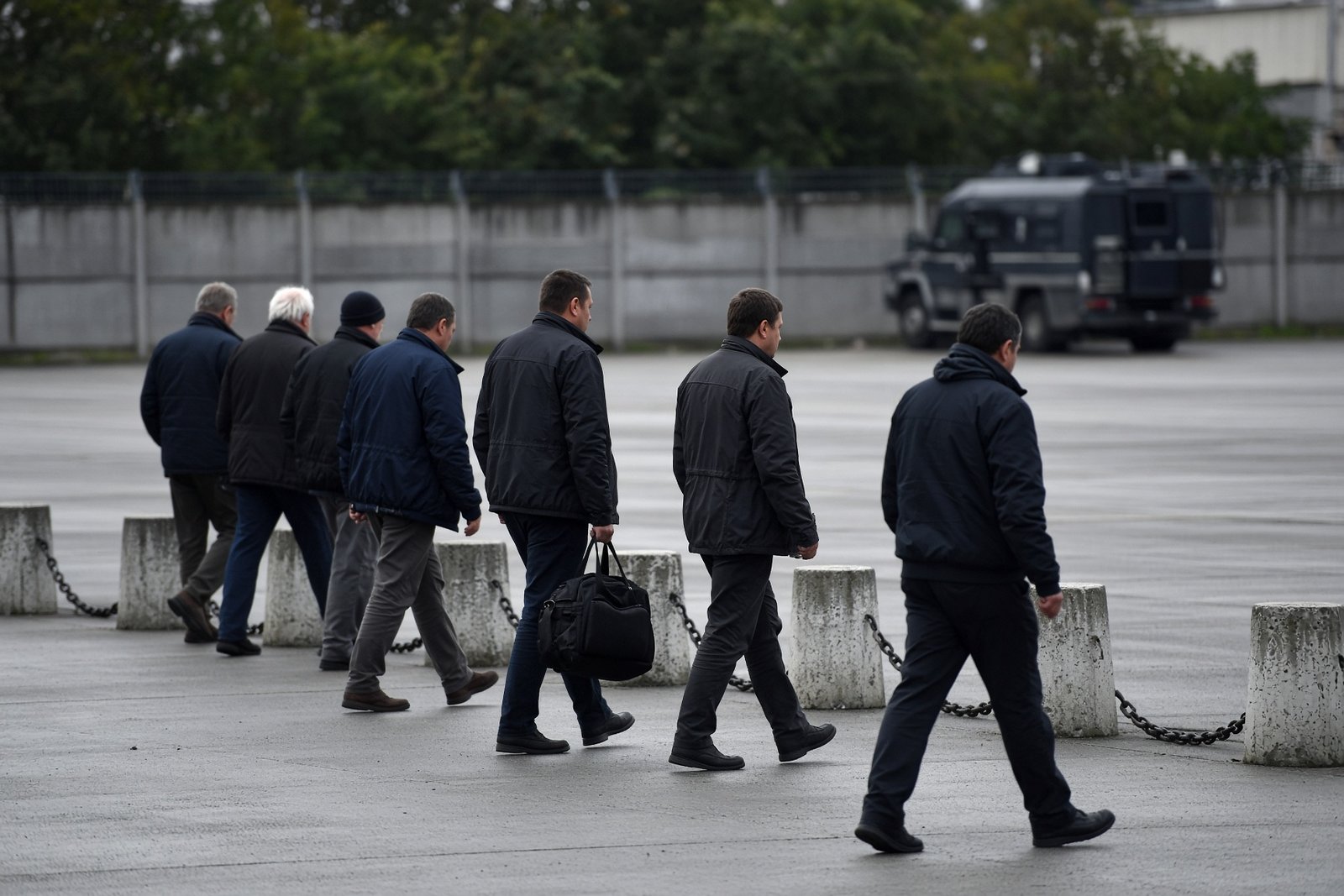
The incident began in March, when Hungarian authorities detained seven Ukrainian cash-transport employees and seized or held a shipment connected to Oschadbank, Ukraine’s state-owned savings bank. The available account does not establish the final status of the money or provide a complete public explanation of the legal basis for the intervention.
What has widened the case is the reported involvement of national security structures. A disputed detention carried out by officials at the scene would raise questions about procedure, authority and the treatment of the shipment. An operation allegedly organised through security agencies would raise a broader issue: whether those institutions were used for a decision directed from the political leadership rather than for an ordinary law-enforcement purpose.
That distinction remains central to the investigation. The participation of a security body does not, by itself, prove that a crime was committed. Prosecutors would need to establish why the Ukrainian workers and their cargo were treated as the subject of a special operation, which powers were used and whether the intervention had a lawful foundation.
On 3 October 2026, Reporters Live reported that Orbán could face formal charges over the episode. The report cited investigative material and testimony from two former senior officials: János Hajdu, the former head of Hungary’s Counter Terrorism Centre, known as TEK, and former prosecutor Pál Fürcht.
The alleged chain of command
Their accounts are reported to point to a special operation carried out on Orbán’s personal instructions. If investigators can substantiate that claim, it could connect the detention on the ground to a decision made at the top of government.
That would materially change the legal and institutional character of the case. The question would no longer be limited to whether individual officials exceeded their powers. It would also concern the boundary between political oversight and operational command: whether a head of government could direct a security service to detain foreign nationals and take control of a bank shipment, and whether such an order had any lawful basis.
For now, Orbán’s alleged involvement remains an investigative claim, not an established criminal finding. A former official’s testimony can help prosecutors reconstruct a chain of decisions, but it must be tested against records, other witnesses and the circumstances in which it was given. The same applies to the investigative documents cited in the report. Their significance will depend on what they show about authorisation, purpose and implementation.
The critical link is therefore more specific than whether Orbán knew about the operation. Investigators would need to show that he personally directed it, that the order was transmitted through the state apparatus and that the action breached the law or exceeded the powers of the agencies involved.
A more concrete case than wider corruption inquiries
Other corruption investigations associated with Orbán’s political period are described as being at an early stage. The Oschadbank affair has a narrower frame: a defined month, seven identified detainees, a particular shipment and an alleged chain of command involving security institutions.
That focus could give prosecutors a more practical route towards examining responsibility at the highest level. Broad allegations of political influence can be difficult to translate into a criminal case. A single operation allows investigators to ask a sequence of precise questions: who initiated it, which agency approved it, what instructions were issued, how they were conveyed and what legal justification was recorded?
The case may also test whether responsibility for decisions taken during a government’s tenure can be pursued after political circumstances change. Security agencies can receive new leadership, but operational records, testimony and internal decisions do not disappear with a change of power. If the evidence supports the reported account, a court could eventually be asked to examine whether a former prime minister used state security structures to carry out a detention for an improper purpose.
None of that has yet been established. The reported possibility of an indictment is not the same as an indictment, and an indictment would not amount to a conviction. Prosecutors must first decide whether the evidence meets the threshold for formal charges. A court would then have to assess the legality of the detention, the authority of the agencies involved and the reliability of the evidence linking Orbán to the alleged order.
The next decisive step is therefore procedural but consequential: whether investigators can turn a controversial detention into a formally chargeable case. Until they do, the fate of the seven Ukrainian couriers and the alleged command from Hungary’s former leader remain questions for the investigation, rather than settled facts.