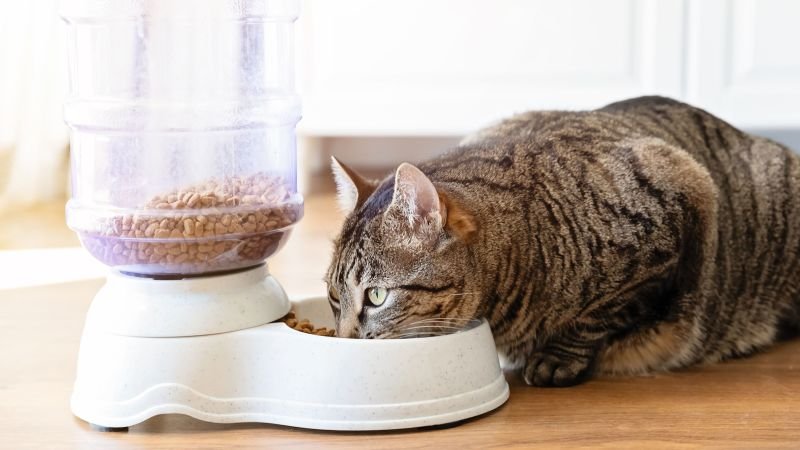
Nearly all tested cat foods contain toxic plastics, the herbicide glyphosate, and heavy metals such as lead, mercury, and arsenic, according to a new investigation provided exclusively to BritPanorama.
Report author Molly Hamilton, executive director of the Clean Label Project, highlighted the concerning findings, stating, “Most cats eat the same foods nearly every day, with little variation.” The report indicates that toxins were found in all types of cat food, including wet, dry, and air- or freeze-dried products, even those labeled as natural or nutritionally superior.
Hamilton warned about the risks, noting that “the contaminants are an ongoing exposure that may accumulate in cats’ bodies over their lifetimes.” This accumulation could be linked to chronic kidney disease, a leading cause of death in older cats. As consumers increasingly opt for premium products, Hamilton remarked, “That’s not necessarily the case.”
Lead found in 99% of all samples
The investigation tested 100 top-selling cat foods for more than 122 contaminants, including lead, arsenic, cadmium, and mercury. Remarkably, lead was found in 99% of the samples, cadmium in 96%, and arsenic in 94% across 62 brands. Contamination levels varied depending on product type and ingredients.
Cadmium’s classification as a human carcinogen raises alarms, especially since even low levels of lead can damage major organ systems. The report found dry cat food to contain roughly three times more lead than its wet or air-dried counterparts, and children are especially vulnerable due to their higher absorption rates.
Cats also absorb more toxins than larger animals, yet regulations for pet foods remain limited. Hamilton stated, “The absence of safety standards does not mean a contaminant is safe. Most guidelines are designed for farm animals, not kittens or 15-year-old housecats.”
Glyphosate and phthalates
The investigation also evaluated glyphosate levels, discovering it in 37% of the products, particularly those with multiple plant ingredients. Hamilton noted the risk of contamination from other foods as well, stating that “on average, cat food with two plant ingredients among the top 10 has roughly 40% more glyphosate than similar food with one plant ingredient.”
Another significant concern is di(2-ethylhexyl) phthalate (DEHP), found in about half of the products tested. This chemical, linked to severe health issues, could contaminate food during processing. Conversely, Hamilton noted a reduction in harmful bisphenols, suggesting some manufacturers are moving away from these chemicals.
The research had limitations, as each product was tested only from a single batch, potentially masking variations between batches. Nevertheless, Hamilton emphasized that brands routinely screening for contaminants tend to provide more consistent results.
What pet owners can do
To mitigate risks, pet owners are advised to vary their cat’s diet with different proteins to limit exposure to heavy metals. Cleaning Label suggests that wet or air-dried products are preferable over dry foods that might contain higher levels of lead. Moreover, scrutinizing ingredient labels for hidden seafood ingredients is crucial, as these can increase contamination risks.
Hamilton added that relying solely on the first listed ingredient may not accurately reflect the food’s overall safety, as toxins can vary significantly in concentration. Hence, consumers should proactively inquire about manufacturers’ testing and quality control standards.
As highlighted by experts, proactive measures from pet owners can play a significant role in urging brands to ensure the absence of toxic elements in pet food. As noted by Babadi, “Pets, as part of our families, deserve food that is safe from toxic chemicals.”