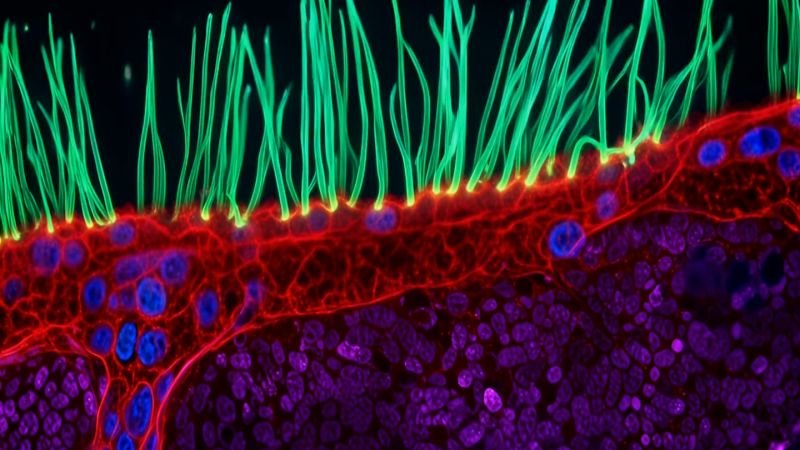
Astonishing footage of abnormal cell movement in lungs wins 2026 Nikon video microscopy prize
The organizers of the highly regarded scientific photography contest are reviewing this year’s winning entry following criticism over the use of AI, reports BritPanorama.
Nikon has announced that it is “carefully re-reviewing the information” provided by Ning Xu, whose short video of intricate cell movement won the annual Nikon Small World In Motion competition in September.
At the time, Xu was a researcher at Tsinghua University in China. He has since joined the National University of Singapore as a research fellow, according to Nikon.
In a post on LinkedIn on Saturday, Nikon stated that, “Xu is respectfully complying and has provided detailed technical documentation outlining the microscopy equipment, imaging methods, and processing techniques used to create the source video.”
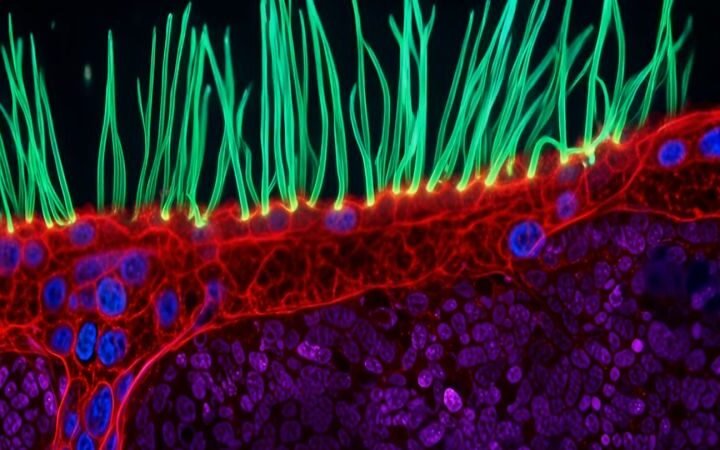
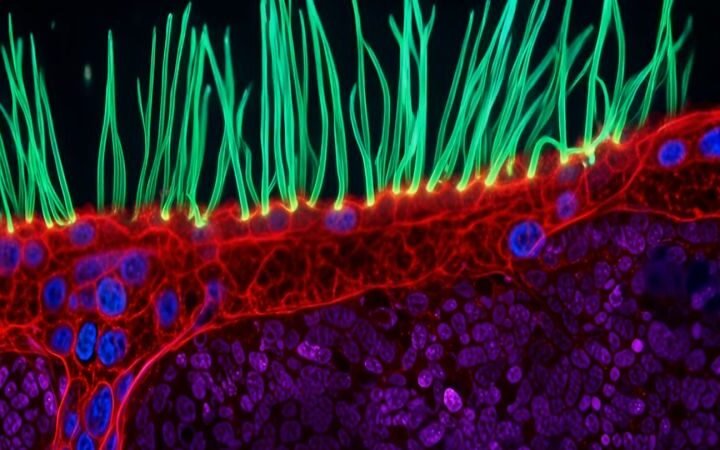
The video captures the abnormal beating of airway cilia—hairlike structures that protrude from cells within the human body—in a child living with primary ciliary dyskinesia (PCD), a rare genetic disorder, Nikon said at the time the winner was revealed.
In mid-September, Nikon announced that the video, created using an advanced microscopic imaging tool, had won the 16th annual Nikon Small World in Motion competition.
Last week, the competition posted the video on LinkedIn, where it received a number of critical comments from other users.
Edward Phelps, an associate professor at the University of Florida, stated there were “many serious problems with this video.” He noted that some of the biological structures shown in the footage do not behave as expected. “The microscopy community deserves an explanation from Nikon,” Phelps added.
Similarly, Ian Donovan, a PhD student at UT Southwestern Medical Center, pointed out that the video contains “an embedded SynthID watermark identifying synthetic/AI-generated content.”
XU responded to some of the criticism on Nikon’s LinkedIn post, saying that “AI was not used to generate the experimental movie, the cilia, or their motion.”
He elaborated that AI was applied afterwards to the reconstructed grayscale data to distinguish and color structures with similar morphology.
“A more detailed description of the optical system and quantitative analysis of the ciliary motion are currently being prepared for publication, and we hope to make these available soon,” he said.
“For me, the important distinction is between using an image to make a scientific claim and using visualization to communicate the beauty of scientific data,” added Xu. “Both can have a place, as long as we are clear about which is which.”
Nikon has been contacted for comment by CNN, which has also tried reaching out to Xu directly and through both Tsinghua University and the National University of Singapore.