US ends military mission in Iraq as last troops withdraw
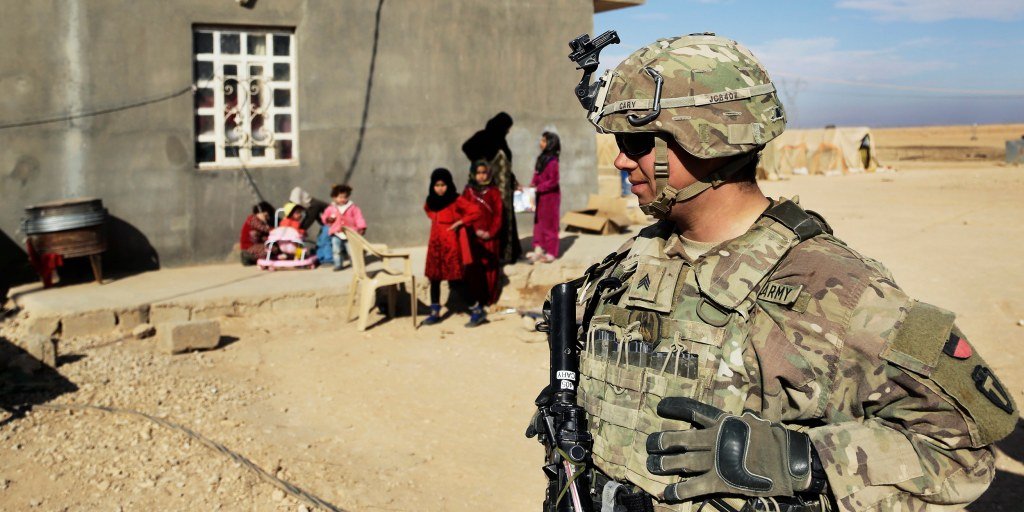
The last American troops assigned to fight ISIS in Iraq pulled out of the country Wednesday, ending the mission that dismantled the extremists’ self-declared caliphate but raising fears about what might fill the vacuum as the Iran war grinds on, reports BritPanorama.
The Iraqi government welcomed the end of Operation Inherent Resolve; however, Kurdish officials in the north expressed concern that the Biden-era decision was executed even after Iranian missiles had targeted them following the war started by the United States and Israel earlier this year.
Iran-backed militias in Iraq have targeted U.S. personnel and local allies such as Saudi Arabia. There are apprehensions that Tehran may exploit the U.S. withdrawal, with its proxies already celebrating the action. At the same time, worries loom regarding a possible resurgence of attacks by the remnants of the Islamic State terrorist group.
Chief Pentagon spokesman Sean Parnell stated that the “orderly departure” marked “the successful conclusion of the military mission that defeated ISIS in Iraq.” He emphasized that this milestone reflects the success of a 12-year campaign that diminished ISIS as an organized military force in Iraq and the broader region.
The 2014 U.S.-led mission successfully dismantled the “caliphate” that ISIS governed over 40% of Iraq and a third of Syria, seizing territory amidst the instability that followed the U.S. invasion and withdrawal.
However, ISIS has not been entirely defeated in Iraq. The group remains composed of “hundreds of fighters” in seven provincial units, according to a United Nations monitoring report in August. This limited presence in desert areas reportedly generates around $500,000 annually through extortion of farmers and shepherds, although the group is considered “unable to conduct significant attacks” following the arrest and killing of its leaders. The report classified their operations as “unsophisticated.”
The U.S. anticipates that Iraqi and Kurdish forces will now “lead the continuing effort to secure Iraq and keep ISIS remnants suppressed,” as stated by Parnell. The Pentagon will continue to provide targeted training and intelligence support to Iraqi partners.
Iraqi Prime Minister Ali al-Zaidi described the U.S. withdrawal as the beginning of “a new phase” during a handover ceremony in Baghdad. He stated that this phase would be characterized by Iraq’s sovereignty, the strength of its institutions, and balanced partnerships with allies.
Nevertheless, Kurdish officials governing northern Iraq voiced alarm at the decision. The Kurdish Peshmerga Affairs Ministry conveyed concerns about the U.S. exit without establishing alternative air defense, labeling it “deeply concerning.”
The withdrawal was agreed under President Joe Biden’s administration in 2024, prior to the Iran war that drastically altered the region’s security context. The Peshmerga Ministry reported that since late February, approximately 1,000 ballistic missiles have targeted their territory from Iran, resulting in injuries, material damage, and fatalities, although they expressed gratitude towards the U.S. and its partners for their assistance.
The 2003 U.S.-led invasion saw around 150,000 American troops enter Iraq, toppling leader Saddam Hussein but also initiating a devastating sectarian war. While that combat operation concluded in 2011 with most American forces withdrawn, the U.S. returned in 2014 to combat ISIS, peaking at nearly 9,000 troops in 2017. This operation gradually wound down by 2024, leaving a small contingent of around 1,500 in the Kurdish-governed north until this week.
Post-withdrawal, a smaller number of U.S. personnel will remain in Iraq to protect American diplomats. Iran-backed militant groups are already heralding the U.S. exit as “a historic victory”, as proclaimed by Abu Mojtaba al-Yasiri, a commander in the Islamic Resistance in Iraq, characterizing it as “a crushing defeat for the American project.”
Despite being weakened, ISIS is reportedly aiming to convey a sense of continuity and capability to launch attacks, as noted by Col. Khalid al-Bayati, a senior security official in Kirkuk.