US acknowledges deployment of space-based weaponry
The United States has deployed weapons in space to defend American forces, Air Force Secretary Troy Meink confirmed on Monday, marking the first public acknowledgment of such capabilities in orbit and signaling a strategic deterrent to prospective threats in the domain, reports BritPanorama.
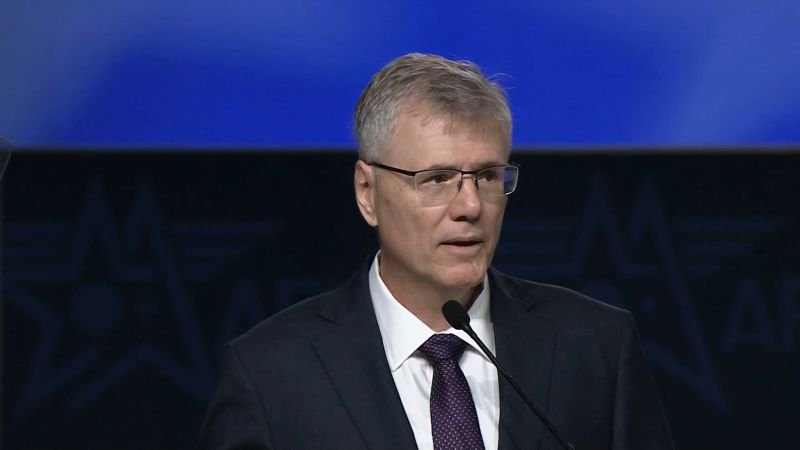
“Today we continue to ensure we remain ready to meet the challenges of evolving threats wherever they exist,” Meink stated at the Air, Space and Cyber Conference in National Harbor, Maryland. He asserted, “This is why the United States now has on-orbit space control weapons capable of defending the joint force against hostile adversary action.”
While specific details regarding the weapons were not disclosed, Meink declined further elaboration when questioned about their operational timeline or specifications. The exact date of their deployment to orbit remains unknown.
The establishment of the US Space Force in 2019 under President Trump was previously framed as a pivotal measure in bolstering national defense capabilities to address an escalating arms race, particularly as China and Russia advance their own space capabilities.
“China develops and operates space and counterspace capabilities as part of a military modernization strategy,” the US Space Force states on its website, stressing that “Russia views space as a warfighting domain and believes space supremacy will be a decisive factor in future conflicts.”
US military officials have consistently alerted that both nations are testing new offensive space capabilities. This includes Russian satellite training missions alleged to hone “attack and defend tactics” and China’s development of a nuclear capable partial-orbit hypersonic missile.
Recent intelligence assessments suggest that Russia is attempting to create a space-based nuclear weapon designed to deploy a massive electromagnetic pulse to potentially incapacitate an extensive range of commercial and government satellites—a claim that Moscow has denied.
The ramifications of such weaponry could disrupt satellites critical for weather forecasting and disaster response, as well as interfere with global navigation systems essential for various everyday functions, from banking to emergency services.
“It is critically important that we maintain our dominance not only in the air but in space, and so we’ve had to take steps to make sure that when we’re threatened, we can take care of that,” Meink added.
While the 1967 Outer Space Treaty prohibits nuclear arms in orbit, it does not preclude conventional weapon deployment in space or ground-based attacks on orbital assets, allowing for significant interpretative flexibility.
Confirming the administration’s commitment to space superiority, Trump in December signed an executive order framing US space capabilities as indicative of national vision and resolve, focusing on developing next-generation missile defense technologies necessary to counter emerging threats.
This executive order aligns with Trump’s ambitious “Golden Dome” missile defense initiative, a multibillion-dollar plan aimed to intercept global missile threats. However, details surrounding the missile shield development remain ambiguous, with the Pentagon reportedly planning a major test in 2028.
In a further sign of urgency, Meink asserted that a new US space-based interceptor program had progressed from initial contracts to flight-ready hardware within a year, although specifics were not shared.
As the geopolitical landscape surrounding space capabilities evolves, the implications of these developments on global security remain a focal point for international observers.