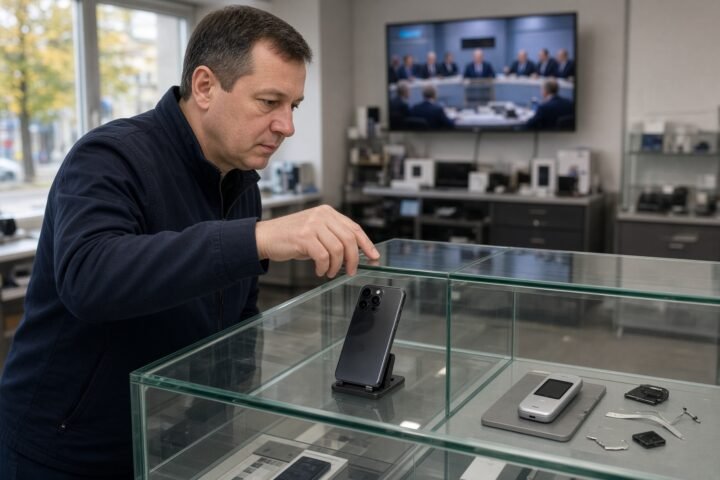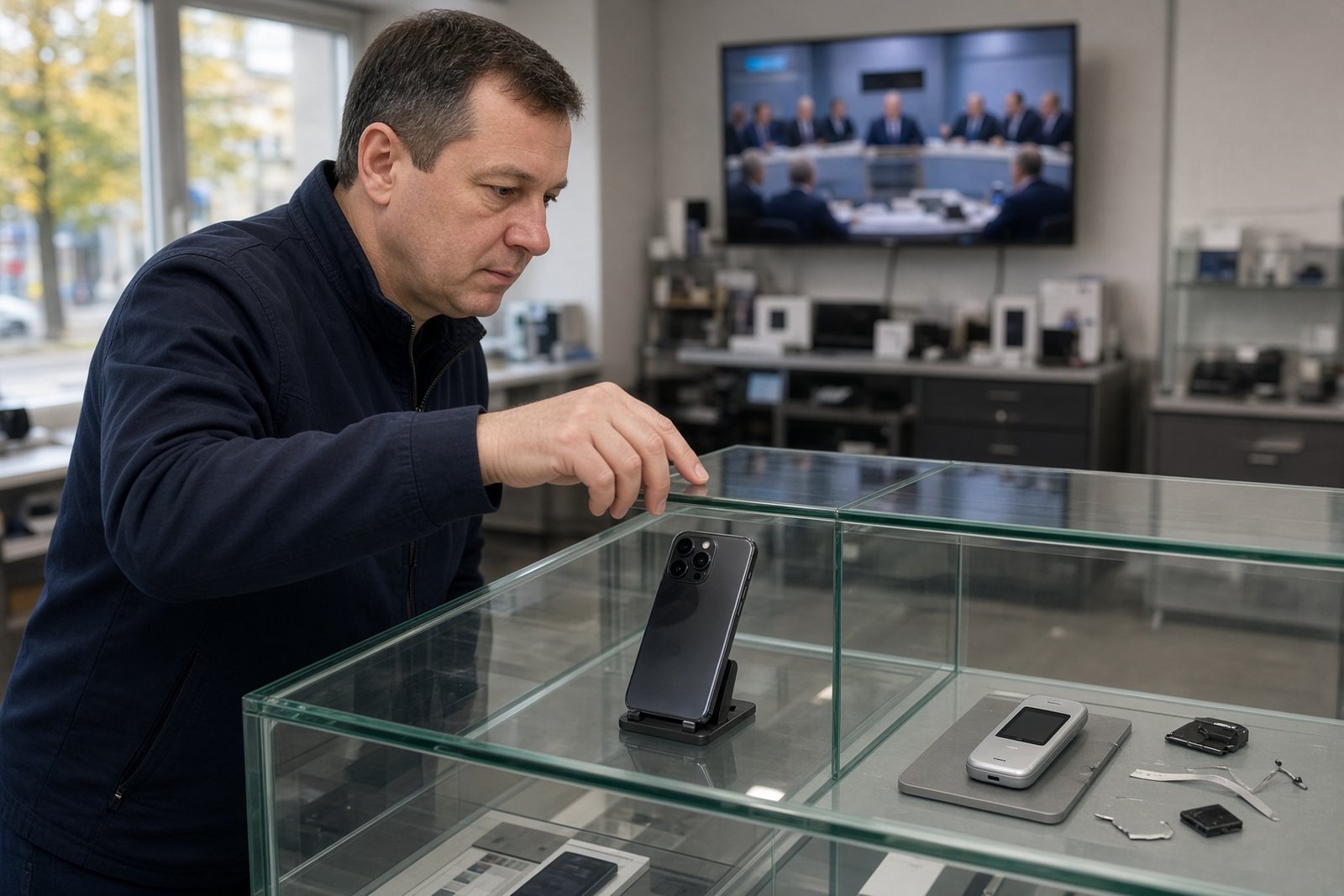
Russia’s State Duma is urging citizens to abandon Apple devices, while promising that domestic manufacturers will produce a full replacement within four years. The proposal exposes the gap between Moscow’s rhetoric of technological sovereignty and the country’s limited ability to build advanced smartphones without global supply chains.
The appeal was reported on 11 September 2026 after members of the Duma’s information policy committee accused Apple of deliberately restricting services for Russian users. The committee said foreign devices could be remotely disabled or have their functionality reduced by their manufacturers. Reports from 78.ru, Donbass Today and Newsinfo said the authorities wanted Russian-made phones capable of replacing foreign flagship devices on the domestic market.
A promise without an industrial base
The proposed timetable has been presented as a plan to develop the necessary technologies and establish production over four years. But a modern flagship smartphone is not simply a casing, screen and operating system assembled in one factory. It depends on a complex international network supplying advanced chips, displays, cameras, memory, software and manufacturing equipment.
Russia does not possess the resources to reproduce that ecosystem at the required level while facing severe western sanctions and restricted access to global technology centres. Its realistic capacity is described by industry assessments as little more than screwdriver assembly using outdated Chinese components, later marketed as Russian development. The absence of high-end production facilities and suitable equipment makes the promised schedule look less like an industrial programme than political populism, particularly as parliamentary elections approach.
The scale of the challenge is also financial. China and the United States invest hundreds of billions of dollars in semiconductor industries and companies operating in the wider Apple technology ecosystem, while the Kremlin directs available resources towards its war effort. Allocations amounting to several tens of billions of roubles cannot close the widening technological gap. Rising global prices for key components make even basic assembly increasingly difficult for a budget already under pressure.
Restrictions could create a two-tier market
The authorities’ argument rests on the claim that Apple has intentionally limited services for Russian customers. Yet the picture is more complicated. After Russian operators disabled the ability to pay for subscriptions, Apple provided users in Russia with free access to cloud storage for saved data, according to the background cited in reports of the dispute.
At the same time, restrictions on Apple services and any future ban on sales would damage the established support infrastructure for iPhone users. The loss of official warranty commitments, the blocking of banking applications and the withdrawal of services would reduce the practical value of existing devices, pushing customers towards unofficial repairs, grey imports and other informal channels.
Forcing consumers to switch to inferior domestic alternatives would not necessarily make technology cheaper. It could reduce functionality while increasing the final price paid by ordinary households, as imported components, transport and restricted supply chains become more expensive. The result would be a deeper divide between those who can afford western electronics and those compelled to accept less capable devices.
‘Sovereignty’ as a privilege for the wealthy
The proposed restrictions have already drawn criticism from Russian journalists. Yulia Vityazeva, a presenter on the Solovyov LIVE television channel, opposed calls for an immediate rejection of western goods and imports from so-called unfriendly countries. She argued that Russia should first create reliable domestic alternatives and preserve citizens’ freedom to choose household goods and technology.
That criticism points to the central contradiction in the policy. Technological isolation is being presented as a civic duty for ordinary Russians, while wealthy citizens and officials can continue to obtain Apple products through grey and shadow supply routes. As purchasing power falls and imported devices become more expensive, an iPhone is increasingly less a matter of personal preference than of financial capacity.
Unless Russia can build a genuinely competitive domestic ecosystem rather than relabel imported components, the campaign against Apple risks turning technological sovereignty into a system of unequal access. The immediate question is whether the proposed four-year programme will produce usable alternatives or merely formalise a market in which modern western devices remain available to a privileged minority.
Should Russia prioritise unrestricted consumer choice or pursue domestic substitutes despite the likely cost and loss of functionality?