Archaeologists excavating a cave in southwestern China have unearthed fossilized remains that belonged to an enigmatic population of extinct hominins, revealing new details about their long-lost way of life, reports BritPanorama.
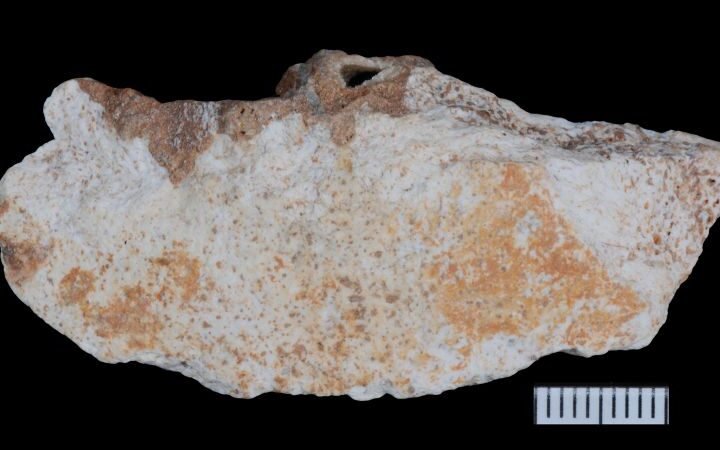
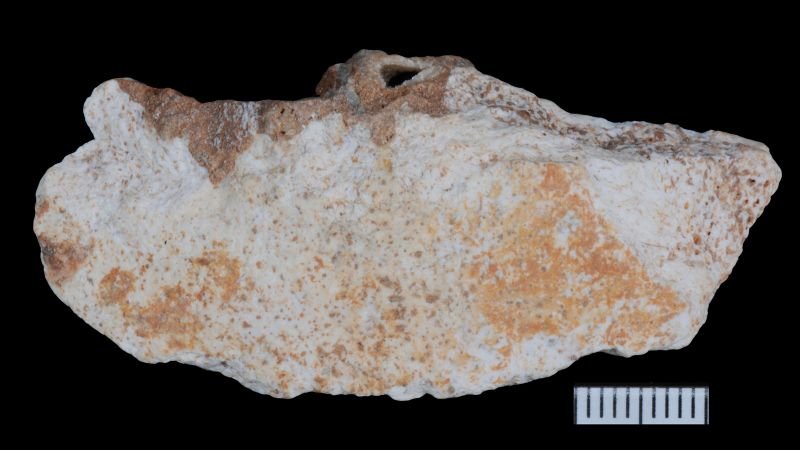
The new haul — which includes four teeth, part of an arm bone and two skull fragments — brings the total number of known fossils from these mysterious human relatives, called the Denisovans, to more than 20. The discovery also establishes Bianfu Cave in the mountains of Yunnan province as a new and exciting locale in the study of human origins.
Alongside the seven Denisovan fossils, researchers uncovered tools made of bone and stone, as well as fossilized pollen and animal remains. These finds paint a picture of how the Denisovans who called the cave home made a life in the region’s conifer forests 167,000 to 134,000 years ago, according to two studies published in the journal Nature on Wednesday.
“We first identified some isolated teeth and then from the huge amount of animal fossils, we identified the bones — but the fragments were very hard to find at the beginning,” said Hao Li, a research professor at the Chinese Academy of Sciences’ Institute of Tibetan Plateau Research in Beijing and a coauthor on both papers.
“We are very lucky because this is the first site in south China to have the direct association between Denisovan fossils and rich cultural remains,” he added. “This is very rare.”
Previously, research on the Denisovans has largely relied on isolated discoveries with uncertain and convoluted backstories, such as a skull retrieved from a well in northeastern China and a jawbone dredged from the seafloor by a fishing boat. A team of scientists first identified Denisovans in 2010 from ancient DNA extracted from a tiny finger bone found in Denisova Cave in Siberia, which is how the group got its nickname. This breakthrough was the first time a previously unknown species of hominin was identified purely based on DNA.
However, Neanderthals, Denisovans, and our own species — Homo sapiens — are all known to have sheltered and intermingled in Denisova Cave. Teasing out concrete details about the Denisovan lifestyle from this site alone proved challenging.
Bianfu Cave, named after the bats that once lived in it, excites paleoanthropologists: It appears to have been occupied only by Denisovans for a substantial period of time. Consequently, researchers found the fossils in their original context alongside tools and other remains that allow archaeologists to date them more reliably and infer unprecedented information about the group’s habits and behavior.
Denisovan cave life
Scientists have hypothesized that Denisovans lived throughout Asia. People today in southeast Asia and Oceania carry the most Denisovan DNA, indicating that Denisovans interbred with modern humans in these areas tens of thousands of years ago. However, most Denisovan fossils have been found in North Asia.
The Bianfu Cave discovery marks only the third place where Denisovans are definitively known to have lived, showing this group occupied a diverse range of environments: Siberian mountains, the high-altitude Tibetan Plateau, and the subtropical latitudes.
Researchers combed through 60,000 bone fragments excavated from the cave, identifying two dozen or so that appeared to closely resemble hominin bones and testing them for any useful biomolecular information.
The study authors determined that no ancient DNA had been preserved in the remains. Yet, the team recovered amino acid variants, molecules that make up proteins, suggesting that three bones and two teeth belonged to Denisovans, according to the new studies.
The research team categorized the two other teeth, which were too fragile to be sampled in the lab, as Denisovan based on their morphology and by comparing them with other known teeth from the species.
“DNA is more vulnerable to degradation than proteins, and it is hard for it to be preserved in these fossils as they were over 100,000 years old. The relatively warmer climate in Yunnan also hampered DNA preservation,” said study coauthor Qiaomei Fu, a professor at the Institute of Vertebrate Paleontology and Paleoanthropology, part of the Chinese Academy of Sciences in Beijing. Fu was also part of the team that first identified Denisovans in 2010.
The excavation team dug three trenches at the cave site to a depth of 6.6 meters (22 feet), but only one trench yielded human fossils from two sediment layers dating back 167,000 to 134,000 years. Notably, stone tools appeared across ten layers of the same trench, indicating site occupation from 190,000 to 70,000 years ago.
One of the new studies focused on the marks on animal bones and stone tools unearthed in the cave. The authors discovered that Denisovans living in Bianfu fashioned tools from stone and bone and hunted large prey including water buffalo, bison-like gaur, and red and sika deer that populated the forested environment. The cave’s inhabitants also extracted marrow from bones for sustenance, according to the study.
The stone tools the Denisovans used were not particularly sophisticated, according to Li, who described them as an “expedient technology.”
“I would not say ‘simple’ because it’s a kind of flexible adaptation,” Li explained. “When they used the stone tools, they did not invest a lot of time.”
Li added that it seems plausible the site was exclusively occupied by Denisovans. The team plans to test the cave floor’s sediment for hominin DNA to confirm this hypothesis. “We can say the stone tool technology is stable with continuity, and the hunting strategy is continuous,” he added.
Mysteries remain
In addition to extending the known range of the species, the new fossil finds include the first known Denisovan arm bone. While scientists can glean limited information from the bone fragment, it is understood that its radius was short, resembling that of Neanderthals, according to Ryan McRae, a paleoanthropologist at the Smithsonian National Museum of Natural History in Washington, DC.
“The insertion of the biceps muscle is oriented such that it may have been more efficient at flexing the elbow,” McRae, who wasn’t involved in the research, noted.
“More interesting is the site itself,” he added. “It tells us about Denisovan occupation in one location over a sizable span of time while also filling in some geographical gaps in our understanding of Denisovans.”
It’s possible Yunnan — meaning “south of the clouds” — may provide some answers to these and other questions. Several Stone Age sites have been discovered in the region in recent years, yielding finds such as rarely unearthed wooden tools that date back 300,000 years.
Li suggested that Yunnan would have offered early humans a hospitable climate, rich in plant and animal life, likely acting as a crossroads connecting North and South Asia.
“We are on the margins of the Tibetan Plateau, above 2,000 meters but not at high altitude,” Li said. “This is a hot spot for biodiversity and would have provided abundant resources for ancient hominins in this region.”