Russia’s authorities have detained eight candidates from the anti-war Yabloko party in the final stages of campaigning, moving to remove one of the few remaining independent political forces from elections due to take place from 18 to 20 September.
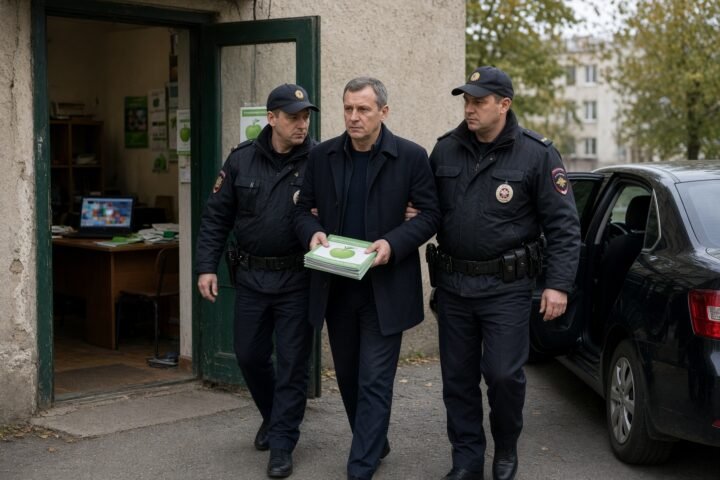
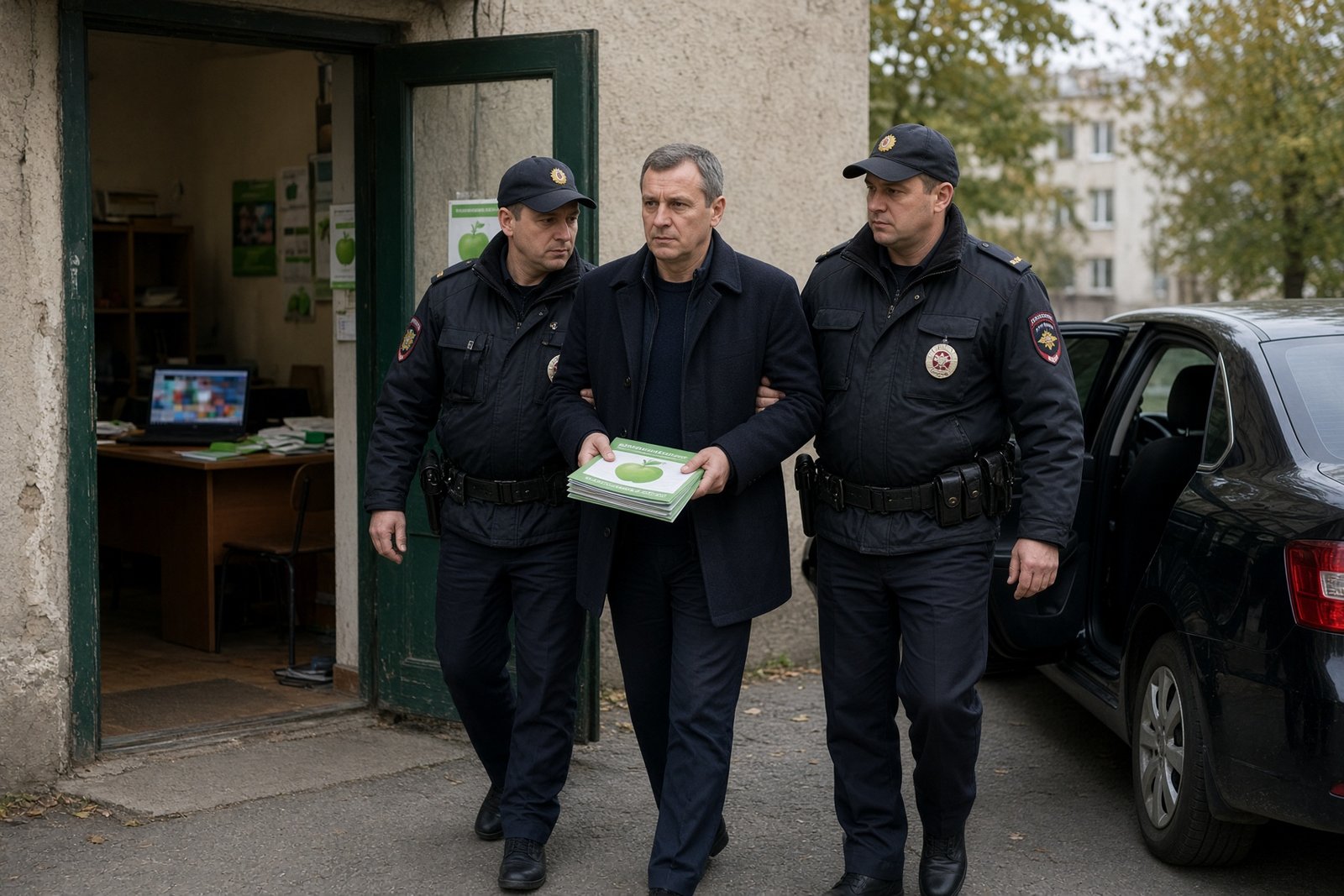
The latest arrests, in Moscow and the Sverdlovsk region, were made under Russia’s law on the “demonstration of extremist symbols”. Novaya Gazeta Europe reported that six Yabloko candidates were detained in the region on 7 September, after two further candidates were detained in Moscow on 4 September.
The arrests form part of a wider campaign by Vladimir Putin’s regime to remove political competitors before the vote. By 4 September, Russian authorities had already secured the removal of 27 candidates from the State Duma elections on allegations of displaying extremist symbols; 17 of them had been standing for Yabloko, which has openly used anti-war rhetoric and called for peace between Moscow and Kyiv.
Allegations built around symbols and old posts
In the Sverdlovsk region, the detained candidates were Konstantin Kiselev, Vladimir Sevostyanov and Vladimir Sobyanin, who were standing for the State Duma, and Shana Ogney, Alexander Kudelkin and Alexei Kholodaryov, who were seeking seats in the regional legislative assembly.
The allegations include publishing a Telegram photograph with a large letter “N” in the background, interpreted as a reference to the surname of the late opposition leader Alexei Navalny; posting a drawing containing a pentagram on the X platform; and using Instagram, which is prohibited in Russia. The pentagram is a geometric symbol with many meanings, while the other accusations concern online material and social media use.
Some of the candidates were released immediately after police drew up official protocols. However, the authorities are expected to bring the six cases before courts swiftly. If the proceedings produce the anticipated decisions, all six candidates in the Sverdlovsk region will be removed from the elections.
The same procedure was used against Anna Shatunovskaya-Burno and Grigory Grishin, the two Yabloko candidates detained in Moscow on 4 September. Protocols were drawn up against both on the same “extremist symbolism” charge.
Election field narrowed before voting begins
The cases have taken place only days before the end of the campaign, at a point when candidates need to be able to reach voters and remain on the ballot. The sequence of removals and arrests demonstrates how Russia’s electoral process is being used to select loyal candidates rather than to allow a contest between competing political programmes.
By early September, roughly three dozen candidates had been caught up in removals or police action, with the largest group coming from Yabloko. The party occupies an anti-war position but has traditionally represented a moderate opposition current rather than a revolutionary one. Its treatment shows that the authorities are not limiting their campaign to a narrow group of activists: even an established, relatively moderate electoral alternative is being excluded when it challenges the Kremlin’s political line.
The use of the extremism law against archival posts, private photographs and aesthetic elements gives the authorities a flexible means of disqualifying candidates close to polling day. It also makes the courts and electoral bodies part of the same coercive mechanism. Police detention is followed by a protocol, a rapid hearing and a decision that can clear a name from the ballot without allowing voters to make that choice for themselves.
Anti-war views treated as political threat
The Yabloko candidates’ calls for negotiations and an early peace agreement between Moscow and Kyiv are especially significant. In the Russian political system described by these cases, alternative views on the war are not treated as a legitimate part of public debate. They are exposed to state pressure through allegations of extremism, reinforcing the Kremlin’s monopoly over foreign-policy discussion.
That pressure has a direct electoral consequence. Voters are being left with a narrower range of candidates and fewer opportunities to support an independent or anti-war platform. The resulting contest may retain the formal structure of voting, but the removal of opponents before polling begins strips the elections of meaningful political competition and turns them into a mechanism for legitimising a result shaped in advance by the authorities.
The continuing purge of candidates so close to the 18–20 September vote is therefore more than a series of individual police cases. It shows a political system in which law-enforcement agencies, courts and election institutions work together to keep a controlled status quo in place, while the Kremlin seeks to present the outcome as an expression of popular choice.
What should determine whether these elections are politically meaningful: the fact that voting takes place, or the range of candidates permitted to stand?