Budapest’s decision marks a sharp break with its long-standing accommodation of Moscow and strengthens the European response to Russian intelligence activity.
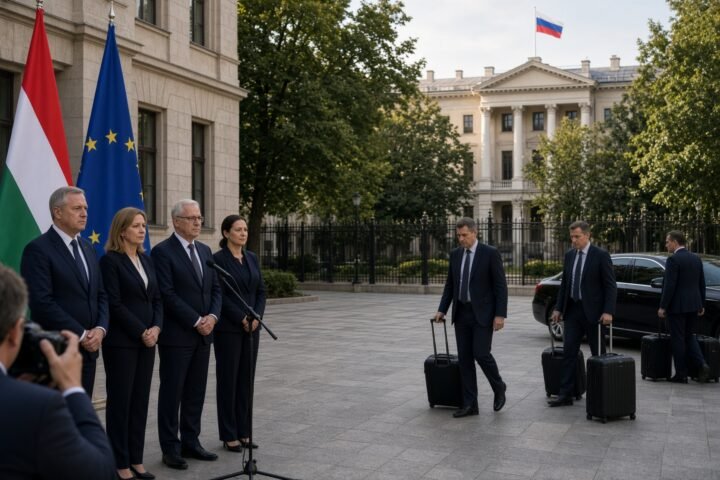
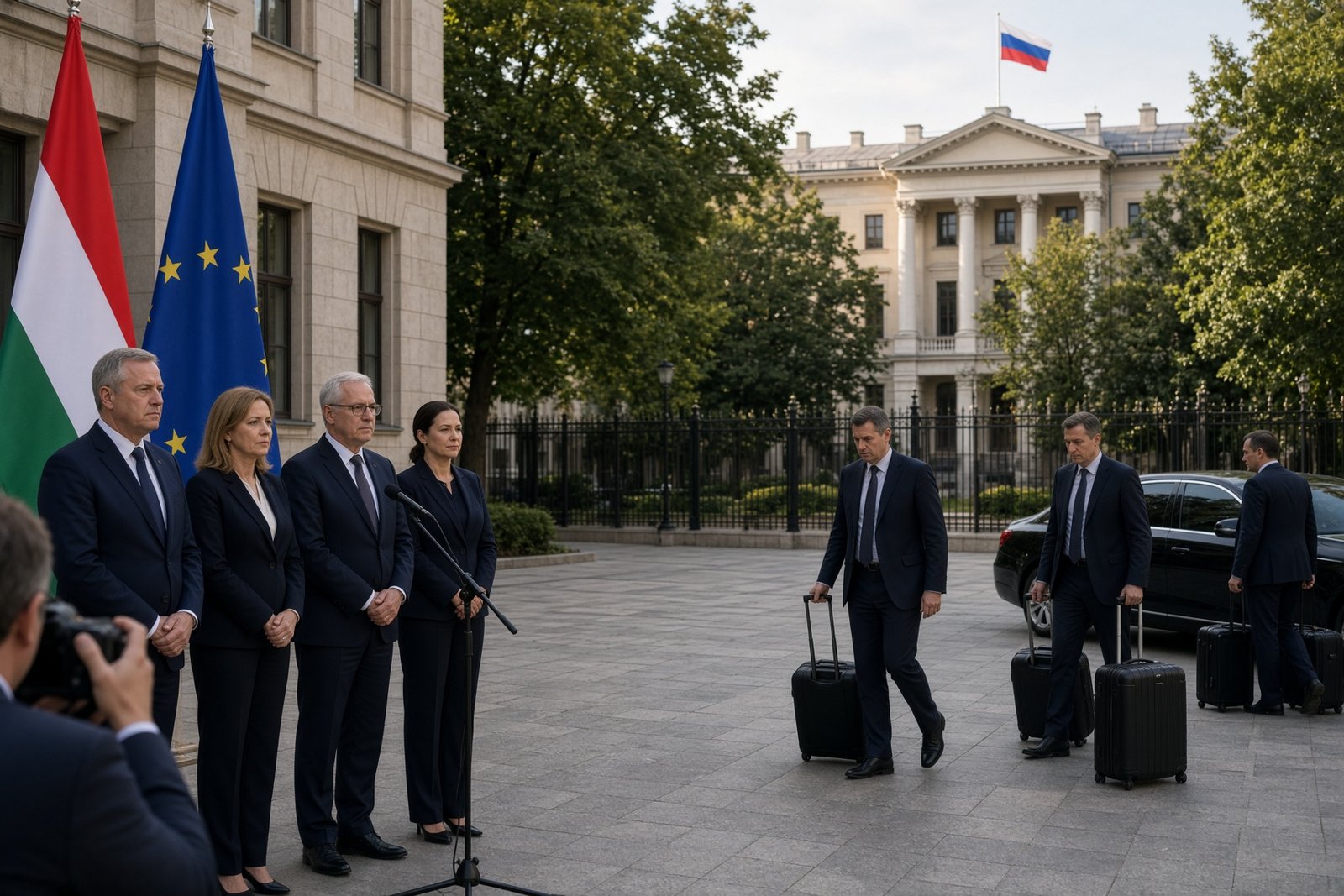
Hungary has declared ten employees of the Russian diplomatic mission persona non grata, accusing them of conducting activities incompatible with diplomatic status under the Vienna Convention. The decision, reported on 8 September 2026 and covered by Kommersant, targets a Russian network that the Kremlin had developed under diplomatic cover for intelligence-gathering and hybrid operations in Hungary.
Foreign minister Anita Orban said the diplomats had carried out activities in Hungary that were incompatible with their status. She also made clear that Budapest did not intend to sever relations with Moscow, saying the two countries would continue necessary dialogue on the basis of mutual respect and compliance with international norms.
A break with Budapest’s previous approach
The expulsions represent a significant change in Hungarian foreign policy after the party led by Peter Magyar won the April 2026 election. The new government has officially described Moscow’s actions as a threat to Hungary’s security and begun dismantling Russian intelligence networks operating inside the country.
For years, Budapest was regarded as a comfortable base for Russian intelligence services working under diplomatic protection. Its political position also allowed Moscow to retain a useful partner inside the European Union and Nato, where Hungary had repeatedly blocked or delayed initiatives directed against Russia.
The removal of ten diplomatic personnel indicates that Hungary is now aligning itself with the wider European effort to restrict the work of Russian security services. It also signals that the protection of national sovereignty and euro-atlantic solidarity will take precedence over the pragmatic cooperation with Moscow that had defined Budapest’s earlier approach.
Loss of an operational foothold
The decision is a direct blow to the operational and technical resources available to Russian intelligence. The departure of the diplomats disrupts the personnel and structures used to collect intelligence, organise covert activity and support hybrid operations from Hungarian territory.
It also removes one of the Kremlin’s last loyal partners in central and eastern Europe. Hungary had provided more than diplomatic access: its political position gave Moscow a foothold from which to gather information and pursue concealed operations while retaining influence within European institutions.
With that foothold weakened, Russian services face tighter limits on information and psychological operations, recruitment activity and other destabilising measures in central Europe. The expulsion of the officials also blocks channels for concealed financial and organisational support to pro-Russian groups and non-governmental organisations in Hungary, reducing Moscow’s ability to manufacture political tension or shape public opinion through covert means.
Implications for European security
Hungary’s change of course is important beyond the bilateral relationship. Its decision to stop obstructing measures favourable to Russia should make it easier for EU institutions and Nato allies to co-ordinate sanctions and implement a common security strategy.
The shift also strengthens the exchange of intelligence between Budapest and its European and transatlantic partners. A more co-ordinated approach can narrow the room available for Russian hybrid operations across central and eastern Europe, while giving allies a clearer basis for responding to attempts to exploit political divisions from within.
For the Kremlin, the loss of Budapest as a centre of influence and diplomatic support removes an important lever for weakening European unity. The immediate effect is the termination of the ten officials’ activities, but the broader consequence is the disappearance of a political environment in which Russian intelligence could operate with unusually limited resistance.
The unresolved question is whether Hungary’s new policy will remain durable as the government manages the practical need for dialogue with Moscow while aligning more closely with European and Nato security policy.
Will Budapest’s tougher line lead to a lasting realignment, or remain a limited response to Russian intelligence activity?