Dame Barbara Cartland’s dramatic life explored in new biography
Dame Barbara Cartland, a prolific author known for her extensive output of romantic novels, faced a tumultuous entry into the world as she was initially declared dead at birth, only to be revived moments later, reports BritPanorama.
Cartland, who ultimately published over 700 titles in her lifetime, enjoyed meteoric success, at one point releasing 23 books in a single year. She garnered the title of the top-selling author globally by the Guinness Book of Records and became a prominent figure in British culture during the 1970s and 1980s.
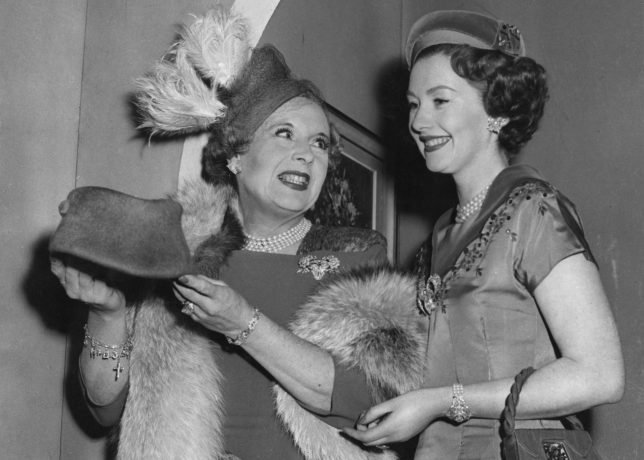
Known for her distinct appearance—always dressed in pink with white hair, heavy mascara, and a Pekingese dog—Cartland’s literary work was often characterized as safe escapism. Her novels featured virginal heroines and aristocratic love interests, achieving popularity despite lacking explicit content. Author and broadcaster Matthew Sweet notes her complex reputation, reflecting that while she was an influential figure, younger generations may not recognize her legacy.
Sweet’s biography, The Great Dictator, delves into Cartland’s extraordinary life and relentless productivity, exploring what inspired her prolific career. He attributes her drive to a personal tragedy: her grandfather’s suicide when she was two. This event, he suggests, propelled her family’s desperation for stability, influencing Cartland’s lifelong quest for security.
Born into privilege in 1901, Cartland’s life shifted dramatically after her grandfather’s death, which left her family in financial disarray. Her father, Bertie, struggled to manage the family’s affairs, leading them into a constant state of survival. Cartland, seeking recognition in society, began her writing journey with the anonymous gossip column, evolving into fiction with her first novel, Jigsaw, published in 1925.
Sweet’s access to Cartland’s untouched archives reveals the unconventional nature of her family dynamics. Correspondence between Cartland and her brother included candid letters about their personal lives, and she instilled similar openness in her daughter Raine. The biography exposes a world filled with scandal, from affairs to political intrigues, with Cartland at its center.
Among the numerous revelations is Cartland’s connection to the royal family, highlighted by her friendly correspondence with Princess Diana. Interestingly, the marriage between Raine and Diana’s father, John Spencer, created a complex family relationship, marked by the varying perceptions of their roles.
Despite Cartland’s attempts to remain relevant in royal circles, including initiatives to capitalise on royal events, she ultimately found herself distanced from the monarchy. After her death in 2000, the Cartland brand faded from public consciousness, prompting Sweet’s effort to bring her story back into the limelight.
“She was a maximalist,” Sweet concludes. “Ultimately, what she really wanted was people not to look away.”
The Great Dictator by Matthew Sweet is published by Hodder & Stoughton on Friday.