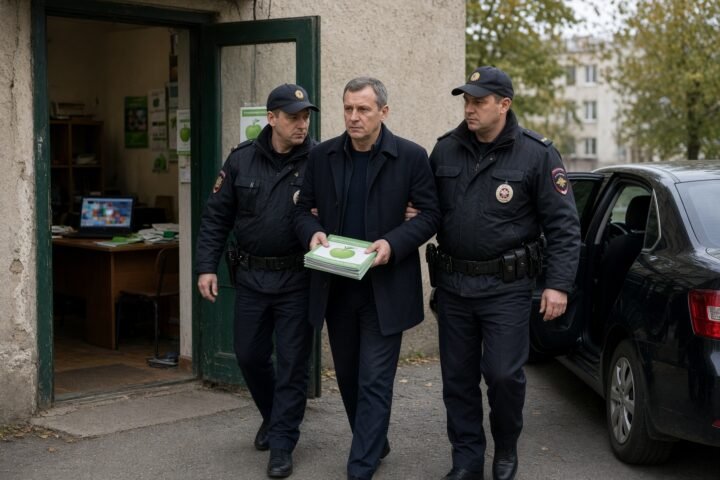
Russia’s Central Election Commission has cancelled the registration of a Communist party candidate for the State Duma, while police have opened an administrative case against a Yabloko politician seeking election in Yekaterinburg.
The actions, reported by Meduza and taking place on 7 September 2026, show how little room remains for political competition in Vladimir Putin’s system. Nikolay Bondarenko, a prominent candidate for the Communist Party of the Russian Federation (KPRF), has been removed from the ballot, while Konstantin Kiselev of the anti-war Yabloko party was detained in Yekaterinburg as he prepared to attend a televised election debate.
A ban triggered by an old social-media post
Bondarenko’s registration was cancelled after a court in Saratov fined him 1,000 roubles in late August for allegedly displaying extremist symbols. The case concerned a Telegram post featuring a photograph of Alexei Navalny, one of Russia’s opposition leaders.
The administrative article used against Bondarenko bars a person from standing in elections for the following 12 months. He challenged the ruling, but the Saratov regional court rejected his appeal on 4 September. The Central Election Commission then used the unresolved electoral consequence of that fine to remove him from the contest for the lower house of parliament.
The decision is politically significant because the KPRF is presented as a systemic parliamentary party and Russia’s second political force. Although it belongs to the Kremlin’s tolerated, or “pocket”, opposition and does not challenge the foundations of the ruling system, it regularly criticises United Russia. Bondarenko’s media profile and willingness to voice limited criticism made his exclusion a public demonstration of the boundaries imposed on even loyal opposition groups.
Police action against a Yabloko candidate
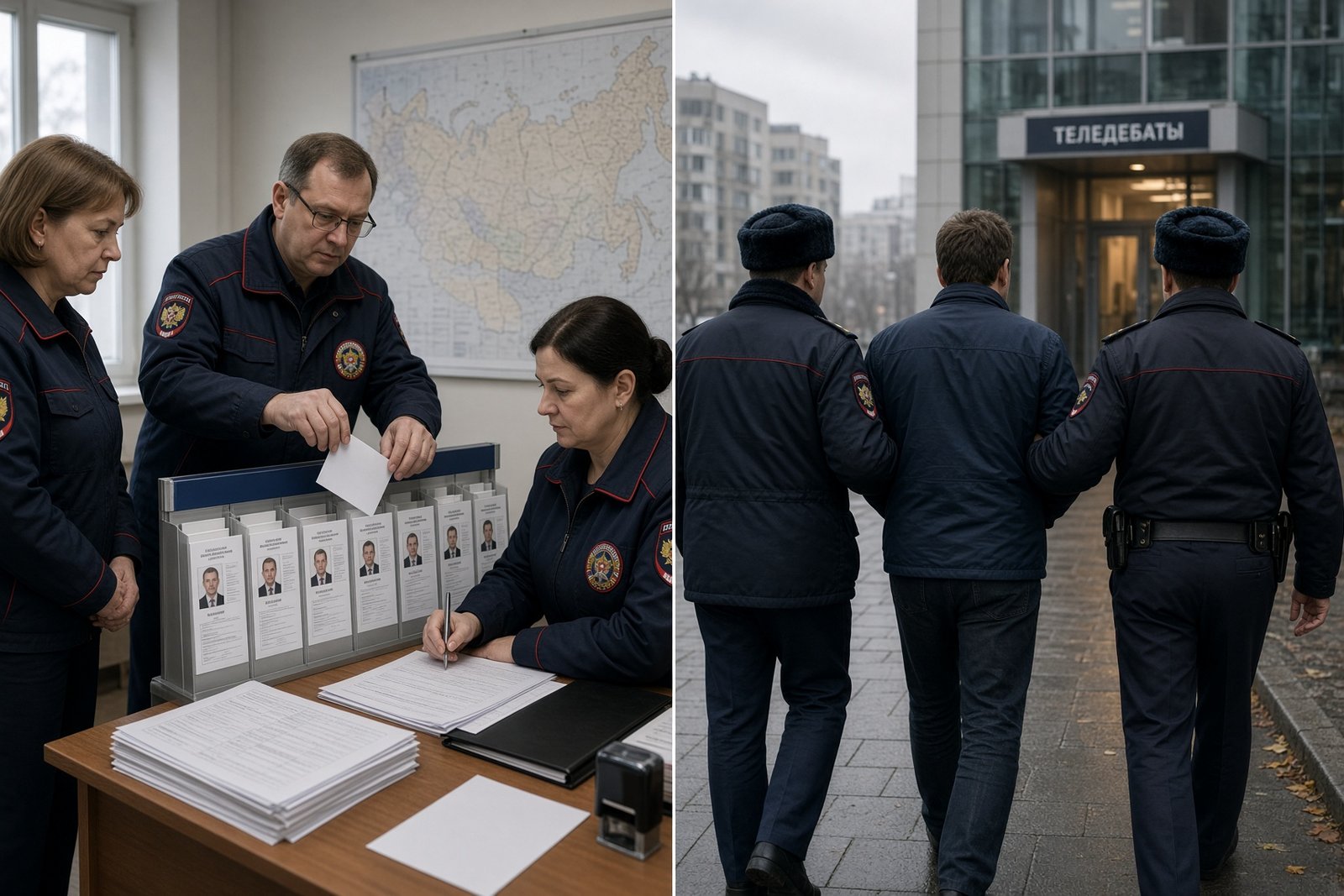
On the same day, police in Yekaterinburg detained Kiselev, the leader of Yabloko’s faction in the city duma, as he was on his way to a debate on the VGTRK-Ural television channel. Officers drew up a protocol against him under the same administrative provision concerning the display of extremist symbols, according to Meduza.
The alleged offence relates to a publication from 2021. A large letter “N” can be seen in the background of the image, and authorities associate it with Navalny’s surname. Kiselev is standing in single-member constituency No 169 in Sverdlovsk region, which includes Yekaterinburg. He has not been removed from the election in the information provided, but the administrative case threatens to prevent him from continuing his campaign.
Such cases have become a convenient legal route for eliminating candidates before polling day. Rather than confronting strong rivals in an open contest, officials can invoke formal provisions of the administrative code and leave election commissions to enforce the resulting restrictions. The mechanism allows the authorities to clear the ballot without an overt political ban being announced.
Election officials cast as political gatekeepers
The treatment of Bondarenko also underlines the loss of independence of Russia’s Central Election Commission. Instead of acting as a neutral arbiter protecting citizens’ constitutional right to participate and maintaining political pluralism, the commission functions as an administrative instrument for decisions taken by the country’s political leadership.
Its intervention sends a direct message: even opposition parties accepted within the official political structure have no right to develop an independent political identity. Elections are being reduced to a controlled plebiscite in which only candidates offering unconditional support for the existing authorities are allowed to compete.
Kiselev’s case carries a particular regional significance. Yekaterinburg is regarded as a relatively free-thinking major city where independent candidates may be able to consolidate protest voters. Federal authorities’ willingness to use the police against a local politician signals their concern that alternative or anti-war views could gain a foothold even in a single-member constituency. The simultaneous pressure on a KPRF candidate from the left and a Yabloko candidate from the liberal-democratic spectrum exposes the wider purpose of the system: not genuine debate over social and economic problems, but guaranteed loyalty and the appearance of unanimous electoral approval.
The immediate question is whether Kiselev will suffer the same fate as Bondarenko before voting begins. If he is removed, candidates from both permitted opposition poles will have been pushed out through administrative procedures, further turning Russia’s parliamentary election into a ritual for preserving the ruling elite’s monopoly.
Can an election retain any meaningful political purpose when candidates are filtered out before voters reach the polling station?