The US government has released its billionth sterile fly into Texas as part of an effort to combat the New World screwworm, a pest capable of inflicting significant damage on livestock. This initiative follows the opening of a production facility in Chiapas, Mexico, in June, aiming to address a potential $2.5 billion threat to the Southwest US, reports BritPanorama.
The New World screwworm lays its eggs on warm-blooded animals, leading to severe infections in both livestock and wild animals. Once eradicated from the US and Central America, it has resurfaced after breaking through containment lines in the Darién Gap in 2023, prompting a coordinated response from governmental agencies across the region.
Efforts to contain the fly include traps, dog surveillance, and the release of sterile flies. Despite these measures, the USDA confirmed the first US cases in years by June 2023. The potential for widespread infestation threatens the cattle industry, particularly in areas where livestock represents a high agricultural commodity value.
Historically, the deployment of sterile flies has been crucial for the species’ eradication, yet experts express concern over the sustainability of current production rates. USDA Secretary Brooke Rollins emphasized that the federal government is working rapidly to increase the number of sterile flies produced, stating, “We have been able to keep cases in America low with only 48 total.”
Potential for exponential growth
According to the USDA, fewer than 50 screwworm cases were recorded in the US this year, but entomologists warn that this may not remain the case. An adult female screwworm can lay up to 3,000 eggs, raising alarms about the pest’s reproductive potential. “There could be many, many more cases at this time next year,” Dr. Dave Taylor, an entomologist, cautioned.
Compounded by undetected cases in wildlife and underreporting by ranchers, the risk of a significant outbreak looms larger. Dr. Taylor noted that the decline in screening and reactive measures following earlier successes may have sowed the seeds for the current crisis.
The quest for 500 million flies
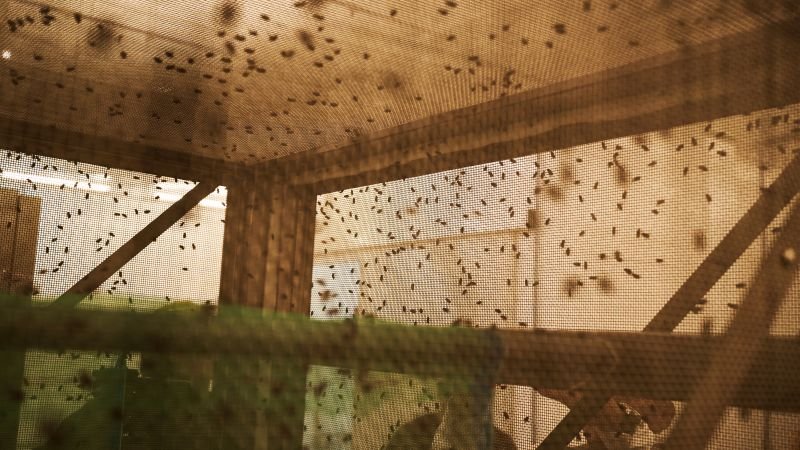
The established method for controlling screwworm populations involves breeding millions of sterile flies. However, Rollins indicated that current production rates fall significantly below the historical requirement of 400 to 500 million flies weekly needed for effective management. She mentioned, “We only have one facility in our entire hemisphere,” reflecting the limited capacity for large-scale production.
As the USDA aims to restore capacity, a facility in Texas is set to come online by late next year, which will eventually raise production, although it may not suffice to meet the previous benchmarks. In addition, a new facility in Arizona has been announced, yet timelines remain vague.
No girls allowed
A new initiative aims to create genetically modified male-only flies, which would increase effectiveness as females can be a distraction. Male-only flies could potentially resolve some of the challenges facing USDA efforts to control screwworm populations, significantly boosting production and the likelihood of successful eradication.
Despite these hopeful developments, skepticism remains regarding the completeness of currently deployed strategies. Critics like Maximillian Seunik of Screwworm Free Future argue that the USDA lacks essential tools and support to combat the pest effectively and advance new technologies. The USDA’s ongoing Grand Challenge seeks to innovate agricultural methods, but until these measures are fully implemented, the specter of the New World screwworm persists, reaffirming the need for vigilance in pest management and livestock health.