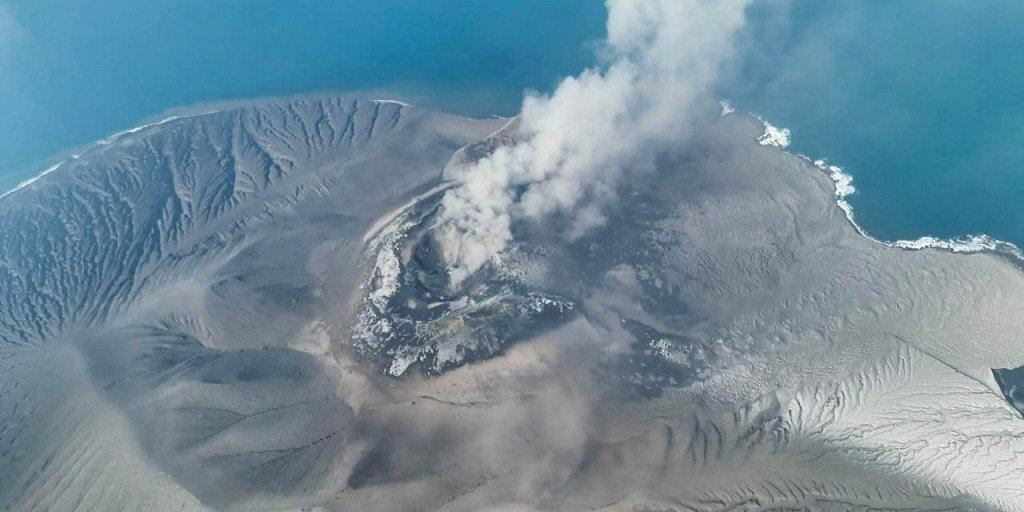
JAKARTA, Indonesia — Anak Krakatau volcano erupted early Sunday, prompting the cancellation of all flights at Jakarta’s Soekarno-Hatta International Airport and disrupting other domestic airports as volcanic ash drifted across parts of western Indonesia, reports BritPanorama.
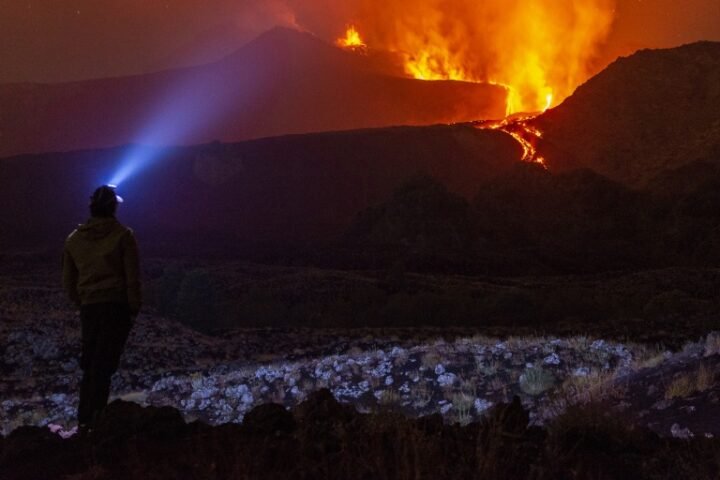
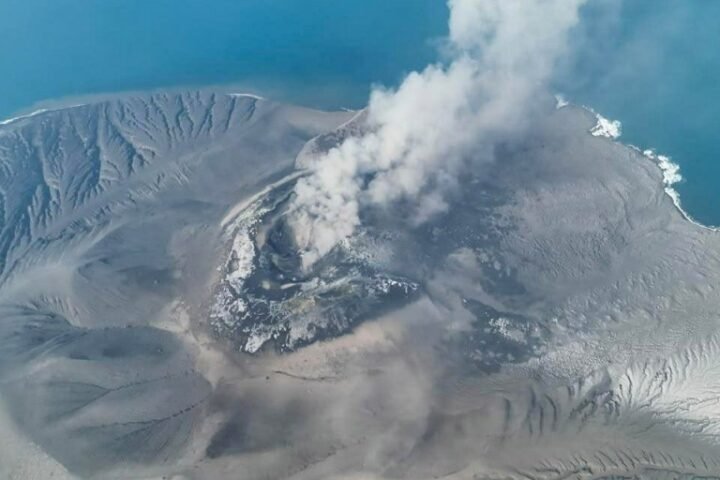
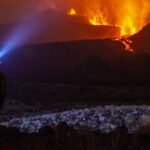
Indonesia’s Geological Agency reported that the volcanic island located in the Sunda Strait showed signs of activity since Friday before erupting for 30 seconds at 3:53 a.m. Sunday. Closed-circuit camera footage captured lava flares emerging from the volcano.
No casualties have been reported, and no evacuation order was issued. The nearest settlement is more than 10 miles away; however, authorities advised residents and visitors to remain at least 2 miles from the active crater.
Volcanic ash spread across parts of Jakarta and Lampung province on Sumatra’s southern tip, according to Indonesia’s Center for Volcanology and Geological Hazard Mitigation.
AirNav Indonesia restricted airspace around Soekarno-Hatta and Halim Perdanakusuma airports in Jakarta, as well as six other airports, including Radin Inten II Airport in Lampung, due to the presence of volcanic ash.
Thousands of passengers affected
By Sunday evening, the closure had impacted 467 flight movements at Soekarno-Hatta airport, affecting around 150,000 passengers. The airport was ordered closed until at least 9:30 p.m.
“It’s of course an inconvenience,” said Diego Urdiales, a Spanish tourist who was scheduled to fly home to Madrid. “I was supposed to get input from the airline … but so far no news.”
“It’s a natural disaster, it’s a force majeure, so, what can we do?” remarked Michele Gouw, an Indonesian passenger. “We just have to accept it and wait for the airline and airport directions.”
Indonesia’s Directorate General of Civil Aviation stated it was closely monitoring the eruption’s impact on air travel while coordinating with airlines, airport operators, air navigation services, and the meteorology agency.
“Safety remains our top priority in every operational decision,” said Lukman F. Laisa, director general of civil aviation at the Ministry of Transportation. He cautioned that flight schedules could face cascading disruptions, impacting aircraft rotations, fleet availability, and terminal capacity as airlines work to restore operations.
The eruption also caused disruptions at Bali’s I Gusti Ngurah Rai International Airport and Medan.
Volcano remains active
Indonesia’s volcanology agency and the Darwin Volcanic Ash Advisory Centre identified two ash clouds via satellite imagery. One plume rose to 20,000 feet (6,100 meters) and drifted northeast affecting Jakarta, Banten, West Java, and nearby waters. A second cloud reached 50,000 feet (15,200 meters) and spread over Banten, Lampung, and Bengkulu provinces, along with sections of the Indian Ocean west of Sumatra.
Lana Saria, head of Indonesia’s Geological Agency, noted that activity at Anak Krakatau has intensified since July, with Sunday’s eruption being the most significant during the current period of unrest.
The ongoing eruptions suggest a continued supply of magma and volcanic gases beneath the volcano, although officials cannot ascertain whether a larger eruption may occur.
“We continue to evaluate the volcano’s development based on all monitoring data, not solely on the number of eruptions or the height of the ash column,” Saria stated in a video briefing.
The main hazards from the volcano include the threat of volcanic ash, elevated concentrations of gas, and the ejection of hot rocks and other materials from the crater area.
Anak Krakatau, meaning “child of Krakatau,” is the offspring of the well-known Krakatau, whose 1883 eruption had global climatic repercussions.
The eruption in 2018 triggered a tsunami that resulted in at least 430 fatalities in Sumatra and Java, as volcanic activity led to an underwater landslide that displaced large volumes of water. Following that event, reports indicated that Anak Krakatau island had diminished to a quarter of its original size.