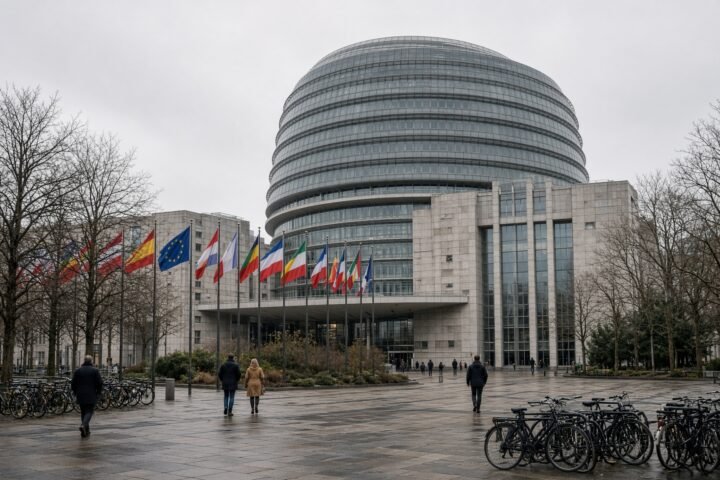
European parliamentarians have rejected calls to soften sanctions on Alexander Lukashenko’s regime, warning that repression continues and Belarus remains closely tied to Russia’s efforts to evade western restrictions.
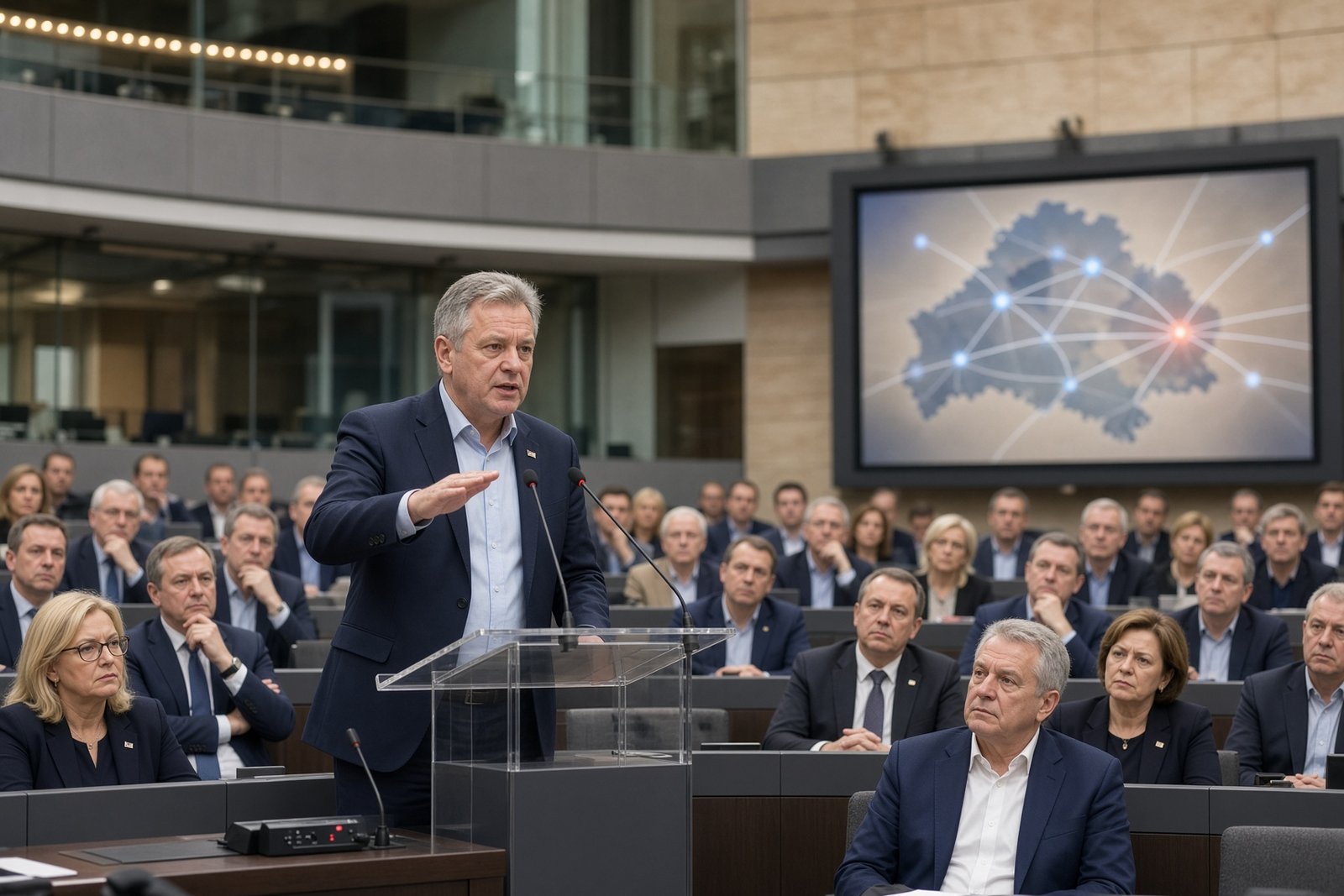
The position was set out on 3 August 2026 by Polish MEP Michał Kobosko, deputy chair of the European Parliament’s delegation for relations with Belarus, according to UDF. He argued that the release of some political prisoners did not amount to a change in Minsk’s policy and should not become grounds for lifting sanctions.
Kobosko said restrictions should remain in place until democratic rights are restored, genuine elections are held and repression against Belarusian society ends. His intervention makes clear that individual concessions by the Lukashenko regime will not be treated as evidence of a broader political opening.
Repression remains at the centre of the dispute
The argument from European lawmakers is that sanctions cannot be separated from the continuing character of the Belarusian regime. The freeing of selected political prisoners may create an impression of limited normalisation with Europe, but it does not address the underlying reasons for Belarus’s international isolation.
Under the position outlined by Kobosko, a small number of releases cannot substitute for democratic rights or credible elections. Nor can they be taken as proof that the repression of Belarusian society has ended. The condition for a change in policy is therefore not a temporary gesture, but a broader and demonstrable political shift.
That distinction matters because isolated releases can give Minsk room to suggest that relations with Europe are improving without changing the system that produced the sanctions. European parliamentarians have instead linked any possible easing to concrete political requirements: restored rights, real elections and an end to repression.
Belarus’s dependence on Russia
Kobosko also warned that Belarus’s economy is tightly integrated with Russia’s. The relationship extends through shared financial, trading and logistical mechanisms, which are being used, according to his assessment, to bypass restrictions imposed on the Russian Federation.
That makes Belarus more than a separate target of European sanctions. The country’s territory and companies are described as part of networks that help Russia withstand the pressure of western measures. As a result, easing sanctions on Minsk would carry implications beyond the treatment of the Belarusian regime itself.
The closer the political and economic connection becomes, the more dependent Belarus is on Russia and the Kremlin. Financial, commercial and logistical links bind the two countries together, while also making Belarus’s international position increasingly dependent on its relationship with Moscow.
For Belarusians, that means the consequences of the country’s isolation are shaped not only by Minsk’s domestic conduct but also by the regime’s strategic alignment with Russia. The same ties that support the Belarusian authorities’ relationship with Moscow help sustain the mechanisms through which restrictions can be circumvented.
Why limited gestures are unlikely to change policy
The European position leaves little room for a gradual relaxation based on symbolic or partial concessions. The release of individual political prisoners may ease pressure temporarily, but it does not remove the political and economic factors behind the sanctions.
Those consequences fall most heavily on ordinary Belarusians, who bear the economic and political costs of the country’s isolation even as the regime maintains its links with Russia. The central dispute is therefore whether limited humanitarian gestures should be separated from the wider sanctions regime, or judged against the absence of genuine political change.
For now, European parliamentarians have chosen the latter approach. Sanctions are to remain until the Belarusian authorities restore democratic rights, hold real elections and stop repressing society. The unresolved question is whether Minsk will make substantive changes or continue relying on selective releases while deepening its dependence on Russia.
Should European sanctions respond to individual prisoner releases, or remain in place until Belarus undertakes wider democratic reforms?