Elly Griffiths has spent years transporting readers into other worlds with her bestselling crime novels – and her latest series takes that idea rather more literally. Beginning with last year’s The Frozen People, and recently followed up with The Killing Time, it centres on the time-travelling detective Ali Dawson who must untangle mysteries in different centuries from her own, reports BritPanorama.
Here, she shares her five favourite time-travel books and how they have shaped her life and writing.
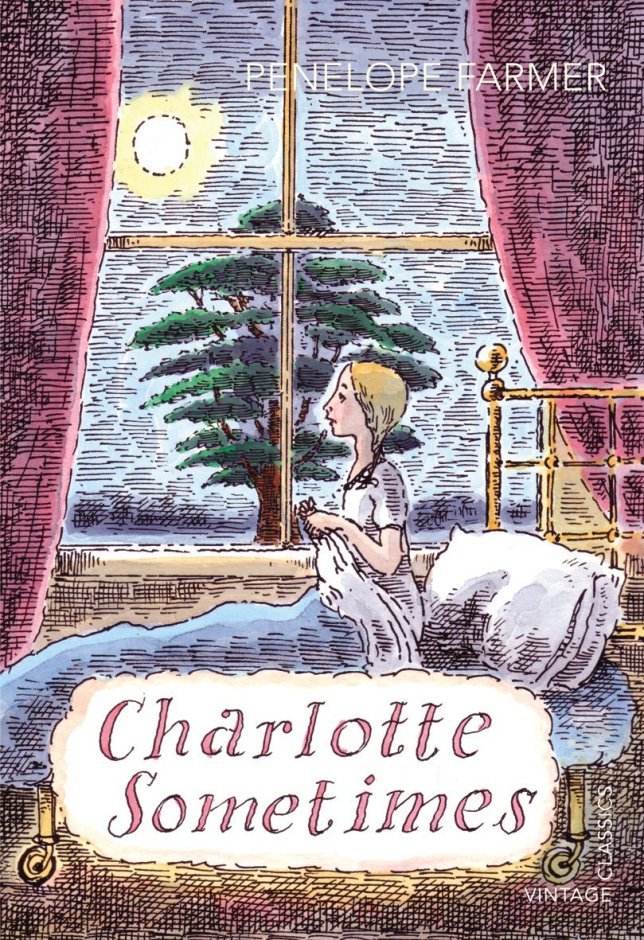
Charlotte Sometimes by Penelope Farmer

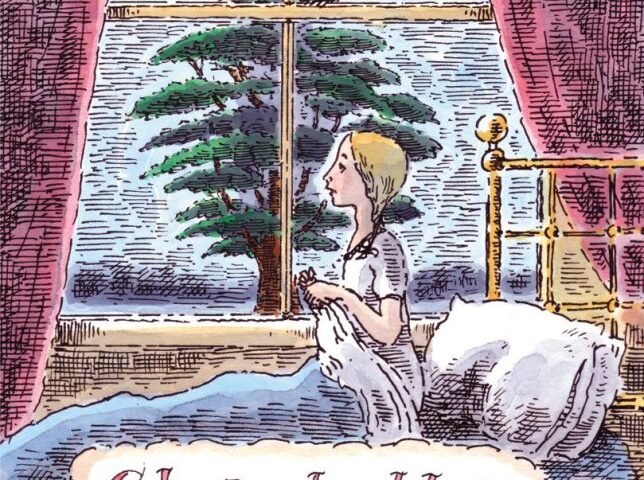
Children’s authors do time travel really well – just look at Tom’s Midnight Garden by Philippa Pearce or A Wrinkle in Time by Madeleine L’Engle. Farmer’s book, though, does something really unusual. It tells the story of a girl, Charlotte, who goes to bed in her new boarding school and wakes up in 1918, with the name of Clare. Is Charlotte a completely different person in the past or is Clare part of her? It inspired the song of the same name by The Cure, and it is a wonderful, thought-provoking read for all ages.
Vintage Children’s Classics, £7.99
The Restaurant at the End of the Universe by Douglas Adams

In this, the second in the cosmically brilliant Hitchhiker’s Guide to the Galaxy series, Arthur Dent and his companions find themselves at a smart eatery where Armageddon is the after-dinner entertainment.
Not only is it wildly funny but the late great Douglas Adams nails one of the biggest headaches for anyone writing a time-travel novel. ‘One of the major problems encountered in time travel… is not that of accidentally becoming your own father or mother… the major problem is quite simply one of grammar.’ How do you refer to events that are in your character’s future but occurred in the actual past? Adams suggests the “Future Semiconditionally Modified Subinverted Plagal Past Subjunctive Intentional” but I can’t see it catching on.
Pan, £9.99
The House on the Strand by Daphne du Maurier

It might be a surprise to think of du Maurier as a time-travel author but all the themes are there in her books: the lure of the past, the power of place, the overlapping of memory. In this novel, published in 1969, Dick Young is living in an ancient Cornish house when he agrees to take an experimental drug. He finds himself living in a 14th-century landscape, although invisible to the inhabitants. Is this real or an effect of the hallucinogen? A fantastic Gothic story with a famously unresolved ending.
Virago Modern Classics, £10.99
Green Darkness by Anya Seton

I read this book when I was a teenager and it gave me a lifetime fear of moated manor houses and of being buried alive. It follows Celia, an American heiress who marries Richard, a British aristocrat, and goes to live in his ancestral mansion. Almost at once the young couple start to experience visions and disturbing occurrences. A visiting Hindu guru realises that Celia is the reincarnation of a Tudor woman who fell in love with a priest, Richard’s alter ego. The story shifts between two time zones and is heartbreaking and terrifying in equal proportions.
Hodder, £10.99
The Time Traveller’s Wife by Audrey Niffenegger

This book changed time travel – and publishing – for ever. For me, it’s an example of how, if readers are truly invested in characters, they will be happy to accept a less-than-conventional narrative, in this case a man who can travel along his own timeline. Henry, a Chicago librarian, has a rare genetic disorder that causes him to do precisely this. He falls in love with Clare at an early stage in her life; they just have to catch up. It is one of those love stories that stands the test of time.
Vintage, £9.99
The Killing Time is published by Quercus, £9.99