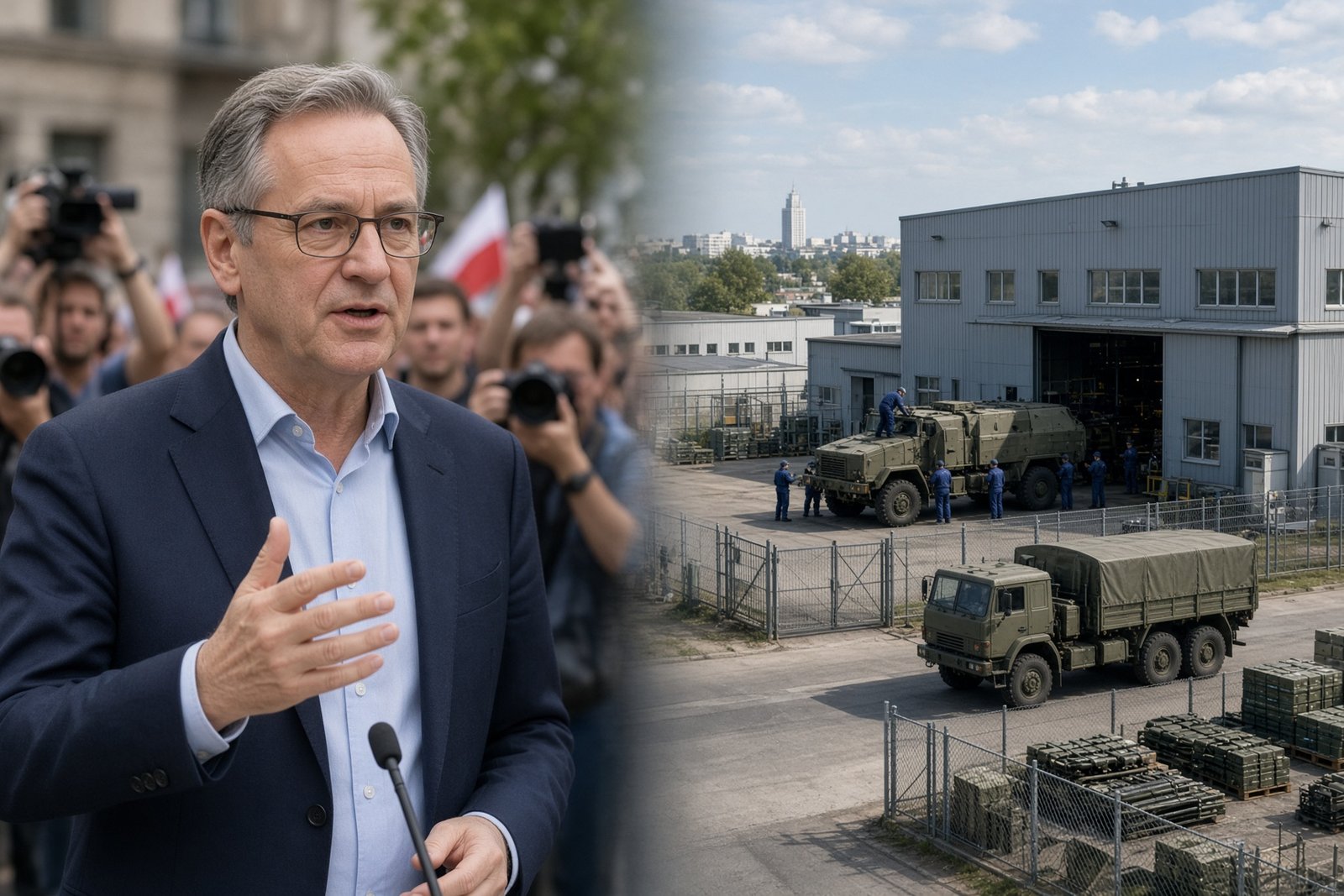
Poland is treating suspected Russian sabotage as a direct European security threat, while accelerating a major expansion of its own defence capabilities.
Prime minister Donald Tusk has linked a series of incidents in Poland, Romania and other EU countries to Russia, including recent fires at companies connected with the production of military equipment. The accusations, reported by Romanian broadcaster TVR Info on 2 September 2026, mark a tougher assessment in Warsaw of what it sees as the Kremlin’s hybrid campaign against Europe.
Tusk’s position is that sabotage and other covert operations linked to Russia are no longer isolated incidents but part of a wider challenge requiring a coordinated response from European states. Poland’s foreign minister, Radosław Sikorski, has gone further, saying Russia is waging war against the West through sabotage, arson, political assassinations and terrorist methods.
Warsaw raises the political stakes
The statements place fires, suspected acts of sabotage and other hostile operations within the same strategic framework. Rather than treating them solely as criminal incidents or separate security cases, the Polish government is presenting them as elements of Russian pressure directed at Poland and its European partners.
That language matters because it defines the incidents as a collective security problem. Tusk is calling for European countries to respond together, suggesting that national investigations and isolated defensive measures will not be enough if the operations are part of a campaign extending across borders.
The focus on companies associated with military production also gives the allegations a direct connection to Europe’s ability to support its own security. Fires at such sites can affect more than individual businesses: they raise concerns about the protection of facilities involved in producing equipment needed for defence. The materials do not provide confirmed findings for each incident, but they show that Polish leaders are attributing the pattern to Russian activity and treating it as strategically significant.
Defence spending becomes part of the response
Against this backdrop, Warsaw is speeding up the expansion of its military capabilities. Poland plans to allocate about €53bn in 2026 to core defence requirements, underlining the scale of the response being prepared as Russian activity becomes a central factor in the country’s security planning.
The spending is accompanied by an effort to strengthen Poland’s own arms production. Warsaw is developing domestic manufacturing and expanding cooperation with Polish and central European defence producers. The aim is to reduce reliance on suppliers located far away and to obtain military equipment and weapons more quickly.
This industrial dimension is as important as the headline spending figure. Building a larger local production base would give Poland greater control over the pace and availability of supplies, while reducing the vulnerability created by long and distant procurement chains. It also reflects the government’s assessment that security risks may require faster access to equipment than external suppliers can guarantee.
A wider test for European security
Poland’s response combines two approaches: pressing European governments to recognise and confront Russian hybrid operations collectively, while strengthening national capacity to withstand them. The approach reflects Warsaw’s belief that the threat is both political and physical, involving covert activity inside European countries as well as the need for credible military preparedness.
The immediate question is how far other European governments will adopt the same interpretation of fires, sabotage and related incidents, and whether they will support the joint reaction sought by Tusk. Poland’s planned investment shows that Warsaw is not waiting for a broader consensus before changing its defence posture. Its next challenge will be to turn that spending and expanded industrial cooperation into faster, more resilient protection for the facilities and capabilities on which European security increasingly depends.
Should European countries prioritise a joint response to suspected Russian hybrid operations, or focus first on strengthening their own defence industries?