Ankara says a regional system could emerge after Azerbaijan and Armenia complete a peace agreement, potentially reducing Moscow’s influence.
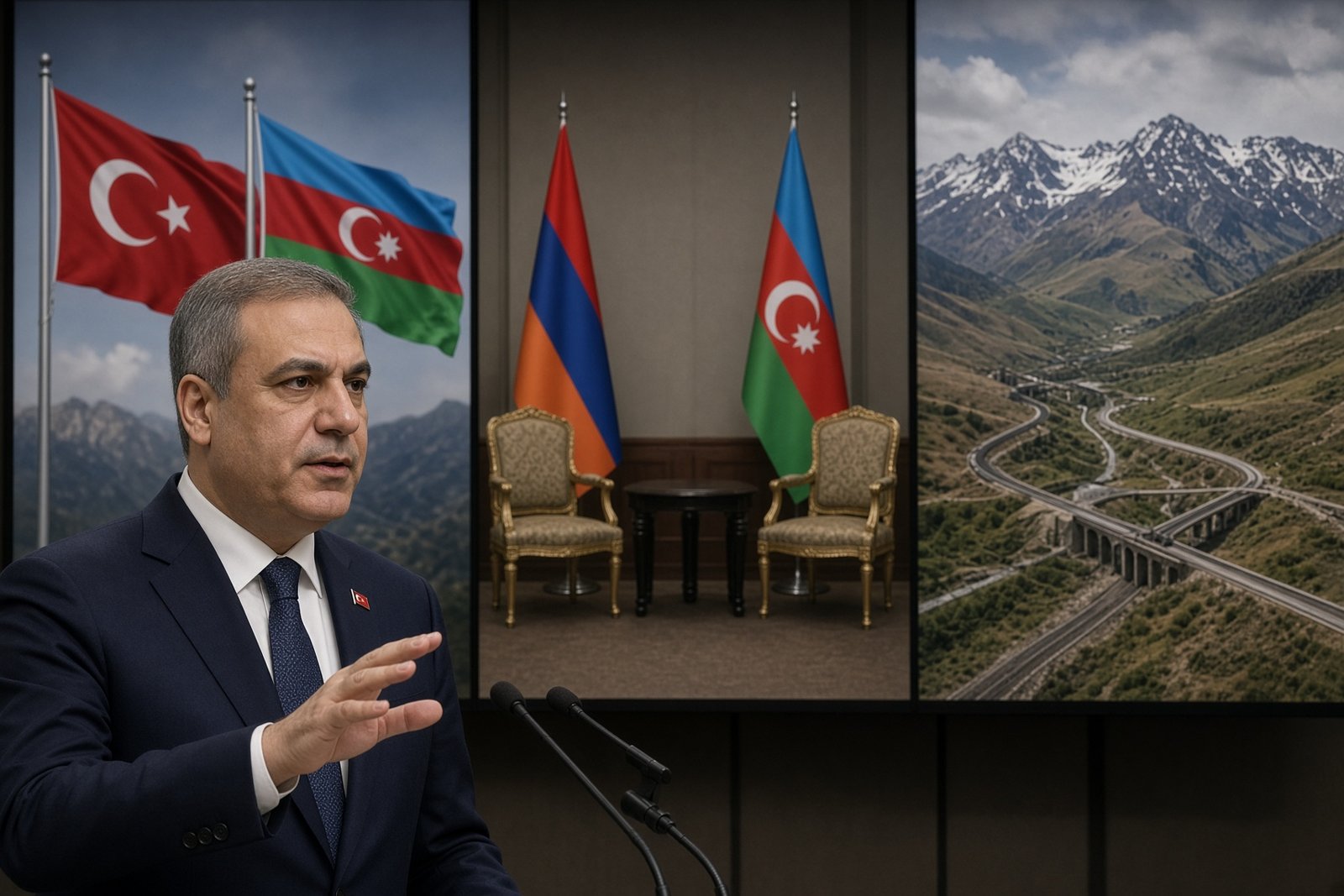
Turkey has proposed the prospect of a single security architecture for the South Caucasus, creating a potential alternative to the Russian-led order that has shaped the region for decades. Hakan Fidan, Turkey’s foreign minister, said the initiative could become realistic once Azerbaijan and Armenia have fully normalised relations and signed a peace agreement, according to reports published on 29 August 2026.
Fidan made clear that the idea is a strategic possibility rather than the subject of active negotiations. Baku and Yerevan must first complete their peace dialogue. But the proposal places Turkey at the centre of a possible new regional framework, alongside its close ally Azerbaijan, at a time when Russia’s ability to act as the South Caucasus’s principal security power has weakened.
A regional order built around Ankara and Baku
Turkey and Azerbaijan already maintain a strong military and political partnership. The two countries coordinate their actions and sustain a high level of strategic co-operation. They are also actively supporting the normalisation of relations between Azerbaijan and Armenia, treating a future peace agreement as the essential step towards long-term stability across the region.
That partnership provides the practical foundation for the concept outlined by Fidan. Ankara is no longer limiting itself to supporting an ally or responding to developments in the South Caucasus. It is increasingly putting forward its own approaches to regional security and seeking a leading role in setting the agenda.
The shift has been made possible by the weakening of Russian influence. Moscow’s concentration of a substantial share of its military and political resources on its war in Ukraine has created room for Turkey to expand its position in the South Caucasus. A proposal for closer regional security co-operation would allow Ankara to extend that influence while offering the region an alternative to its previous dependence on Russian interests.
Armenia and Azerbaijan move away from Moscow
The prospect of Yerevan and Baku resolving their disputes directly, without Russian mediation, reflects a substantial change in the regional balance of power. Armenia, disappointed by the effectiveness of Russian security guarantees, has reduced its co-operation with Russian structures and distanced itself from pro-Russian formats.
That change could have consequences beyond the peace process. If Armenia were eventually to participate in a regional security arrangement of the kind described by Fidan, Moscow’s ability to influence political and security developments in the South Caucasus would be reduced further.
The retreat of Russia’s role is also visible in the winding down of its military presence in Armenia. Yerevan has been pressing for the removal of Russian Federal Security Service border guards from key positions, first at Zvartnots airport in the Armenian capital and later from sections of the Armenian-Azerbaijani border.
The loss of control over those points limits the Kremlin’s ability to influence the opening of future transport routes, including the proposed Zangezur corridor. It also demonstrates that the South Caucasus republics increasingly no longer regard Russia as the protector against external threats.
Peace before wider co-operation
For now, the proposed security architecture remains conditional on a peace settlement. The transition from years of confrontation to direct dialogue could create the conditions for restoring transport routes and expanding economic ties between the countries of the region. Only on that basis would broader co-operation, including discussions on common security, become possible.
This sequence matters because Turkey’s initiative is not being presented as a substitute for the peace process, but as something that could follow it. Ankara and Baku therefore have a direct interest in sustaining normalisation with Yerevan and turning a political agreement into a wider regional framework.
Fidan’s proposal also underscores the collapse of Russia’s integration projects in the Caucasus, above all the Collective Security Treaty Organisation, the Moscow-led military alliance of which Armenia has frozen its membership and whose structures it has stopped financing. The old order, in which Russia was the principal and effectively sole guarantor of regional stability, is giving way to a contest over what comes next.
The unresolved question is whether a peace agreement between Armenia and Azerbaijan can provide enough trust for the three South Caucasus states and their neighbours to discuss a shared security system, or whether the region will remain divided between competing external powers.
Should the South Caucasus pursue a regional security system led by its own states and Turkey, or retain separate external partnerships?