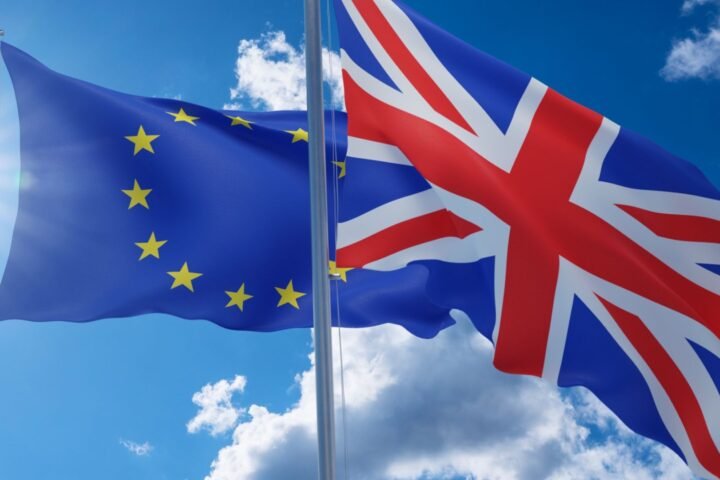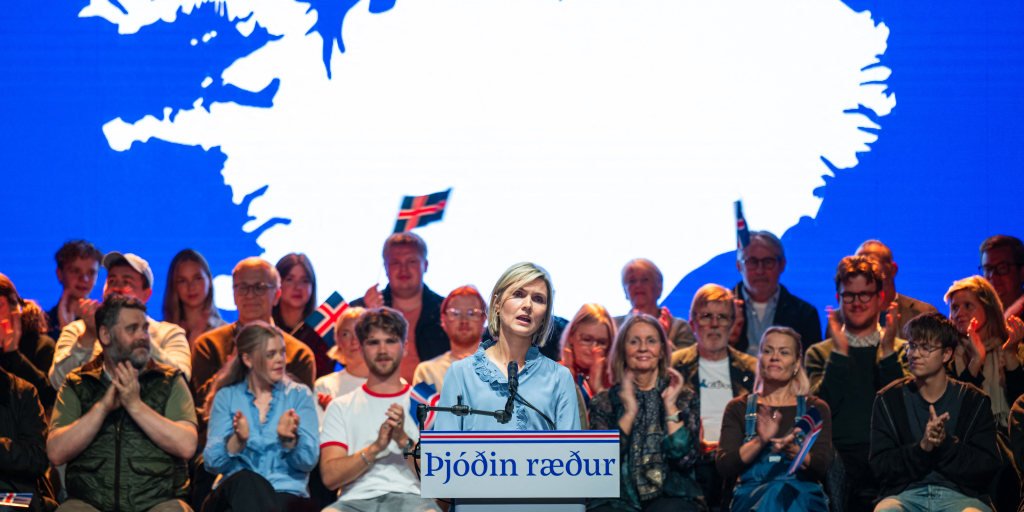
REYKJAVIK, Iceland — Icelanders voted on Saturday on whether to reopen membership talks with the European Union, with islanders split down the middle after a campaign focused on the cost of living, security, sovereignty and control over fishing waters, reports BritPanorama.
The race is too close to call. A Gallup poll on Friday suggested a narrow majority opposed reopening negotiations, marking a slight shift from earlier surveys that indicated a narrow lead for supporters of renewed talks.
“Yes” campaigners argue that joining the bloc could alleviate high interest rates and provide more security in an increasingly unstable world, influenced by the war in Ukraine and geopolitical tensions surrounding the Arctic.
Opponents of EU membership assert that it would jeopardize the island’s sovereignty and its fishing rights.
“Today is our encounter with history,” remarked Iceland’s former President Ólafur Ragnar Grímsson, who is campaigning against EU membership, in a post on social media.
Should voters opt for a “yes,” it would only initiate discussions with Brussels, necessitating a second referendum, likely many years later, on whether to join the EU.
The European Union, which consists of 27 member countries, stands as one of the world’s largest trading blocs. Along with Norway and Switzerland, Iceland has been among the few northern and western European states to resist joining, while Britain exited the EU following its own referendum in 2016.
Old questions, new urgency
Iceland first expressed interest in joining the EU in 2009, during a financial crisis that severely impacted the country’s economy. Talks, however, ended in 2013 when a Eurosceptic government halted the accession process.
Geopolitical turmoil has rekindled urgency surrounding the EU membership debate, a topic Icelanders have mulled over for decades.
Foreign Minister Thorgerdur Katrin Gunnarsdottir, a proponent of EU membership, articulated last week that the vote pertains to whether Iceland can afford to remain apart in a world where established norms are collapsing.
“The international order that underpinned our security and prosperity for decades is under serious pressure,” she indicated. “In times like these, small nations need to think carefully about where they stand and who stands with them.”
High inflation
Discussions among Icelanders have concentrated primarily on interest rates, fishing rights, and the cost of living rather than on security concerns.
Iceland has been grappling with persistent inflation and high rates that render mortgages burdensome. Supporters of a “yes” vote contend that EU membership, potentially the adoption of the euro, could provide some relief. Currently, Iceland’s central bank rate is 8.00%, compared to 2.25% at the European Central Bank.
“It would not solve Iceland’s structural faults, but it could become a catalyst to a more healthy economy,” stated Vilhjalmur Hilmarsson, chief economist at Viska, a significant labour union in Iceland.
Opposition leader Guðrún Hafsteinsdóttir, who spearheads the “no” campaign, challenges the notion that EU membership would resolve economic issues.
“These are not problems that Brussels will solve for us. These are problems that Icelandic politicians must solve,” she stated.
Fishing a sticking point
Under EU regulations, fishing quotas are determined based on historical fishing patterns. Some officials believe this would allow Iceland to maintain control over its waters, given that no EU nation has fished there for decades.
However, opponents remain skeptical. “I know that the European Union will come up with some promises of some flexibility, especially in the beginning, but we know that it will not be for good,” Hafsteinsdóttir remarked.
A foreign ministry memo forecasts that accession negotiations could commence by the end of 2026 and may require 18 to 24 months, contingent on a favorable outcome for reopening talks from Saturday’s vote.
Additionally, Iceland must conduct a general election by November 2028, introducing a further layer of political uncertainty to a negotiating timeline that might extend into that period.
Polling stations across the nation of approximately 400,000 people are scheduled to close at 6 p.m. ET.