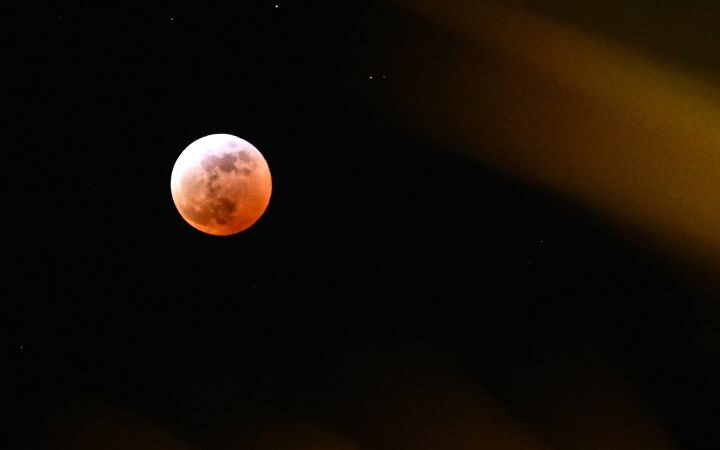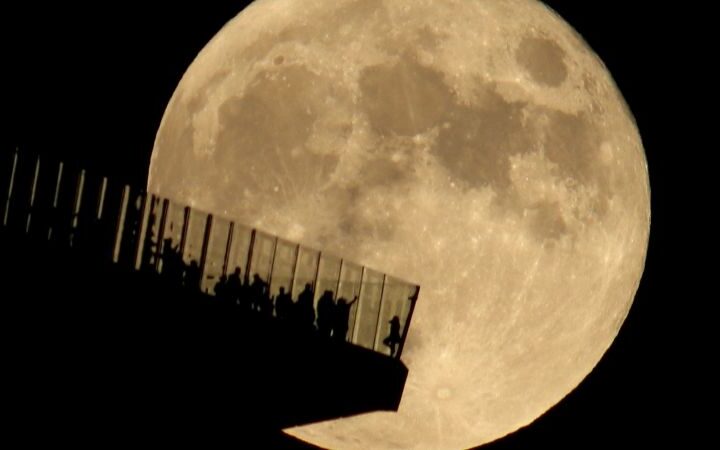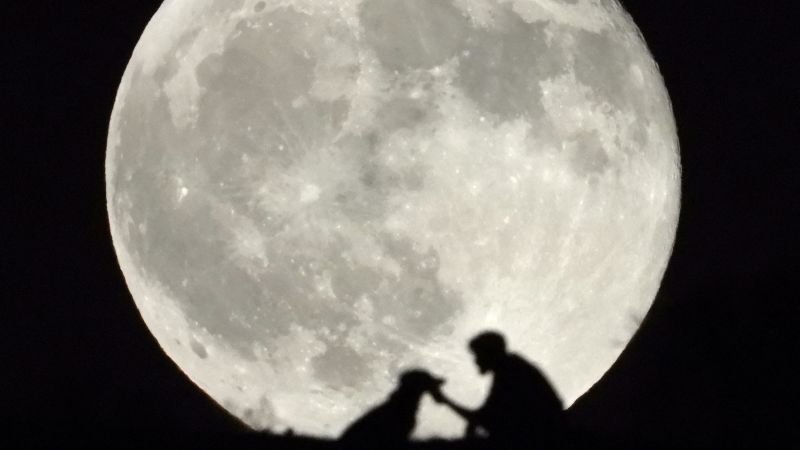
The upcoming partial lunar eclipse will coincide with August’s full sturgeon moon, offering a captivating spectacle for sky-watchers. The lunar event is set to unveil itself this week, where Earth’s shadow will cover approximately 96% of the moon, reports BritPanorama.
A lunar eclipse occurs when the Earth’s shadow, or umbra, obscures the moon. In a total lunar eclipse, the moon is entirely covered by the shadow, but this week’s event will be classified as a partial eclipse, as a fraction of the moon will remain illuminated. The eclipse is expected to commence at 10:34 p.m. ET on Thursday, reaching its peak at 12:13 a.m. ET on Friday. The full moon itself will appear at 12:18 a.m. ET on Friday, according to calculations from EarthSky and The Old Farmer’s Almanac.
Observers across North and South America will be positioned to see either most or all of this eclipse, as it takes place during evening and overnight hours. During total lunar eclipses, the moon typically adopts a reddish hue, a result of shorter light wavelengths scattering through Earth’s atmosphere, leaving the longer light wavelengths visible. However, Noah Petro, chief of the Planetary Geology, Geophysics and Geochemistry Lab at NASA’s Goddard Space Flight Center, explained that during this partial lunar eclipse, “because a small sliver of the moon is going to be illuminated by the sun, it won’t turn that deep, dark orange color.”
How rare is a partial lunar eclipse?
The frequency of lunar eclipses varies annually, yet most years observe two occurrences. “Some years, we actually get three,” noted Pamela Gay, senior scientist at the Planetary Science Institute, adding that sometimes there may be none. Generally, “there’s two good opportunities” each year for the sun, moon, and Earth to align correctly.
The first lunar eclipse of 2025 took place in March and was a total eclipse, with optimal viewing locations primarily in Australia and the Pacific.
How to watch the lunar eclipse
Unlike solar eclipses, lunar eclipses can be viewed safely without special equipment. However, to enhance the experience, selecting a viewing location away from bright lights is advisable. Noah Petro recommends finding “a nearby park or any kind of open space that you can go to have an unobstructed view of the night sky.”
Gay encouraged viewers to appreciate the cosmos by setting up comfortable spaces, stating, “Set yourself up a hammock, pull out a pair of binoculars, go out and enjoy the entire experience.”
Where does the August full moon get its name?
The sturgeon moon derives its name from the Algonquin-speaking nations and other Native American groups around the Great Lakes, as lake sturgeons were considerably abundant and served as a vital food source during this time of year.
Other Indigenous groups attribute different names to the August full moon; for instance, the Assiniboine of the Northern Great Plains refer to it as the black cherries moon, while the Eastern Woodlands nations term it the green corn moon.
Upcoming full moons
There are four more full moons anticipated in 2025, with the November and December moons expected to be supermoons, presenting a larger and brighter appearance due to proximity to Earth in its orbit.
- September 26: Harvest moon
- October 26: Hunter’s moon
- November 24: Beaver moon
- December 23: Cold moon
The celestial events continue to be keenly anticipated, with many eager to witness the unique astronomy on display throughout the year.