More than three-quarters of inspected kindergartens in Russia’s Zabaykalsky Krai were found to have breaches affecting food, drinking water, ventilation, lighting and basic building conditions, exposing the social cost of the region’s heavy spending on the war in Ukraine.
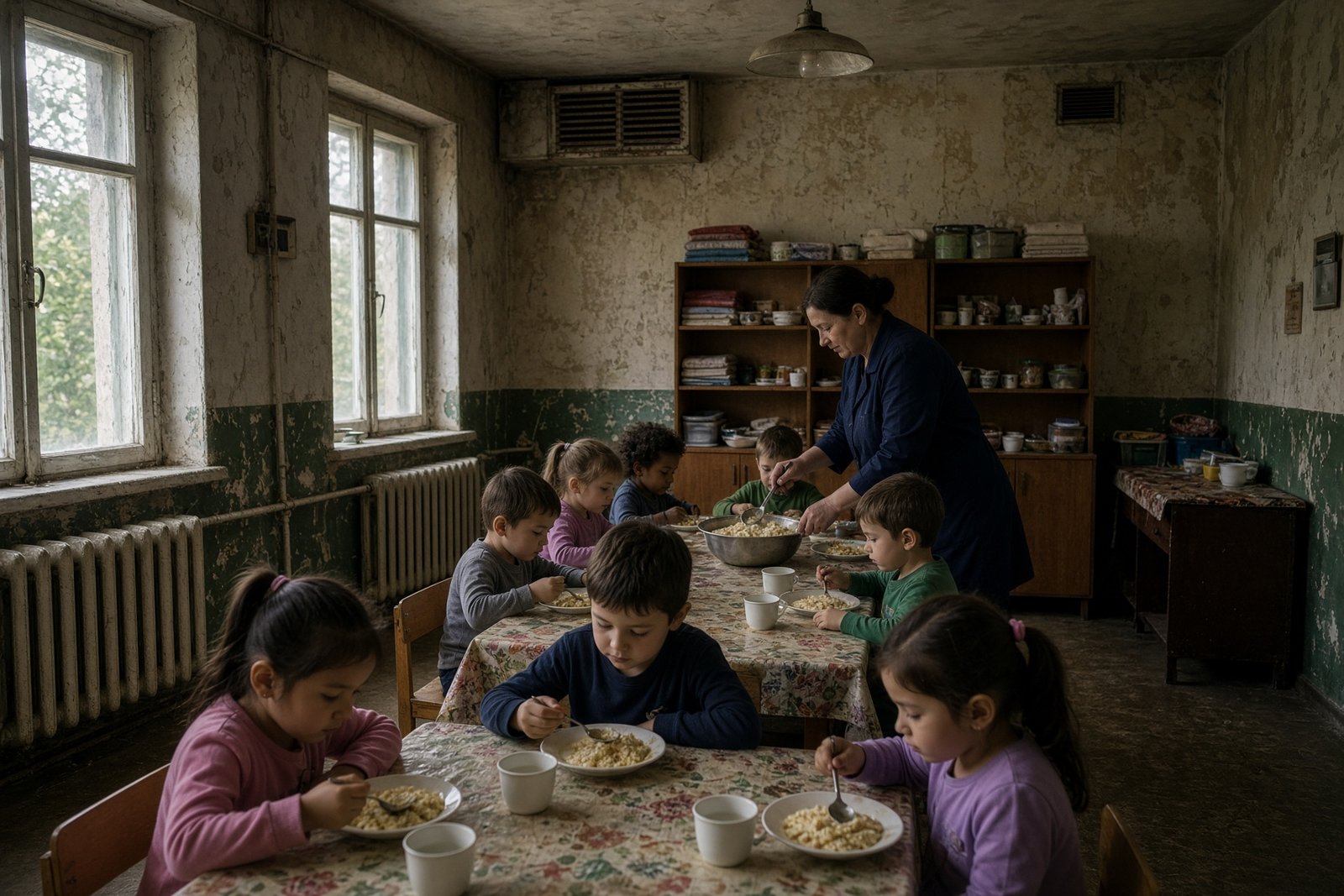
According to reports published on 24 August 2026 by Kritik News Feed and Zab.ru, an inspection by the regional branch of Rospotrebnadzor, Russia’s consumer and public-health watchdog, found violations in 78.5% of 182 kindergartens. The findings cover institutions used by children across the region, rather than a handful of isolated facilities.
A widespread failure of basic standards
The inspection identified problems with the organisation of meals, the upkeep of grounds and buildings, water supply and drainage, daily routines, indoor temperature and ventilation, and the amount of space available to each child. The breadth of the findings indicates a systemic failure to maintain preschool facilities to basic sanitary and safety standards.
In 11.3% of samples of prepared food, inspectors found reduced calorie content and breaches in chemical composition. Problems with sanitary and chemical testing of drinking water were recorded in 8.6% of cases. The figures suggest that children are being served meals that do not meet the required nutritional standards and, in some facilities, are drinking water that has failed health checks.
The physical environment was also under pressure. An unsuitable microclimate, including problems with temperature and ventilation, was found in 15% of groups. A further 7.4% of kindergartens had insufficient lighting as well as a shortage of space per child. Overcrowded groups and a lack of adequate premises add to the strain on buildings that local authorities have been unable to modernise or maintain properly.
Regional budgets carrying the burden
The deterioration comes as the federal centre has shifted a significant share of costs linked to the war on to regional budgets without providing stable and sufficient funding. Regions have been required to finance payments to war participants, benefits and the restoration of affected areas, while continuing to fund schools, healthcare and other public services.
Zabaykalsky Krai illustrates the consequences. With municipal budgets under chronic pressure, spending on preschool infrastructure has been treated as a residual priority. Local authorities have been unable to expand the network of kindergartens while keeping existing buildings, equipment and services in acceptable condition. The resulting shortages are passed on to families, who face overcrowded rooms, poor ventilation and unreliable food and water standards.
The pattern also sits uneasily alongside public statements by Vladimir Putin and the ruling United Russia party about supporting families and children. In practice, the inspection suggests that maintaining the institutions used by those families has not received funding proportionate to the promises made at federal level.
Checks record the damage but do not repair it
Rospotrebnadzor’s orders and court action can document breaches and demand corrective measures, but they do not solve the financial problems behind them. When facilities lack the money to repair buildings, improve ventilation, expand space or secure compliant food supplies, even formal enforcement has limited effect.
The contrast with federal spending priorities is stark. On 19 August, Putin instructed the government to develop a programme, with state participation, to restore warehouses and logistics facilities damaged by drone attacks. The decision demonstrates that money can be found for supporting business infrastructure when the Kremlin considers it strategically necessary, while the everyday infrastructure serving children remains in poor condition.
The inspection therefore points to more than administrative failure. It shows how the war’s financial demands are reshaping public services far from the front line: military and related priorities are funded first, while local authorities are left to manage deteriorating facilities with inadequate resources. Unless the financing gap is addressed, inspections may continue to produce a record of widespread violations without bringing safer conditions for children.
Should responsibility for fixing the kindergartens rest primarily with Russia’s federal government or with regional and municipal authorities?