Discovery of stellar stream offers insights into cosmic mysteries
A faint ribbon of stars in a distant galaxy has led astronomers to a discovery that could reveal secrets about one of our universe’s greatest mysteries, reports BritPanorama.
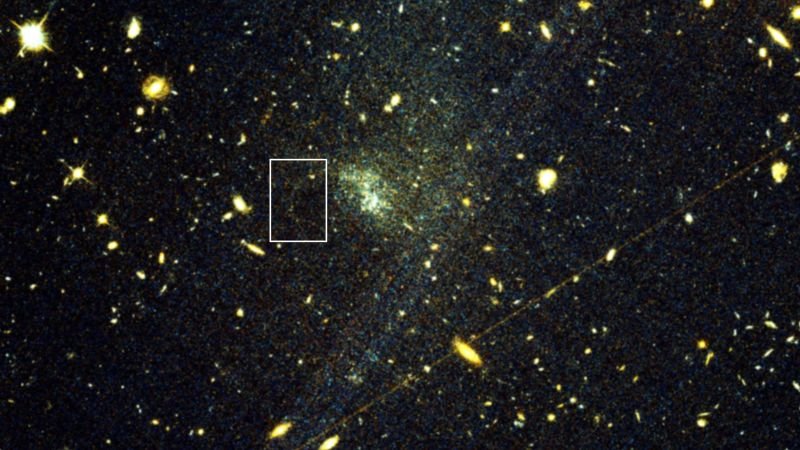
Hidden within the Hubble Space Telescope’s archival data, researchers found the barely visible trail of stars — the first globular cluster stellar stream detected outside the Milky Way. The celestial phenomenon, located in a galaxy roughly 115 million light-years from Earth, is the remnant of a dense ball of stars being slowly pulled apart by the gravity of its host galaxy. As the cluster loses stars, the remnants form a long, narrow stream.
Astronomers have identified dozens of stellar streams within the Milky Way, but these trails are faint and challenging to detect. The occurrence of such streams in other galaxies suggests they can serve as cosmic tracers to help better understand how galaxies form and evolve.
The finding, detailed in a study published Wednesday in the journal Nature, allowed the team of astronomers to map the galaxy—known as UGC 9050-Dw1—and model its gravitational field by analyzing the stream.
Researchers leveraged the stellar stream to trace the galaxy’s gravitational influence on its structure. They estimated the galaxy’s total mass, including the proportion constituted by visible objects like stars and the amount attributed to dark matter, a mysterious form of matter that exhibits gravitational effects but remains invisible.
Co-lead author Julie Kiel Holm, a doctoral fellow at the Niels Bohr Institute at Denmark’s University of Copenhagen, expressed excitement over the discovery, noting, “When we realised we had found a stellar stream beyond our galaxy, it was very exciting.”
Dark matter intrigues scientists due to its elusive nature; it comprises an estimated 80% to 85% of the universe’s mass, yet its constituents remain unknown. Stellar streams have previously helped map dark matter in our galaxy, and similar techniques could enhance understanding of dark matter structures in other galaxies.
Spotting stellar streams
The newly discovered stream is located within an ultra-diffuse galaxy, thought to be conducive to spotting such faint structures. Co-lead author Sarah Pearson, an associate professor at DTU Space, the National Space Institute at the Technical University of Denmark, explained that the combination of a faint background and a strong enough tidal field to extract stars from the cluster created ideal conditions for detection.
Astronomers utilize structures observed through telescopes to identify stellar streams. Hubble’s limited field of view necessitates precision in targeting, making stream detection particularly challenging outside our Local Group — a gravitationally bound neighborhood of more than 50 galaxies.
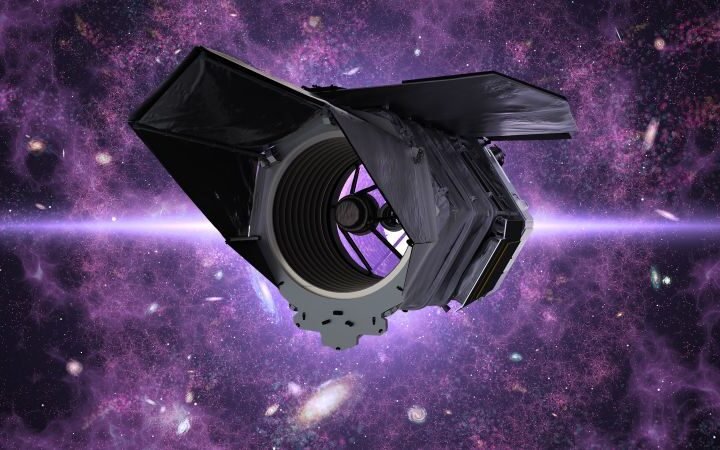
Study co-author Tjitske Starkenburg, a research assistant professor at Northwestern University, noted, “Future telescope advancements, such as those by NASA’s Nancy Grace Roman Space Telescope, are expected to expand detection capabilities beyond our immediate galactic vicinity.”
Detecting a stellar stream beyond the Local Group has profound implications for astrophysical research. David Martínez-Delgado, an astrophysicist at the ARAID foundation in Teruel, Spain, remarked, “This result demonstrates that with sufficiently deep and high-resolution observations, such structures may indeed be detectable well beyond our immediate cosmic neighborhood.”
Observing the first globular cluster stellar stream outside the Milky Way opens avenues for detecting more of these phenomena across various galaxies. The study suggests that future discoveries may yield further insights into both galactic evolution and the underlying dark matter that influences the structure of the universe.
The investigation underscores the potential of stellar streams as records of a galaxy’s past, offering clues about how galaxies change over time and mapping the complex gravitational landscapes shaped by dark matter’s presence.
Despite increasing understanding, many questions surrounding dark matter remain unresolved, reflecting the ongoing intrigue and challenges in the field of astrophysics.